Showing posts with label Epiphany. Show all posts

Sunday, October 12, 2025

New Glasses


I’m wearing glasses for the first time in over a decade.

Last weekend I came out by posting a glasses selfie to Facebook. It was a picture of me with my son. (You can see my half of the selfie above.) We were sitting behind right field at the Seattle Mariners’ first playoff game. As I wrote in Seize the Day,

Oliver chose our tickets to last weekend’s Mariners game. When we got to T-Mobile Park, I realized that in all the professional baseball games I’ve seen, I’d never sat behind the outfield before. I loved our seats – it turns out a baseball game is more interesting when you’re looking toward the batter.

Maybe it was the playoff excitement, or sharing an amazing experience with my son. Or maybe it was my new glasses.

I never wore glasses as a kid. My mother, my brother Doug, and my child Kamryn are the ones who grew up with glasses. But in law school I realized I was having trouble reading the blackboard. Then one night I had trouble distinguishing between a truck and a mountain.

It turns out I’m nearsighted. “Myopia” is not just a metaphor – it’s a common eye condition where distant objects appear blurred, while near objects remain clear. For the next two decades I needed a mild prescription to pass the driver’s test, drive at night, or enjoy theatre performances from further away than the tenth row.

I didn’t need glasses to read or interact with people. Instead, I got into the habit of taking off my glasses whenever I came indoors, just like I switch from shoes to slippers and from pants to sweats. Mr. Rogers is my role model.


I found freedom in my forties. When I renewed my driver’s license, I was able to pass without wearing glasses or cheating. My ophthalmologist explained that my eye muscles’ natural aging had canceled out my myopia. I remained entirely glasses-free for the next few years.

My ophthalmologist warned me the eye’s aging process eventually leads to reading glasses. I told him reading glasses are for old people. 

I have the same definition of “old people” as my son Oliver: “people my parents’ age.” My father buys big clunky reading glasses in bulk from Costco, then leaves them lying around the house and in the car. They’re hideous.

Although I’m a dad, I’m still a fabulous gay man. When I finally accepted it was time to wear reading glasses, I found a slim pair of lightweight tortoiseshell readers. I’ve stuck with them ever since. (Search for “Fisherman’s” or “Dr. Dean Edell’s.”) I only use my glasses to read, so I’m always taking them off and on. Nowadays I only buy shirts with pockets so I always have somewhere to put my glasses.

The workstation in my home office has a huge monitor. It turns out my reading glasses are too fabulous – I can only see a small portion of the screen clearly. So I bought a pair of lightweight IMAX-sized reading glasses to use at my desk. They’re not hideously clunky like my dad’s. Nevertheless, my daughter Eleanor made me promise never to wear them in public.

All good things come to an end. This year when I got a new job and could finally afford to go the theatre again, I realized the actors’ faces were getting blurry. Driving at night had gotten more stressful. When I went in for my first eye exam in years, the ophthalmologist said my aging eye muscles had reached the point when they need a little help. So he wrote me a new myopia prescription.

When my son was young, he needed glasses for lazy eye and cross-eyedness. Even though he outgrew these conditions, he still gets a new prescription every year. But he never wears his glasses. He says he doesn’t need them.

I used to nag Oliver about wearing his glasses. But now that I have non-reading glasses of my own again, I understand where he’s coming from. I thought I would enjoy wearing glasses while Bear and I walk along the waterfront. My new glasses let me see details in the beautiful islands and mountains that surround Bellingham. But our view is stunning enough without magnification. Glasses created a distracting frame around a small portion of the panorama view.

Because I only use my new glasses for driving and going out to shows, they now live in a case in the car. Meanwhile, something changed in the last twenty years: I have to put on reading glasses to use my cellphone.

When my children were taking driver’s ed, I told them not to look at their phones while driving. I try to model good behaviour myself. Perhaps too well – I feel vaguely sinful whenever I put my new glasses on in the car.

Several Baby Boomer friends recently had cataract surgery. They raved about suddenly seeing a whole new world.

When I mentioned these friends’ experience to my ophthalmologist, he told me I shouldn’t expect to be stunned by a similar sudden vision. Instead, the cataract process will gradually unfold over a couple of decades, and then I’ll see mild improvement when I finally get around to surgery. That’s what recently happened to my eightysomething father. Getting a new prescription this fall after a couple of decades without glasses might be as close to an “I was blind and now I can see” moment as I’ll ever get.

Oliver chose the tickets to our recent playoff game. Before this month I’d only seen the Mariners play while sitting in some law firm’s skybox, or from infield seats with a good view. The seats behind right field that Oliver picked were a lot further way from the infield than I’d ever been before. Nevertheless, as I explained in Seize the Moment, “I loved our seats – it turns out a baseball game is more interesting when you’re looking toward the batter.”

Maybe baseball really does look better from the outfield. Maybe I felt the magic of a special night with my son. Or maybe I just have new glasses.


Saturday, July 6, 2024

My First

The very first concert I ever attended was at the Marriott Center in Provo, Utah, in September 1981. I saw Barry Manilow.

I’d arrived as a clueless freshman at Brigham Young University three weeks before. During my time at BYU, I was confused about my own sexual orientation. I was also oblivious to the fact that most of my college friends were gay, too. And the fact that Barry Manilow is gay.

Years later, a friend who had been part of BYU’s secret gay underground told me a story about the Barry Manilow concert. Apparently afterwards an unmarked car full of BYU security officers followed Manilow and his posse forty-five mile north to the Sun Tavern, Salt Lake City’s gay bar.


Last week I drove with my daughter Eleanor for seven hours so we could see singer-songwriter Noah Kahan at The Gorge Amphitheater. I waited for five hours in the desert, mostly in arbitrary lines fueling monopolistic profit. It was too hot, too muggy, and then too cold. We got home at 3:30 am the next morning. It was amazing.

I’ve been to other classic outdoor concert venues, like Red Rocks and Ravinia. I saw Sting play Park City, with Stewart Copeland sitting in on drums. Seattle used to host concerts on a waterfront pier where I saw artists like Indigo Girls and Lyle Lovett sing as sailboats passed by.  

I’d heard of the Gorge, of course, and its reputation as a concert venue. I’d had opportunities to attend shows before. My inevitable response: “All that driving just to sit in the desert?”

I’ve always been more into theater than music performances anyway, except for eras when I’ve gone to concerts with the handful of partners whose musical taste I absorbed. With my mother I’ve seen Great American Songbook masters like Barbara Cook and Kristin Chenoweth. My boyfriend in Chicago was a lesbian, at least musically, so he dragged me to Ani DiFranco, Tori Amos, Alanis Morrisette, and Natalie Merchant. My ex in Seattle was more twee – we saw Belle & Sebastian twice. 

Now Eleanor is my go-to concert date. Our first show after covid was Harry Styles at the Tacoma Dome.

Eleanor went to her first concert with a friend. It was also Eleanor’s first outdoor concert, at the Muckleshoot Tribe’s Wind River Amphitheater near Seattle. She saw the Jonas Brothers. As we drove to the Gorge, I asked Eleanor which Jonas brother is “the cute one.” She picked Joe. (Wrong – the correct answer is Nick.) 

According to Eleanor, the highlight of the Jonas Brothers concert was their opening act, a rising country star named Kelsea Ballerini. On the same day we went to the Gorge, Noah Kahan released a new duet with Kelsea:  “Cowboys Cry Too.”

Noah Kahan’s concert at the Gorge sold out long ago. Thirty thousand people stood on the darkening hillside for his entire two hour set. We watched a talented and suddenly successful young musician connect with the crowd for a one-night-only performance on the day his breakthrough single “Stick Season” hit a billion Spotify streams.

Kahan writes openly about living with anxiety and depression. His charity benefits mental illness programs. As an extra encore at the Gorge, Kahan performed “Young Blood.” He introduced it as the first song he ever wrote. Looking out at the vast crowd, he told us “I remember feeling really lost. I wrote this song so that when I got older and if I had a music career, I could remember where I came from and what it was like to feel alone.”


It Gets Better and Better. If I were a little smarter, I would have recognized fatherhood was my destiny a little sooner. But then I wouldn’t be going to amazing concerts with Eleanor.

Sunday, September 18, 2022

Something Rotten


At the end of July each year, my mother and her friend Carolyn spend a girls’ week at a condo in Vancouver’s West End. They watch the fireworks, shop on Granville Island, and walk along the seawall. They also attend the summer musicals at Malkin Bowl in Stanley Park, where the nonprofit Theatre Under the Stars has been producing shows since 1940. 


This year TUTS presented two shows in repertory. The first, We Will Rock You, is a British jukebox musical featuring the music of Queen, with a thin plot about a dystopia where music is forbidden. The second show, Something Rotten!, opened on Broadway in 2015. Brothers Nick and Nigel Bottom struggle to find success in an Elizabethan theatre scene dominated by William Shakespeare’s rock star status. Christian Borle won the Best Supporting Actor Tony for his portrayal of Shakespeare as a preening but insecure narcissist. 


Seattle Mens Chorus singing “A Musical” (2016)

Desperate to get an edge over his rival Shakespeare, Nick Bottom offers his life savings to a soothsayer in return for learning what kind of theatrical production is guaranteed to succeed in the future. The only oracle Nick can afford is Thomas Nostradamus, an undistinguished nephew of the famous French seer. Thomas’s predictions turn out to be accurate but slightly garbled. In Something Rotten!’s show-stopping production number, Thomas convinces Nick he can succeed by introducing the world’s first musical. 


In 2016, Seattle Men’s Chorus conductor Dennis Coleman retired after thirty-five years with the baton. That was also my first year in Vancouver Men’s Chorus. Instead of singing with SMC, I drove to Seattle with my daughter Eleanor to see the “Everything Broadway” show. Both of us were riveted by SMC’s performance of “A Musical.”


This summer when my mother mentioned she had tickets to Something Rotten!, Eleanor and I immediately played her the original cast recording of “A Musical,” including this classic excerpt:


THOMAS:       Some musicals have no talking at all....
All of the dialogue is sung
In a very dramatic fashion.

NICK:              Um, really?

THOMAS:       Yes, really.
And they often stay on one note for a very long time
So when they change to a different note, [finally changing pitch] you notice.
And its supposed to create a dramatic effect
But mostly you just sit there asking yourself
“Why aren
t they talking?”

NICK:              That sounds miserable.

THOMAS:       I believe it’s pronounced Misérable.

Songwriters: Wayne Kirkpatrick / Karey Kirkpatrick        

A Musical lyrics © WB Music Corp., Mad Mother Music


Sure enough, my mother and Carolyn loved Something Rotten. (Mom’s review of We Will Rock You: “It was loud.”) I got a ticket to Something Rotten for the last Wednesday of the summer. As I reported on Facebook, the show was delightful.


The key to surviving Facebook is to remember you’re not the target audience in Facebook’s business model – you’re the company’s productFacebook’s actual customers are paying advertisers. In a popular and apt metaphor, the rest of us are merely a herd of cattle on display. 


I’ve run the numbers, and I’m pretty happy with our bovine arrangement. As far as I can tell, the algorithm has never lured me into buying anything. Instead, Facebook serves as a convenient communication platform and auxiliary memory bank. After posting pictures of children, dogs, and travel for fourteen years, I can now rely on Facebook for daily reminders of happy times.


For example, according to Facebook I was at the Saint James Theatre seven years ago waiting to watch the original Broadway cast of Something Rotten!. As I wrote at the time, “Shakespeare has always been my idol.”


I’m lucky I have Facebook to remind me – because I don’t have any memory of being at the theatre in New York. In fact, other than the songs I heard on the original cast album, I didn’t remember anything about the show before I saw it again in Vancouver last month.


The last time I was in New York I was on my way to New Haven for my 25th year law school reunion. This was just a few weeks before my new Bellingham physician told me my weird recent symptoms added up to Post-Traumatic Stress Disorder and serious codependency. My disability diagnosis changed my life – but not as much as the abusive behaviour of my employers. 


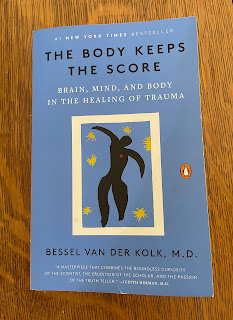
PTSD is a disease of memory. As Bessel van der Kolk observes in The Body Keeps the Score: Brain, Mind, and Body in the Healing of Trauma, “traumatized people simultaneously remember too little and too much.” Sometimes trauma results in disassociation or repression, leaving no accessible memories at all. More often, trauma prevents key brain modules like the thalamus and hippocampus from integrating our experiences into “normal” memories. According to Dr. van der Kolk, “the imprints of traumatic experiences are organized not as coherent logical narratives but in fragmented sensory and emotional traces:  images, sounds, and physical sensations.”


When I realized I had no memory of seeing Something Rotten! on Broadway in October 2015 – even Christian Borle’s Tony-winning portrayal of my idol Will Shakespeare – I went back to my collection of Playbills to figure what else was missing. 


The only other show I saw on that trip was Fun Home, a musical based on lesbian cartoonist Alison Bechdel’s memoir about growing up in a repressed and dysfunctional environment (she was raised in her familys funeral home). While Bechdel was away at college, her father killed himself rather than come out of the closet. 


In contrast with Something Rotten, I remember seeing Fun Home on Broadway. I’ve also read Bechdel’s graphic memoir. But my memories of both are fragmentary.


Theatre Under the Stars

Early in his career, Sigmund Freud successfully treated hysteria patients who had PTSD-like symptoms. Freud reported his patients could not access traumatic memories because of the “severely paralyzing” effect of strong emotions like fright and shame. Freud concluded “the ultimate cause of hysteria is always the seduction of the child by an adult.” 


However, as Bessel van der Kolk observes, when “faced with his own evidence of an epidemic of abuse in the best families of Vienna – one, he noted, that would implicate his own father – he quickly began to retreat.” Freud shifted his emphasis from real-world childhood trauma to “unconscious wishes and fantasies” like Oedipus complexes and penis envy. A century later, the leading psychiatry textbook in 1974 stated that “incest is extremely rare,” while opining it probably “allows for a better adjustment to the external world,” leaving “the vast majority” of underaged victims “none the worse for wear.” 


Since then, we’ve learned PTSD is very real, and that its not just a soldier’s disease. Here is Dr. van der Kolk’s call to action in The Body Keeps the Score after four decades treating trauma victims:  “Child abuse and neglect is the single most preventable cause of mental illness, the single most common cause of drug and alcohol abuse, and a significant contributor to leading causes of death such as diabetes, heart disease, cancer, stroke, and suicide.”


My childhood best friend Paul killed himself a few months after he was diagnosed with Borderline Personality Disorder. In a pioneering study by Dr. van der Kolk and his Harvard colleague Dr. Judith Herman, 81 percent of patients diagnosed with Borderline Personality Disorder also had histories of severe child abuse. On my way to see Something Rotten!, sitting in line at the Peace Arch border crossing, I read more details about the study in The Body Keeps the Score. And I remembered various odd things Paul said or did over the years. Suddenly I made the horrifying connection  my friend Paul likely endured abuse while we were in elementary school together.


Christian Borle and "Will Power" on Broadway

When I visited New York in October 2015, my PTSD diagnosis was still a few weeks away. But I was well on the way to rock bottom. Even after Theatre Under the Stars refreshed my recollection, I still can’t remember seeing Something Rotten!.


I can think of several explanations for the memory gap. The first is the general effect of my disability. As a wrote in “Better-ish,” although many of my fuzzy memories from that period finally snapped into place, others never did. Instead my brain concluded the simplest way to adjust my internal clock was to delete two years from the timeline. It was like switching to Daylight Savings Time. Or like when England converted from the Julian Calendar to the Gregorian Calendar, and eleven days were dropped from September 1752. Nevertheless, there’s a silver lining:  I remember half as much Donald Trump presidency as everyone else.


Another possible explanation for erasing Something Rotten! is my obsessive relationship with Shakespeare. For example, the best class I took at Yale Law School was Hal Bloom’s graduate Shakespeare seminar. My bardolatry goes beyond ordinary English Major fervor. I was born exactly four hundred years after William Shakespeare. (To the day, after adjusting for the switch to Gregorian calendar). All my life, or at least from 1964 to 2015, I could easily compare myself to where Will was at a particular age:  having his three kids in Stratford during the ’80s, writing classics like Hamlet in the ’90s, retiring to the country in the aughts, and dealing with poor health in the teens. Shakespeare died in 1616, on what would have been his 52nd birthday. On that date four hundred years later, senior managing lawyers at the Attorney General’s Office realized the State’s employment lawyers and their investigator had broken the law and discriminated against me. Rather than correct their errors, they hastily terminated my employment and embarked on the triggering coverup that continues today. My life stalled at age 51. As my health and career unraveled in 2015-16, I felt more doomed that Will Shakespeare. Now it feels like the clock has started again.


But there’s a third explanation for my memory blocking out Something Rotten!. As I sat in Malkin Bowl last month, I recognized some of the characters and plot developments from listening to the original cast album. For example, during Act I, Will Shakespeare’s rock-star narcissism was predictably charming. I was also prepared to see Nick Bottom weave his soothsayer’s misleading fragments of prophecy into the fiasco of Omelette: The Musical. (It’s no Springtime for Hitler, but it’s no Hamlet, either.) What surprised me was Shakespeare’s pathetic efforts during Act II to re-ignite own creative fire. Eventually Will is so desperate he steals Nigel Bottom’s brilliant draft script of Hamlet. After Omelette: The Musical bombs, Shakespeare conspires with the authorities to banish Nick, Nigel, their wives, and the soothsayer to America in order to cover up his own plagiarism.


Why did my memory block out the entire show, including the fact I saw it on Broadway? Because Something Rotten! centers on writer’s block. And finding your own voice. Which turns out to be how I finally worked my way through complex PTSD over the last few years. I still dont remember anything from the first time I saw Something Rotten!. But I’m happy so many of the other rotten things from that time in my life are finally beginning to heal.


Daniel Curalli as Will at Theatre Under The Stars


Thursday, September 1, 2022

Relabeling


I met my best friend Paul in 1970 on the first day of Grade 1. Like my best friends in high school, college, and law school, Paul turned out to be gay. (Apparently I’m contagious.) 


Paul also turned out to be mentally ill. After struggling with depression, anxiety, and other challenges, Paul killed himself twenty years ago.


I thought of my friend Paul while reading the first chapter of Stephanie Foo’s recent memoir. A few months before he died, Paul told me he felt betrayed by his healthcare providers. While peeking at his medical charts, he discovered he had Borderline Personality Disorder, a bleak diagnosis that was even bleaker two decades ago. No one bothered to tell Paul, which made it even worse.


In What My Bones Know: A Memoir of Healing from Complex Trauma, Foo writes about growing up in San Jose with dysfunctional immigrant parents who subjected her to relentless physical and emotional abuse before abandoning her as a teenager. Foo escaped to college, found an effective therapist, and went on to a successful career in Bay Area public radio. Eventually Foo moved to New York to work as a producer at This American Life, the granddaddy of podcasts. 


Nevertheless, Foo found herself increasingly frustrated with challenges at work and in her relationships. At age thirty she was still seeing the same therapist, now via Zoom. Eventually she asked “Do you think Im bipolar?”


Samantha actually laughs. “You are not bipolar. I am sure of it.” she says. And that’s when she asks, “Do you want to know your diagnosis?”

I don’t yell, “Lady, I've been seeing you for a fucking decade, yes I want to know my goddamn diagnosis,” because Samantha taught me about appropriate communication. Thanks, Samantha. Instead, I say, “Yes. Of course.”

Something in her jaw becomes determined, and her gaze is direct. “You have complex PTSD from your childhood, and it manifests as persistent depression and anxiety. There’s no way someone with your background couldn’t have it,” she says.

“Oh. Yeah, PTSD.” Post-traumatic stress disorder. I had a crappy childhood, so I kinda figured that.

“Not just PTSD. Complex PTSD. The difference between regular PTSD and complex PTSD is that traditional PTSD is often associated with a moment of trauma. Sufferers of complex PTSD have undergone continual abuse-trauma that has occurred over a long period of time, over the course of years. Child abuse is a common cause of complex PTSD,” she says. Then her eyes drift to the corner of the screen. “Oh—we're out of time! Let’s continue this next week.”


We’ve recognized for millennia that wartime trauma causes a predictable constellation of physical and mental symptoms. In the 4000-year old Epic of Gilgamesh, the warrior-hero experiences intrusive memories and nightmares after witnessing the death of his best friend. Greek historian Herodotus described an Athenian soldier who was stricken with blindness in 490 B.C. when he observed the death of a comrade at the battle of Marathon. After the Civil War, veterans developed “soldier’s heart.” The term “shell shock” first appeared in The Lancet in February 1915, six months after World War I began. 


Seven years ago I moved to Bellingham to accept a position with the Washington Attorney General’s Office as general counsel to Western Washington University. My dream job became a nightmare when I began exhibiting strange new symptoms, including bizarre anxiety tics and skewed personal interactions. I was shocked when my new Bellingham physician, Dr. Heuristic, diagnosed me with PTSD and serious codependency. 


As I told a friend who developed PTSD after serving as an Army Ranger medic in Afghanistan, I was sheepish about sharing the same DSM-5 category with someone like him. He told me not to be concerned, and that soldiers feel lucky they get so many folks’ respect. They worry instead about the many women and children who are scarred by the impact of earlier domestic abuse and do not have access to the help they need.


Or as Stephanie Foo writes:


It is a great, sexist irony that in our society, PTSD is generally considered a male condition. It is the warrior's disease, a blight of the mind that must be earned by time in battle, in some dangerous overseas desert or jungle. But the real statistics suggest the opposite: Women are more than twice as likely to have PTSD than men. Ten percent of women are expected to suffer from PTSD in their lifetimes, as opposed to just 4 percent of men. But even after #Me Too, a global movement to recognize the legitimacy of women's trauma, treatment for this trauma remains a half-assed endeavor, an afterthought in the shadow of the glory of war. And it has always been this way.


Actually, it usually has been even worse. 


Bessel van der Kolk is one of the world’s leading experts in trauma and its treatment. In his classic book The Body Keeps the Score: Brain, Mind, and Body in the Healing of Trauma, Dr. van der Kolk describes how both sides in World War I mistreated their traumatized soldiers. Depending on the whims of individual doctors, British servicemen originally would either get a diagnosis of “shell shock,” which entitled them to treatment and a disability pension, or “neurasthenia,” which got them nothing. Then in June 1917, the British General Staff issued an order stating “In no circumstances whatever will the expression ‘shell shock’ be used verbally or recorded in any regimental or other casualty report, or any hospital or other medical document.” According to Dr. van der Kolk, “The Germans were even more punitive and treated shell shock as a character defect, which they managed with a variety of painful treatments, including electroshock.” 


During World War II, my grandfather’s generation benefited from more humane leadership and more effective psychiatric treatments. They also had the benefit of fighting and winning a “good war,” followed by the GI Bill and fifty years of peace and prosperity. Meanwhile, individuals and society mostly repressed the lingering impact of wartime trauma. 


In contrast, Vietnam was a “bad” war in every way, which likely amplified its traumatic impact on American veterans. When Dr. van der Kolk began his medical career with the Veterans Administration during the 1970s, he was struck by the fact that all his psychiatric patients were “young, recently discharged Vietnam veterans,” even though the VA hospital was filled with aging WWII vets who were all being treated for purely “medical” complaints:  “My sense was that neither the doctors nor their patients wanted to revisit the war.”


In a sign of the times, the term “Post-Traumatic Stress Disorder” was coined in 1978. The diagnosis was added to the DSM-III in 1980, with criteria that continue to reflect its status as an event-based disorder.


Dr. van der Kolk is the founder of the Trauma Research Foundation and the National Child Traumatic Stress Network. Although his work began with Vietnam veterans, he quickly recognized trauma also affects other vulnerable populations. In particular, “child abuse and neglect is the single most preventable cause of mental illness, the single most common cause of drug and alcohol abuse, and a significant contributor to leading causes of death such as diabetes, heart disease, cancer, stroke, and suicide.”

As the Department of Veteran’s Affairs recognizes, “Many traumatic events (e.g., car accidents, natural disasters, etc.) are of time-limited duration. However, in some cases people experience chronic trauma that continues or repeats for months or years at a time.” In 1988, Dr. Judith Herman proposed a new diagnosis of “complex PTSD.” In addition to the symptoms associated with classic PTSD, complex PTSD includes: 

  • Behavioral difficulties (e.g. impulsivity, aggressiveness, sexual acting out, alcohol/drug misuse and self-destructive behavior) 
  • Emotional difficulties (e.g. affect lability, rage, depression and panic) 
  • Cognitive difficulties (e.g. dissociation and pathological changes in personal identity) 
  • Interpersonal difficulties (e.g. chaotic personal relationships) 
  • Somatization (resulting in many visits to medical practitioners) 

Rather than a single traumatic event, complex PTSD is a consequence of ongoing trauma that occurs over an extended period, such as childhood abuse and neglect, domestic violence, and religious trauma. Because these types of experiences tend to involve betrayals by an individual’s most trusted authority figures, the resulting symptoms focus on impaired interpersonal relationships. Although the DSM-5 does not include diagnoses for complex PTSD or codependency, complex PTSD is already recognized by the Department of Veterans’ Affairs, the World Health Organization, and the British National Health Service.


Here is Stephanie Foo's reaction when she ended the Zoom call with her therapist and found the VA webpage after googling complex PTSD”:


It is not so much a medical document as it is a biography of my life: The difficulty regulating my emotions. The tendency to overshare and trust the wrong people. The dismal self-loathing. The trouble I have maintaining relationships. The unhealthy relationship with my abuser. The tendency to be aggressive but unable to tolerate aggression from others. It’s all true. It’s all me. The more I read, the more every aspect of my personhood is reduced to deep diagnostic flaws. I hadn’t understood how far the disease had spread. How complete its takeover of my identity was. The things I want. The things I love. The way I speak. My passions, my fears, my zits, my eating habits, the amount of whiskey I drink, the way I listen, and the things I see. Everything—everything, all of it—is infected. My trauma is literally pumping through my blood, driving every decision in my brain.


It is this totality that leaves me frantic with grief. For years I’ve labored to build myself a new life, something very different from how I was raised. But now, all of a sudden, every conflict I’ve encountered, every loss, every failure and foible in my life, can be traced back to its root: me. I am far from normal. I am the common denominator in the tragedies of my life. I am a textbook case of mental illness. Well, this explains it all, I think. Of course I’ve been having trouble concentrating on my work. Of course so many people I've loved have left. Of course I was wrong to think I could walk into fancy institutions full of well-bred, well-educated people and succeed. Because the person with C-PTSD, the person who is painted here on the internet, is broken.         


Stephanie Foo’s bleak epiphany comes near the beginning of her story, which is subtitled “A Memoir of Healing from Complex Trauma.” Eventually she recognized her disability had clouded her vision, and learned that healing is “the opposite of the ambiguous dread: fullness.


I am full of anger, pain, peace, love, of horrible shards and exquisite beauty, and the lifelong challenge will be to balance all of those things, while keeping them in the circle. Healing is never final. It is never perfection. But along with the losses are the triumphs. I accept the lifelong battle and its limitations now. Even though I must always carry the weight of grief on my back, I have become strong.


Foo’s “inner narrative” finally changed “from a hateful whip-bearing tyrant to a chill(er) surfer dude. Like love and bankruptcy, it happened slowly, then all at once.”


In many ways my journey through complex trauma and PTSD parallels Foo’s. Both of us escaped from our abusive origins by joining demanding professions – journalism and law – that turned out to be toxic. Yet we both found healing through writing, with the support of true friends and expert healthcare providers. 


Nevertheless, my experience with complex PTSD differs from Foo’s in important respects. Like so many other trauma victims, Foo’s symptoms are rooted in the pattern of abuse she suffered at the hands of her own family. I am an outlier because I was betrayed by a different kind of trusted authority figure – the Mormon priesthood leaders who told me homosexuality was a spiritual disease that could be “cured,” and who continue to deny the humanity and existence of LGBT individuals today. Fortunately, in contrast with most people who struggle with complex PTSD symptoms, I had and have the support of the best family in the world. But I also had the traumatic overlay of coming out of the closet at the height of the AIDS epidemic, when silence and rage both equaled death.


In contrast with Stephanie Foo, no one ever told me “There's no way someone could come from your background and not have complex PTSD.” Who can predict something like that? As every personal or global disaster demonstrates, individual responses to trauma will vary. What I do know is there’s no way someone could come through all this and not be a trauma survivor. If they weren’t survivors, they wouldn't have made it through – as so many of my tribe can attest. Those of us who remain.


My friend Paul’s anger at his healthcare providers probably contributed to his suicidal distress. Stephanie Foo reacted to her belatedly revealed diagnosis not only with rage, but also with resolve:


After I started realizing the magnitude of what having C-PTSD meant, I was livid at Samantha for not telling me about it sooner. This should not have been a secret, I thought. My diagnosis should have been a critical part of the conversation about my mental health this entire time.


So Foo fired her longtime therapist and began treatment with a New York psychiatrist who is one of the world’s experts in complex PTSD.


Why don’t I complain about my doctor’s original label for my disability seven years ago? Because he got it right. As I’ve reported from the beginning, after hearing about my symptoms and my background, Dr. Heuristic diagnosed me with “PTSD and serious codependency.” In addition to referring me to a therapist who specialized in treating PTSD, he also directed me to read Facing Codependency by Pia Mellody, and to attend weekly meetings sponsored by Codependents Anonymous (“CODA”). Because of my doctor’s experience with the recovery community, he recognized I would benefit from CODA’s group therapy model.


As the term is used by CODA, “codependency” refers to a pattern of deeply rooted compulsive behaviors that interfere with individuals’ ability to sustain healthy relationships, maintain functional boundaries, and express their reality appropriately. These are the same symptoms that distinguish complex PTSD from the “classic” PTSD diagnosis in the DSM. At the beginning of each CODA meeting, everyone recites the words “Many of us were raised in families where addictions existed - some of us were not.” I’m one of the “some of us.” It turns out being gay among the Mormons can be more harmful than growing up in a saloon.


Paul and Roger in Grade 4


Labels are not the patient. 


This year I’ve been reading through all of Oliver Sacks’ books. Dr. Sacks, a distinguished neurologist who died in 2015, was an extraordinary observer of the great diversity in human thinking. Most recently I finished his classic The Man Who Mistook His Wife for a Hat, a fascinating collection of case studies. In the introduction, Dr. Sacks writes that when he was a young medical student 


it was the patients I saw, their predicaments and their stories, that gripped my imagination, and these experiences imprinted themselves upon me indelibly. Lectures and textbooks, abstracted from living experience, left almost no impression. I was, however, strongly drawn to the case histories that abounded in the nineteenth-century medical literature-rich, detailed descriptions of patients with neurological or psychiatric problems. It is only by accumulating case histories of people with similar syndromes, comparing and contrasting them, that one can more fully understand the mechanisms involved and their resonances for an individual life….  With the rise of neuroscience and all its wonders, it is even more important now to preserve the personal narrative, to see every patient as a unique being with his own history and strategies for adapting and surviving. 


Since moving to Bellingham, my family has been blessed with exceptional caregivers. In particular, my physician has guided my recovery with insight and compassion. He immediately figured out my weird symptoms added up to Post-Traumatic Stress Disorder and codependency. He correctly diagnosed my tennis elbow and plantar fasciitis. He’s much nicer than Dr. House, the abrasive but insightful head of TV’s fictional “Department of Diagnostic Medicine.” He doesn’t laugh at my jokes about suing people for malpractice, but doctors never do. 


I originally gave my doctor his nickname because a “heuristic” is a simple procedure that our brains use to find quick answers to difficult questions. An expert’s various heuristics add up to an effective algorithm. Eventually I figured out my doctor’s heuristic for me. Whenever I show up with some new complaint, he will generally select from a repertoire of three standard responses:

  1. It's just another typical PTSD symptom.
  2. It’s a common side effect of my medications.
  3. It’s what happens when we get older. (He calls these “barnacles.”)

Nevertheless, Dr. Heuristic isn’t trapped by diagnostic categories. He sees each patient as an individual. He’s the opposite of the lawyers that surround me, who are blinded by confirmation bias, and so in love with the sound of their own voices that they cannot hear my scratchy lament. Because my doctor pays attention, he can help his patients find the answers they need. Rather than “Dr. Heuristic,” perhaps a better label for my insightful physician would be “Dr. Epiphany.”


Thursday, June 23, 2022

My Triple Axel Family


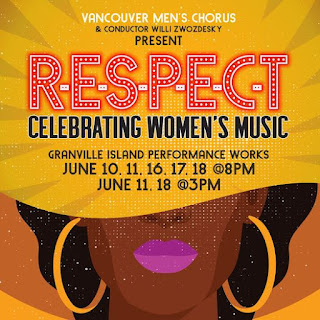
Vancouver Men’s Chorus recently finished a successful series of concerts titled “R-E-S-P-E-C-T:  Celebrating Women’s Music.” It was the chorus’ first return to our cozy cabaret space on Granville Island since coronavirus silenced every choir. VMC and our audience were overjoyed to be together again. 


Gay Olympians Gus Kenworthy and Adam Rippon

Like selecting a team of Olympic athletes, VMC chooses our repertoire through a labouriously competitive yet collaborative process. Under the direction of our elected Board of Directors, the “Concert Planning Committee” confirms the performance schedule and selects each concert’s overall theme. The “Music Selection Committee” generates an exhaustive list of potential songs, artists, and sub-themes. Then the Section Representatives and other volunteers on the Music Selection Committee gather for a series of wine-infused meetings where they haggle over their favourites. Lucky songs on the bubble end up in one of VMC’s celebrated medleys.


Our incomparable conductor Willi Zwozdesky founded VMC forty-one years ago. Willi quietly nudges the entire music selection process forward, then works with our stable of arrangers to create a program of mostly bespoke songs, each written for VMC’s voices. Talented choreographers and dancers from the chorus add pizzazz. Ultimately Willi shapes all this material into an entertaining and powerful concert.  


Willi has always endeavoured to include women’s voices as part of VMC’s mission. Nevertheless, an entire concert with the theme of “Celebrating Women’s Music” presented unique challenges for a bunch of gay men. 


The original music selection process for “R-E-S-P-E-C-T” occurred more than three years ago, just before I became a fulltime single parent. As it happened, this was the only time during my tenure with VMC when my complicated personal schedule permitted me to attend meetings of the Music Selection Committee. Even though none of my suggestions made it into the show, I was fascinated by the collaborative process. (Because we were in Canada, the process was pronounced “PRO-sess,” not “PRAH-sess.”)


We barely began rehearsing the music the Music Selection Committee chose for “R-E-S-P-E-C-T” before Covid arrived in March 2020. During the pandemic we gathered remotely on Zoom, and created a couple of one-off video concerts. It wasn’t the same and it wasn’t enough.


Meanwhile, delaying performances of “R-E-S-P-E-C-T” until 2022 gave our arrangers extra time to finish medleys with titles like “Girl Groups,” “He Had It Coming,” “Great Shoes,” and “The Empowerment Medley.” During the pandemic, VMC President Yogi Omar discovered Rina Sawayama’s song “Chosen Family” and championed its inclusion in “R-E-S-P-E-C-T.” “Chosen Family” became the emotional heart of the concert.


An evening of gay men singing songs by and about women requires a little extra context. Willi therefore asked for volunteers to introduce several of the numbers with personal stories about their connection to the songs. I was one of three singers who introduced “Chosen Families” at our performances over the first two weeks in June.


Paul told about how he and his husband Gerry moved to Vancouver from the U.K. and found a home with the chorus. Two years ago, Gerry died of cancer in Paul’s arms, surrounded by friends from VMC. Yogi’s story is about how he came from Indonesia to Vancouver at age 18 knowing only two words in English. His biological family had given him two months to choose between “stop being gay” and leaving the country. Now Yogi is a pillar of the arts and queer communities, and President of VMC. 


I introduced “Chosen Family” at three of VMC’s performances of “R-E-S-P-E-C-T.” Rather than use notes, I spoke directly to the audience as if it were a stand-up set. At our first Saturday matinee, I told the story of becoming an adoptive father, then a single father, then a PFLAG father. My speech was a success by the most important measures:  I made it to the end without a PTSD meltdown, and numerous people said “I never knew you were so funny, but I hate you for making me cry.” 


One of the soloists complimented me after my presentation at the matinee. “But could you make it a little longer at the show tonight?” He explained that his partner is one of the dancers, and they needed a little more time for his costume change before they sang “Chosen Family.” 


While preparing for the evening performance, I wondered what else to say. I jealously admired Paul’s remarks on opening night, because in addition to telling the story of Gerry’s death and the loss of their “romantic” family, Paul also drew an elegant parallel between the support of his “chosen” and “biological” families. I was already covering “chosen” and “adoptive.” Wouldn’t it be cool if I added “biological” too – like landing a triple axel? 


As I wrote in “True Story,” I looked down and saw my rainbow “PFLAG LOVES YOU” wristband. I’m not just a PFLAG father, I’m a PFLAG son, too. So I decided to acknowledge my mother by telling the story of how I got my wristband. 


When I added a few sentences about my PFLAG mother to my original stand-up script, the evening audience saw me losing my balance. We all paused for a moment. But I wasn’t scared, because I felt the support of everyone around me. I made it to the end with only a bit of a stammer. It was like pulling off a triple axel but with a little too much spin, and not quite sticking the landing.


Before it was my turn to speak again the following week, I had time to revise the story of being blessed with the best chosen/adopted/biological family ever. Here’s the final version, which the VMC audience heard the third and last time I introduced “Chosen Family”:


When I was a kid, one of my friends was teased about being adopted. I remember her telling the bully “Your parents had to take you, but my parents chose me.” 


Thirty years later, my partner and I had the opportunity to adopt a baby girl, who we named Eleanor. Next we adopted Rosalind and then Oliver from the foster system. My daughters are now 17, and my son is 13. Several years ago my ex disappeared from the picture. So I’m a single parent raising three kids alone.


My children are the best thing that ever happened to me. But as the saying goes, It Gets Better.


During middle school, my daughter Rosalind came out to me in a text. Actually two texts. The first said “Papa, just letting you know I've been going to the Queer Student Alliance after school.” Her second text said “Don't make a big deal about it.”


This month is Pride. One morning last week my daughters and I went into Starbucks on the way to school. Rosalind slipped this rainbow wristband on me. It says “PFLAG LOVES YOU.” “PFLAG” stands for “Parents & Friends of Lesbians and Gays.” They’d left a bunch of these wristbands at Starbucks in a rainbow-trimmed basket for Pride. 


In contrast with my daughter Rosalind, I was a late bloomer in every possible way. I was twenty-three before I kissed a girl, twenty-six before I kissed a boy, and thirty-one before I came out to my parents, rather than 13 like Rosalind. 


Actually I attempted to come out when I was thirty, and my first boyfriend moved in with me.  The next time my parents visited the apartment in Seattle, they saw that I’d moved my bed to the larger bedroom where my roommate used to be. When we got to my old bedroom there was just a desk. My father asked, “Where does Josh sleep?” I swear I started to say, “With me, of course,” but my mother interrupted me to say “Look, the futon folds down.”


A year later, we finally had “the talk.” I drove up to see my parents in Bellingham, where they’ve lived in the same house for the last 40 years. I told them I was gay, that Josh was my boyfriend, and I’d quit my miserable corporate lawyer job in Seattle so I could move to Chicago  and be professional homosexual. I became a gay rights lawyer with the American Civil Liberties Union. 


I had five amazing years in Chicago with the ACLU (and a couple of okay years with my first boyfriend). Meanwhile, back in Bellingham, my mother joined the board of our local PFLAG chapter. She served for the next twenty-five years. She sewed the fifty-foot rainbow flag they carry in the Pride Parade. As I told Rosalind at Starbucks last week, my mother made the rainbow basket where my daughter found my PFLAG wristband. Even before I adopted my children, I was already blessed with the best family anyone could have chosen.


Last weekend was the high school’s first Prom since Covid. Both of my daughters went. Eleanor looked radiant in a sequined Marilyn Monroe dress next her to cute nerdy boyfriend. Rosalind looked awkward but completely herself in one of my tux jackets. Rosalind and her goth girlfriend rode to the Prom in a lesbian classmate’s car, together with my daughter's gay boi best friend – a classic skinny twink, with Timothée Chalamet hair. 


The morning after Prom, I went into Rosalind’s room and found the four of them asleep on her king-sized bed – three lesbians and a twinkie, half naked and all intertwined. It looked like the dancers’ dressing room backstage. 


Our next song is by Rina Sawayama. She’s a young queer singer-songwriter who was born in Japan and raised in Britain. You may have seen the video of her singing a duet with Elton John of this song, which is called “Chosen Family.”


I had to wait and grow up and join a gay chorus before I found my chosen family. As a PFLAG son and father, I’m thrilled my daughter is already finding hers. Please enjoy hearing our chosen family share Rina Sawayama’s message.
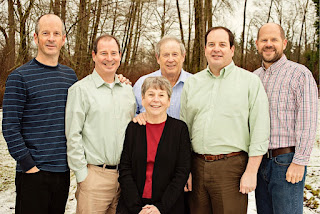


After the evening show, fellow tenor Xavi congratulated me on landing the triple axel. Xavi knew I was going for it because he saw me practicing the night before at PumpJack. (The cute couple on a date at PumpJack also saw me talking to myself, and moved further away from the table with the crazy person.)


When my mother read the final script she complained about my recycling the futon joke. She’s embarrassed she didn’t realize I was gay for so long. I told her I didn’t realize I was gay, either. My father sees people more clearly than the two of us. 


Our incomparable accompanist Stephen Smith reported that he didn’t tear up the third time he heard the story. I confessed I didn’t weep this time either. Adding an extra anecdote provided more of a safety net for my tight wire act. It also sacrificed some of the shared immediacy the audience, chorus, and I felt the first two times I spoke. Every live performance is a unique communal moment. Even with a little more emotional safety net, I could tell the audience was moved.


The next day one of the baritones said my speech made him cry. Hugh hadn’t heard me speak before because he was out of town at a wedding. I told him he would probably have cried even more if he’d been there the week before. Hugh said it was probably for the best – because he had to sing the “Chosen Family” solo right after I spoke. I was so relieved to be finished I didn’t notice it was him singing. 


Elton & Rina singing "Chosen Family"


Tell me your story and I'll tell you mine

I'm all ears, take your time, we got all night

Show me the rivers crossed, the mountains scaled

Show me who made you walk all the way here

     “Chosen Family,” by Rina Sawayama


At the cast party, Willi saluted everyone who contributed to making “R-E-S-P-E-C-T” a smashing post-covid success. He thanked all of us who introduced songs, but told folks we shouldn’t expect another concert with forty minutes of spoken word any time soon. This year, however, our stories were essential. In addition to placing the examples of “women’s music” chosen by the Music Selection Committee in a respectful context, these stories also helped VMC’s fragmented community reconnect after two years of isolation.  


VMC President Yogi underscored what everyone already recognized: the theme of the concert turned out to be our chosen family. The song “Chosen Family” itself came as a powerful quiet moment before our extravagant finale, which was a Lady Gaga/Madonna mashup that involved everyone dancing, even me. “Chosen Family was proceeded by a Girl Group medley that started with the Andrews Sisters. We ended the medley with the dancers strutting to “We Are Family” by Sister Sledge, before segueing to “Wings” by Little Mix:


We don’t let nobody bring us down
No matter what you say, it won’t hurt me
Don’t matter if I fall from the sky
These wings are made to fly.


The audience leapt up for an early standing ovation as they recognized the message of “R-E-S-P-E-C-T”:  Empowerment and Sisterhood.


In our differing introductions to “Chosen Family,” Paul and I added the twists of our “romantic,” “biological,” and “adoptive” families. In contrast, Yogi focused entirely on how his chosen family gave him an incandescent smile – like a figure skater with one amazing move. 


As gay men, it’s not enough to come out of the closet and find our tribe. I hear it’s not even enough to find romantic love. Whether we’ve been out (or married) for months, years, or decades, we also need to find, create, and sustain our chosen families. I was personally blessed with an amazing biological and adoptive family. But I would not have made it safely here without the chosen family I found in Windy City Gay Chorus, Seattle Men’s Chorus, and now Vancouver Men’s Chorus.  
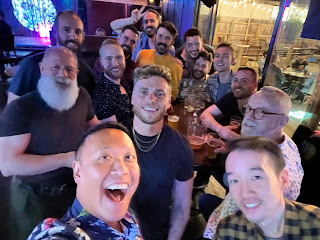

Behind Yogi’s smile: gay Olympian Gus Kenworthy 

joining VMC from across the bar at our cast party


The cast party gave me a rare opportunity for casual socializing. A group of new tenors asked if I planned to move back to Vancouver fulltime after the girls graduate from high school next year. I told them the story of when my children decided they also want to move to Vancouver eventually.


PAPA:             Because I don’t have dual citizenship like my younger brothers, we’ll probably need to find me either a job or a husband in Canada.


ELEANOR:    Hmm. You’d better work on your resume.    


The tenors helpfully began pointing out single guys across the room, and asking whether I think they’re cute. I reminded them I’m still recovering from PTSD and social anxiety, and barely over face blindness. I sheepishly confessed that after six years in VMC, I’ve still never been on a date or kissed anyone I met at chorus, and only seen any of them naked during bawdy skits at Retreat.  


My VMC brothers are so Canadian and nice. They offered to help me finally find my “romantic” family. But you’ll have to wait a while for me to live, then write, “Quadruple Axel.”