Showing posts with label Mormons. Show all posts

Sunday, October 26, 2025

The Best Yale Law School Class Ever

I went to law school to escape from Utah. Killing myself was Plan A. I ended up going with Plan B instead.

I’ve endured anxiety all my life. But on two occasions I also faced suicidal depression. The first time was when I was twenty-two years old and finishing up my English degree at Brigham Young University. I’d entered college in 1981 as a Spencer W. Kimball Scholar, BYU’s most prestigious scholarship. I graduated as the university’s valedictorian. By the summer of 1986, I was worn out from years on the treadmill as the Best Little Mormon Boy in the World. So of course I committed to another crazy year in Utah. I taught freshman English at BYU; performed in multiple shows at the Hale Center Theatre; finished the coursework for a graduate degree in linguistics; and was the founding editor of Student Review, BYU’s longest-running student newspaper. At night I would run for miles, hang with queer street kids, and resist the temptation to drive off an overpass.

I also signed up for the LSAT. I scored in the 99.9th percentile. For no extra fee you could send your score to five schools. I picked Harvard, Yale, Stanford, the University of Chicago, and the University of Washington.

Midway through the year I hit rock bottom. Fortunately, I got help. I had support from friends, family, and sympathetic local Mormon church leaders. Unlike many suicidal queer youth, I found a way out of the darkness.

I needed to leave Utah so I could continue making progress on my mental health. Without suicide as an option, law school was the only escape I could think of. So I compared my acceptance letters.

The University of Washington was my safety school. I enjoyed classes in UW’s English grad program when I moved to Seattle a few years later. But I needed to see more of the world before settling down in the Pacific Northwest.

Stanford looks like a golf course, and triggered my anti-California prejudices. It’s the best law school in the West, but it was time for me to head back East.

Harvard is a great university, and Boston offers more than New Haven. But Harvard Law School was too big, with over 400 students in each entering class rather than 165 students like each of the other schools on my list.

The University of Chicago has a lot of conservative Mormon connections. I had a wonderful experience living in Chicago when I became an LGBT rights lawyer with the ACLU of Illinois several years later. Nevertheless, law school at U of C would have been a grind, and terrible for my mental health. Interesting, my financial aid package at every other school involved graduating with the same $35,000 in student loans. In contrast, the University of Chicago offered me a “merit” scholarship and a full ride. I’m glad I didn’t make a bad decision based on money.

Instead, I ended up choosing Yale Law School. I had pretty good reasons.

First, if you must go to law school, you should go to the best law school you can. Yale has been recognized as the top law school for generations. Privilege has its privileges.

Second, I needed to experience the East Coast. New Haven is a 90 minute train ride away from New York City, which gave me access to Broadway shows, gay bars, and great museums.

Third, Yale Law School doesn’t have grades. Dean Guido Calabresi gave our class a welcoming speech with the title “You’re Off the Treadmill!” The Dean told us “Our goal at Yale is to get 90% of you into the Top 10% of the class.” You can’t tell 165 overachieving nerds to turn off their competitive brains. But you can encourage them to define 165 individual paths to success.

Fourth, in preparing to leave behind the Mormons and Utah, I was looking for a new community that shared my values. Professors like Guido Calibresi inspired me to embrace the legal profession as an instrument of truth and justice. Guido offered an enchanting vision for the law school and its graduates: Excellence and Humanity. Without humanity, a highly skilled lawyer is a menace to society.

Finally, although I was clueless about lawyers and law school, I knew several earnest pre-law students at BYU. My friend Greg was a smart political science major. After touring each Top 20 law school campus, he insisted on wearing his Yale Law School sweatshirt everywhere. Greg said I’d be an idiot to go anywhere else.

Greg didn’t get into Yale. He ended up at University of Chicago instead. When we left BYU, he insisted on giving me his sweatshirt: my first Yale Law School swag.

I bought my son the same classic grey Yale Law School sweatshirt last week at our 35th year reunion.

It was only my second time returning to New Haven. Ten years ago I attended our 25th year reunion, where I heard about the prior reunions. Two stories stood out, both involving the special class-specific slots in the Alumni Weekend schedule. On Saturday evening, members of each reunion class gather for a private cocktail hour and posh dinner. The women and the East Coast men dress up. (Northwestern guys wear jeans.) The Alumni Office staff choose various local restaurants based on anticipated turnout. That year our class dinner was held in a terrible restaurant in the suburbs. My classmates still complain about being stuck on a bus to Hamden. The Class of 1990’s response? Two of our class members infiltrated the Alumni Weekend organizing committee. Last Saturday we dined at New Haven’s finest restaurant.

The Alumni Weekend schedule always includes another class-specific slot, on Saturday afternoon. Most classes meet in an Ivy League courtyard with an open bar, fancy nibbles, and cater-waiters. Some classes plan a group tour to a museum. Others gather for a commemorative photo. This year I saw many alumni on the New Haven Green, which happened to be the location of the local No Kings protest march.

The Class of 1990’s bonding time is identified in the printed schedule as “Two Minute Memoirs.” The venue is always an out-of-the-way classroom in the law school. Several of my classmates told me versions of the same story. It was their first time at Alumni Weekend. They saw the schedule and took a pass. (“Sounded like a tedious corporate ice-breaker.” “I’d never been to the Yale Center for British Art.” “I thought it would just be guys bragging about their careers.” “Who needs a roomful of lawyers?”).

Each truant class member confessed they’d made a terrible mistake and vowed never to repeat it. Hearing my classmates’ memoirs was indeed the highlight of my 25th year reunion weekend. No one wasted their two minutes on resumes. Instead, we heard deeply personal stories about excellence, humanity, and family.

Everyone who ever attends our class reunion raves about the life-altering experience of hearing these extraordinary stories. Like the time in law school when the Rolling Stones secretly played Toad’s, the small nightclub across the street from my dorm room.

This year more than sixty members of our class reunited in New Haven. Other than pathetic outliers like myself, the Class of 1990 is a privileged cohort at the peak of professional success. Yet we convened during a time of existential threat to the rule of law, even as many class members face major life transitions. Everyone talked about what really matters.

The last time I visited Yale was a few weeks before I received my PTSD diagnosis. A decade later, I told my classmates why I’d disappeared.

· The most important thing that happened to me since our last reunion was my ex disappeared and I became a full-time single dad with three teenagers and two dogs. Becoming a father twenty years ago was the best thing that ever happened to me. But becoming a single father thirteen years later gave me the experiences of a lifetime, and left me with the kind of shared memories and relationships with each child that few parents will ever know.

· The second most important thing that happened was getting the right diagnosis, which put me on the path to recovery. I live with complex PTSD symptoms every day. But I am in the best mental and physical health of my life.

· If I had been blessed with supportive co-workers at the State, I could have recovered from complex PTSD in six months. Instead it took more than six years – because my former employer and the state’s lawyers publicly accused me of faking a disability. Gaslighting abuse reinforced the traumatic impact of the Mormon’s refusal to acknowledge LGBT people exist, and triggered my second suicidal episode. Their attacks made me an unemployable pariah in the legal community where I used to be a distinguished bar leader.

· As 2025 began, I still was an unemployed disabled gay single dad, raising three teenagers and living on food stamps. Fortunately, in February I found a position with an online family law firm that has been a good fit for my legal and life experience.

I’m grateful that I can finally support my family while helping ordinary people solve their legal problems. I could also afford to get on a plane for the first time in ten years. Joining the Yale Law School Class of 1990 for our 35th year reunion was an important part of my healing. It reminded me the legal profession can demonstrate both Excellence and Humanity.

Each year the admissions office and the faculty select an extraordinary entering class. Yale Law School cohorts have become increasingly diverse. Many students come from lower socio-economic brackets, but will have their tuition and costs paid in full by generous donors. The law school leadership and the alumni community have invested immense energy and financial resources to ensure that no one misses out on the Yale Law School experience because of money. The largest donation in the history of the law school came from one of my classmates.

Three decades ago, the Class of 1990 was just as diverse as any of the law school’s carefully curated recent classes. Part of that achievement was a fluke of timing and demographics. But the diversity of our class is amplified because everyone is some kind of two-fer or triple threat. For example, it’s no surprise that I got the “Earnest-Mormon-BYU-Valedictorian” slot that’s available most years. But I also ended up contributing to Yale’s diversity as a mental illness survivor, LGBT advocate, showtune enthusiast, Trailer Park Single Dad, and Canadian.

Reconnecting with my classmates reminded me that our time together in New Haven was a transformational opportunity. I lived in the law school all three years. The first year I was a liberal Mormon, and my dormmate was a bright conservative from Texas. He grew up in the same Houston neighborhood as the Bushes, and spent a weekend in New Hampshire volunteering on George H.W. Bush’s primary campaign. The other two years I was a liberal ex-Mormon who had recently tasted coffee and alcohol for the first time. My new roommate was a J.D./English PhD candidate and Martin Luther King’s nephew. He had a vast collection of video-taped movies. There was always a crowd in our living room. Like everywhere else in the law school, the conversation never ended.

The Yale Law conversations continued beyond the walls of the law school. Many of our classmates found housing off-campus. Several groups shared houses near the beach. A posse of bros known as the “Tall Boys” hosted notorious parties – including the first time I tasted tequila, which led to the first time I threw up out of a moving car.

During his Supreme Court confirmation hearing, I kept seeing the same photo of our classmate Brett Kavanaugh that appears in the law school facebook. Brett wasn’t at the reunions. As I wrote in my essay “About My Yale Law School Classmate Brett Kavanaugh,” I realized “he may be the only member of our law school class I never met or interacted with.” Despite his prominence on the Supreme Court, in many ways Justice Kavanaugh is even more of an outlier than me as an exemplar of the Class of 1990.

My previous essay also recognized the diversity of our law school:

Despite its decidedly liberal overall bent, Yale Law School is extraordinarily diverse. (Although there may be an excessive number of Yale College graduates who linger in New Haven, including Brett Kavanaugh, Yale ’87, Law ’90). The rest of my classmates hailed from all over the country and the world, bringing their varied backgrounds and interests to the melting pot. In addition to the occasional pesky law class, you could spend your time with student legal clinics, cutting-edge academic journals, and endless philosophical arguments. My closest friends at law school included evangelical Christians, unreconstructed libertarians, prep-school Republicans, and even bros.

On paper, the diversity of Yale Law School’s carefully groomed recent classes may rival the Class of 1990. But folks who have observed the new Yale students in action say they prefer to talk to their own kind. In contrast, our class’s “endless philosophical arguments” have always been open to everyone. All weekend long at the reunion, I would sit down at a table with classmates I hadn’t seen or thought about in years. We would dive into fascinating conversations with the same old Excellence and Humanity.

At Yale Law School, the Class of 1990 learned to talk with attention and empathy to people who are different from ourselves – an essential gift that is increasingly rare.

My suicidal breakdown at BYU didn’t happen because I was beginning to figure out that I was gay. I hit rock bottom because my disability made me believe I was unworthy of anyone’s respect or love. Despite escaping to Yale Law School, I still had a long way to go.

Now that I’ve made more progress toward mental health, I realize I contributed to the disconnect with Brett Kavanaugh. I probably avoided him in law school. I know I avoided the Tall Boys. They look like the kind of bros I expect to toss me in a garbage can. During the cocktail hour before our fancy dinner, I found myself avoiding the Tall Boys once again, as well as everyone else. The acoustics in the reception room were deafening and triggered my disability. 

Fortunately, listening became easier once we sat down at the dinner tables. The four of us sitting together probably hadn’t seen each other since graduation. Hiram spent the decade since our last reunion as a college president. David, an orthodox Jew, moved his family to Israel fifteen years ago. Paulene never practiced law, instead getting a Ph.D. in Asian literature from Princeton. But she still took the bar exam to please her Chinese mother. As usual with the Class of 1990, the conversation was fascinating, witty, and kind.

When Paulene stepped away from the table, one of the Tall Boys took her chair. He thanked me for sharing my experiences as a disabled single father. During our Two Minute Memoirs that afternoon, this Tall Boy disclosed the most devastating loss in the room: the death of a child. And yet he reached down from the heights to make me feel welcome. Even in a fractured world, it is possible to sustain community by listening to other people with radical empathy.

In former dean Harold Koh’s toast to our class before our delicious dinner, he described some of my classmates’ extraordinary achievements and outsized personalities, including the Tall Boys. After forty years on the faculty, he confessed that he remembers us as his favorite class. But he’s not allowed to admit that the Class of 1990 is the Best Yale Law School Class Ever.


Tuesday, February 11, 2025

Children's Hospital

The first piggy bank I remember was shaped like the old Primary Children’s Hospital in Salt Lake City. “Primary” is the Mormon program for children under age twelve. The LDS church founded Primary Children’s Hospital in 1922. 

When I was a child growing up in Vancouver, we participated in “Pennies By The Inch,” which has been described as “the nation’s oldest grassroots fundraiser.” Each year all the kids in Primary received our own cardboard hospital piggy bank. We were supposed to save enough money by our birthday to donate a penny for each inch of our height. It didn’t seem weird to send pennies a thousand miles away to another country. We knew Children’s Hospital is a special place for kids with special health challenges, wherever they are. 

I never met anyone who was treated at Primary Children’s Hospital. But it felt good to send my pennies to Salt Lake, just in case. As Marlo Thomas says about St. Jude Children’s Research Hospital, “Give thanks for the healthy kids in your life, and give to those who are not.”


As a parent, my faith in Children’s Hospital has grown even more fervent. My first paternal vigil was at Seattle Children’s Hospital in 2005. When Eleanor was a month old, her infant gastric reflux spiked. Whole bottles of formula ended up on her fathers, and she stopped being her happy self. Our pediatrician assured us this was perfectly normal reflux. But it kept getting worse. Eventually we took her to the walk-in clinic. They immediately sent us across town to the emergency room at Seattle Children’s Hospital, where Eleanor was diagnosed with pyloric stenosis.
 
The pylorus muscle connects your stomach to your intestines. Sometimes the valve gets stuck a few weeks after birth. Anything you try to put into the stomach just comes back up. In the old days, infants with pyloric stenosis soon died. Fortunately, surgeons figured out how snip the pylorus and get things flowing again.
 
It took three days before Eleanor was hydrated enough for surgery. My parents came down from Bellingham, and my sainted ex-mother-in-law Judy flew in from Nebraska. Before the surgery, the nice Korean-American surgeon explained to us what was about to happen. Then he and Eleanor disappeared behind the ominous doors, and the rest of us went around to wait on the other side.

An hour later, Eleanor and the surgeon came out through the happy doors, and she began her swift and complete recovery. We went back to another eleven months of ordinary infant reflux and pediatrician visits, never again begrudging the vomit-stained clothes.


My next trip to Seattle Children’s came six years later, and involved mysterious bacterial pneumonia. I drove to the hospital. Eleanor took a helicopter.

Eleanor, Kamryn, and my ex had taken the train home after visiting Judy in the Midwest. After Oliver and I picked them up in Seattle, Eleanor began writhing in pain in the backseat. By the time we got to the Whidbey Island ferry she was burning up. We drove straight to the hospital on the island instead of going home. The doctors pumped Eleanor full of antibiotics, then put her on a helicopter to Seattle Children’s. 

It took a few days in the hospital to bring down Eleanor’s fever. We missed seeing the Broadway tour of “Aladdin.” I gave our tickets to a friend from Seattle Men’s Chorus; he gave Eleanor an oversized Tinker Bell balloon from the hospital gift shop. 


Here’s the key passage from the story of Eleanor’s pyloric stenosis surgery:

“Eventually we took her to the walk-in clinic. They immediately sent us across town to the emergency room at Seattle Children’s Hospital.”

Our upstairs neighbor in Seattle was an ER doctor at Seattle Children’s. When I complained about Eleanor’s melodramatic helicopter ride from Whidbey Island, she said “If you showed up in my Emergency Room with chest pains or a gunshot wound, I’d sent you straight to the grown-up doctors at Harborview.” Likewise, whenever a pediatrician or parent in the Pacific Northwest faces a life-or-death situation, they want their patient at Seattle Children’s.


Last spring my son Oliver started having weird stomach problems. Every four or five weeks he would develop symptoms resembling food poisoning – 24 hours of nausea and vomiting, but without a fever. We talked with our pediatrician and stayed in monitoring mode. 

When Oliver experienced more intense symptoms in November after just a two week break, we skipped school and went to the Urgent Care clinic. The doctor ordered an X-ray and labs. She described some of the potential causes, from stress to cancer to Crohn’s disease. Instead, the nurse called that afternoon to say the X-ray images showed alarming signs of intestinal blockage. CT imaging confirmed Oliver had a bowel obstruction.

The good news is a blocked intestine can be fixed with a one-time surgery. As I learned during Eleanor’s first visit to Seattle Children’s, the bad news is your child will die without surgery. The scary news is emergency abdomen surgery has only a fifty percent survival rate.

If Oliver needed surgery, we wanted it to happen at Seattle Children’s. Our pediatrician and I spent the next few weeks folding bureaucratic red tape into holiday bows. Oliver’s insurance approved a referral to the Seattle Children’s Gastrointestinal Clinic – but the first available appointment was in April. Meanwhile, we watched for a return of Oliver’s symptoms. My friend Dr. Ken did his pediatric residency at Seattle Children’s. When I described the test results, Dr. Ken echoed our local healthcare providers:  “it’s probably not an emergency emergency right now, but if symptoms return or pain he should go to the ER right away!” Not just any Emergency Room – everyone told us we should go directly to the ER at Seattle Children’s if Oliver’s fever spiked. 

Eventually someone looked at Oliver’s X-rays. On Friday, December 6, as I was heading up to Canada for Vancouver Men’s Chorus’s (and Taylor Swift’s) last three concerts, I got a call from Seattle Children’s. The told me Oliver could skip the Gastro Clinic. Instead they scheduled us for a surgery consultation in Seattle on Monday. 

Oliver and I met with Dr. Steven Lee, the Korean-American Chief of Seattle Children’s Surgery Division. Dr. Lee told us Oliver needed surgery as soon as possible. A week later, Seattle Children’s called to tell me Dr. Lee would be performing Oliver’s surgery on December 30. 


After thirty years in gay choirs, a handful of songs inevitably reduce me to tears whenever I try to sing them, such as the coming out anthem “Michael’s Letter to Mama”; the AIDS-era funeral staple “I Shall Miss Loving Him”; and the homesick ballad “Un Canadien Errant.”

This year Vancouver Men’s Chorus closed the first act of our holiday show with a Cher song: “DJ play a Christmas song, I wanna be dancing all night long.” The chorus repeats the words “that’s the only thing I want this year” as if in a trance. When we began rehearsals in September, Cher felt like a total bubble gum number, just like our Dolly Parton encore “Baby I’m Burnin.’” Then I saw Oliver’s x-ray report, and realized my son needed abdominal surgery to save his life. 

Since November, I’ve been unable to sing or hear “DJ Play a Christmas Song” without weeping. I don’t know what Cher is wishing for on the dance floor. But all I wanted for Christmas last year was a surgery appointment at Seattle Children’s. 


Oliver and Papa’s story continues in “Abdomen Whisperer”


Sunday, August 18, 2024

Heaven Together


We chose my daughter Eleanor’s name even before I watched her birth nineteen years ago.


Three and a half years later, I got a call from the State social workers asking if we would take a girl from the foster system who was sixteen days older than Eleanor. We weren’t fond of her birth name, which had already been used by another family member as a boy’s name. Instead we chose “Rosalind,” which I thought was another strong woman’s name.


My son was a year old when he arrived from the foster system. We’d already used our top two boy names (“Graeme” and “Henry”) on failed adoption attempts. This time around “Oliver” was everyone’s second choice. My first pick was “Cameron”; my ex favored “Emerson.” So we put all three names into a hat and let Eleanor draw.


Rosalind came out as queer in middle school. A couple of years ago they identified as nonbinary, so we learned to change pronouns. They said “Rosalind” felt wrong and too girly, but they hadn’t chosen a new name yet. Instead they finished high school with the nickname “Lynn.”


Earlier this year, Lynn came into my room and asked “Papa, how do you feel about the name ‘Emerson’?” (Apparently Lynn didn’t remember Eleanor picking “Oliver” out of the Sorting Hat.)


I smothered a laugh. I told Lynn my ex was fond of “Emerson” because he liked Thoreau, Emerson, and the American transcendentalists. But I’m more of an English-y English Major. Plus I find Emerson too patriarchal. 


Lynn thought for a moment. “How about ‘Cameron’?”


This time I laughed out loud.

I’ve been waiting my whole life for a child named Kamryn. (That’s how they spell their name.)


I was ten or eleven years old when I saw my first musical. It was a touring show at Vancouver’s Queen Elizabeth Theatre called Saturday’s Warrior. After the Broadway successes of Godspell and Jesus Christ Superstar, a group of musicians from Brigham Young University attempted to translate Mormon culture into musical theater. Saturday’s Warrior is about a family resisting worldly temptation and trying to get back to heaven together.


The curtain opens on what Mormons call the “Pre-existence,” the period in our souls’ eternal progression before God created the physical universe. After kicking Lucifer and all the fun angels out of Heaven, our spirits wait around to see who will end up with the hot bodies when we arrive on Earth. Or as the Wikipedia plot summary for Saturday’s Warrior begins: 


While waiting in the pre-mortal Life to be born, a family of eight children promise each other that they will always be there for each other (Pullin' Together). The youngest, Emily, is afraid that when her turn to be born comes around, their parents will be tired of having kids, and she won't be born into their family. The oldest, Jimmy, promises Emily he will personally see to it she will be born into their family. Julie—the second-oldest daughter—and Tod—another spirit in the pre-mortal life—promise each other that, while on earth, they will somehow find each other and get married (Circle of Our Love).


Saturday’s Warrior is Mormon folk art, loosely based in church doctrine but deeply intertwined with Mormon culture. And an intense spiritual experience. Ever since I saw my first musical, I’ve always had the same vision of the family I was supposed to build when I came to Earth:  I’m going to have twins. I’m going to have one of each. The other person has a blur for a face. Vancouver is home.


Five decades later, I sing in Vancouver Men’s Chorus. Bear and I can see Canada on our walks. My parents live across town. I’m a disabled gay single father. And I have the best daughter, son, and child in the world.


After people find out I grew up Mormon, they often ask if I know David Archuleta, the earnest and talented American Idol alumnus and BetterHelp spokesperson. This March, David shared a personal video after releasing his newest single (and showing up online in numerous shirtless photos):


“When I came out I also left my church, and when that was made public I didn’t hear from my mom for a few days,” Archuleta says to his friends in a car in the video he shared. “I thought, oh no, she's probably so upset with me but then she sent me a message saying that she also was stepping away from the church.”


“She’s like, ‘I don't wanna be somewhere where you don't feel welcome and if you'’re going to hell, then we’re going to hell together,’” he continued. “So the song is based off of that and it’s called ‘Hell Together.’”


Although I don’t know David Archuleta, I’ve known a lot of gay Mormon Baby Boomers, and fellow gay Mormon Generation Xers, and gay Mormon Millennials like David. Many endured similar experiences, and some didnt survive. Change will come eventuallyMaybe Gen Z is different. But I don’t need the church to change anything, because our Mormon family has always found a way to support each other. 


My brother Doug died last year from spine cancer. In my eulogy at the Mormon church in Bellingham, “Fathers and Brothers,” I summarized our heritage:


When my sister-in-law posted the announcement on Facebook letting folks know Doug had died, I was moved by the outpouring of comments. Three or four repeated words stood out:  “Nerd.” “Smart.” And “funny.” I realized that’s what the comments would say for all four Leishman brothers.


The other words Doug’s friends repeatedly used to describe him on Facebook were “family” and “father.” Fatherhood is at the center of all my brother’s lives. That is the great gift our parents gave to each of their sons, and now to each of their grandchildren and great-grandchildren.


Church policies and meeting schedules come and go, but the fundamentals are eternal, like the familiar Mormon slogan “Families are forever.” I recognize “forever” is way too long for some families. But not for us.


Tuesday, May 16, 2023

Fathers and Brothers

My brother Doug Leishman died on April 25, 2023 after enduring spine cancer for the last six years. Doug asked that each of his brothers speak at his memorial. This is what I shared at the Mormon church in Bellingham on May 16, 2023.


I’m grateful for this opportunity to meet together as Doug’s family and friends. Gatherings of our extended family always have one very obvious impact on me and many other Leishmans, including Doug. After listening to everyone’s stories, I forget how to pronounce my own last name. It will take several days to switch back from Lishman to Leashman.


Leishman is an ancient Scottish surname. It’s been pronounced the same way for hundreds of years, since before Shakespeare and the King James Bible. But our branch of the family met the Mormon missionaries in Scotland during the 1850s. They sailed across the ocean and walked across the prairie. When they reached Utah, Brigham Young sent them north to settle Wellsville, in Cache Valley. They became a peculiar people, and developed a peculiar dialect. “Roof” became “ruff.” “Creek” became “crick.” And “Leishman” became “Lishman.” That’s how my brothers and I grew up pronouncing our last name.


When I began my professional career, I made a conscious choice to introduce myself as “Roger Leishman.” Just like I don’t say “crick.” But we don’t make a big deal about pronunciation, and respond politely to anyone regardless of how they say our name. Except for “Leischman,” of course.


Like Doug, on days like today we are all “Lishmans.”


When Kyla posted the announcement on Facebook letting folks know Doug had died, I was moved by the outpouring of comments. Three or four repeated words stood out:  “Nerd.” “Smart.” And “funny.” I realized that’s what the comments would say for all four Leishman brothers.


Folks often remark on how much we resemble each other and both our parents, but they struggle to put their finger on the specific similarity. Folks would say we are even more similar in our personalities. Especially my sisters-in-law, and our children.


There are differences. Yes, we’re all nerds, but Doug is the Dungeons & Dragons nerd. We’re all funny – but Doug is the master of sarcasm.


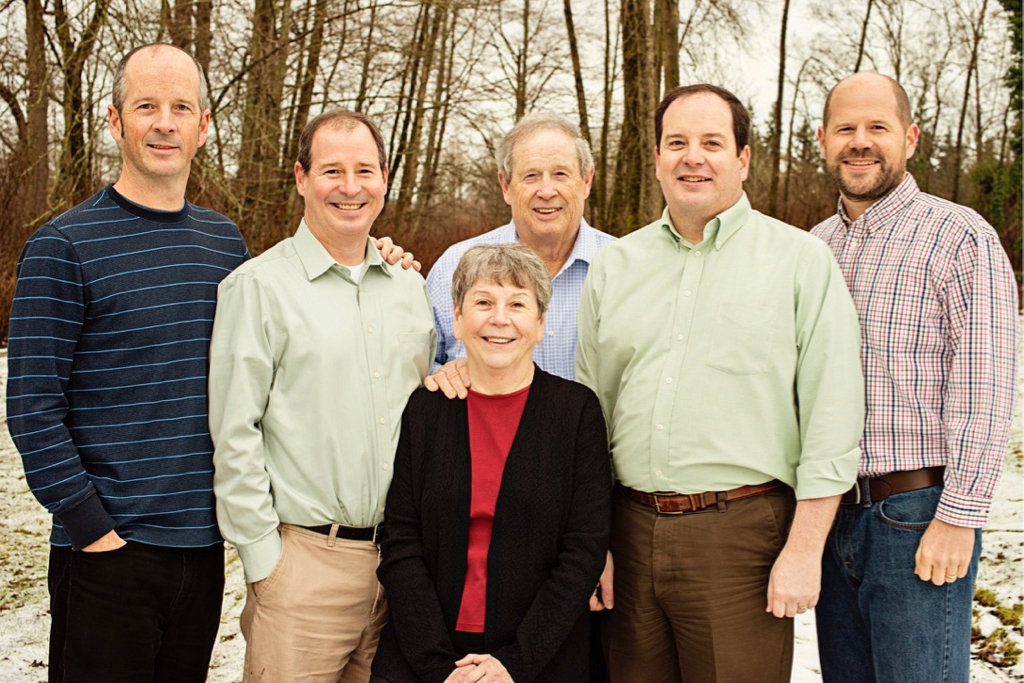
On the wall at my parent’s house there is a framed series of pictures of the four Leishman Brothers. The same series of photos hangs on the wall in my living room. They were taken a few years ago near Lake Whatcom. It was the only time when the brothers, parents, and grandchildren were all in the same place at the same time. So we hired a photographer. 


There are four pictures in this series. In the first picture Roger, Doug, Brian, and Warren are all smiling appropriately for the camera.


In the second picture, Doug has a quiet grin. He is sticking his finger into Warren’s ear.


In the third picture, Warren has his finger in my ear, and everyone is grinning.


In the fourth picture, the brothers have all burst into laughter. 


If you look close, you can see differences between the Leishman Brothers. Warren went bald early. I’ll always be the oldest, and the gay one. And as Brian is quick to point out, he is the tallest brother.


A couple of months ago, I had the opportunity to drive to Kamloops with my parents. Doug looked about the same as the last time I’d visited:  lying in a hospital bed on his stomach in the corner of the living room, surrounded by his children and grandchildren. Before we drove back to Bellingham, I reached in for a goodbye hug. I was struck by how thick and curly Doug’s hair had gotten. And still so dark. 


Technically, I am now the least bald Leishman brother, and Warren is the least grey. But I think we should retire the hair titles with Doug as champion.


Gatherings like this are important because we can help each other remember the real Doug.


I often find it a challenge to recall stories from the past without a picture or something to remind me. Faces are especially hard. Last month when my parents called to let me know Doug had died, I lay in bed weeping because I couldn’t remember what Doug looked like before cancer.


Doug spent the last few years of his life being seen from a strange angle. Spine cancer prevented him from walking or lying on his back, so we only saw him lying on his stomach. That’s how I noticed his dark curly hair.


I knew if I got out of bed and walk into the living room, the pictures on the wall would help me remember laughing together with Doug. But I wanted to conjure the memories on my own. Eventually I was blessed to remember two images of the real Doug.


The first memory was from the spine floor at Vancouver General Hospital. A year and a half ago, Doug was paralyzed by a new tumor in his neck. He was airlifted from Kamloops to Vancouver, where two separate teams of surgeons worked from both front and back, removing the cancer and reconstructing his vertebrae. Doug spent the next hundred days at VGH.


I sing in Vancouver Men’s Chorus, which rehearses on Wednesday evenings. Each week I would drive up early and spend time in Doug’s room. He was propped up on his back in a hospital bed. It’s the only time in the last few years when I got to look Doug in the face. It also gave me the opportunity to sit down and spend hours talking with my brother, sometimes with other family and sometimes just the two of us.


We discussed our challenges living with cancer and with PTSD. But mostly I remember sitting together face to face with Doug, and talking about what it means to be a father.


Spine cancer targets the parts of the body that signal pain. In addition to dealing with Doug’s underlying symptoms, his healthcare team always focused on making him comfortable. Greedy pharmaceutical companies and irresponsible doctors have created the terrible opioid epidemic that is ravaging our communities. But modern opioids are also miracle drugs that make it possible to endure to the end.


While Doug was at Vancouver General, three separate teams were responsible for the opioids in his IV drip, his pillbox, and the little pump installed in his chest. I happened to be visiting the hospital when the pain management teams realized not only were they not communicating clearly with each other, but they were using three incompatible measurements to track dosages. One team would give Doug enough medicine for him to sit up all the way for a meal. After a few minutes they would have to crank the bed back down for him to rest, which would react with the medicine from the other teams. Sometimes Doug would overdose. And then they would start over.


While visiting the hospital, I also observed the laborious process of putting Doug in a wheelchair. I listened to presentations about grueling rehabilitation programs at inconveniently located facilities. 


After more than three months at VGH, Doug was finally stable enough to leave the spine floor and return home. When I visited Kamloops with my parents a few months later, there was no sign of the elaborate rehabilitation programs we’d heard about at the hospital. Instead, Doug used every ounce of his energy to spend as much time as possible with his family. His world was tiny:  a bed in a corner of a living room. But Doug’s world was as large as eternity because he was at the center of his family.


As I lay in bed last month grieving, I remembered a second image of Doug, from a couple of summers ago. It was the height of the pandemic. Nothing was harder for our family than the Canadian border being closed for the first time since the War of 1812. Doug was stuck in a bed in Kamloops, and my parents and I were stuck in the States. 


Like everything else, the Mormon temples closed. But by a miraculous convergence of circumstances, Katie and Christian were able to get married in my parents’ backyard in the strangest Mormon wedding ever. I will always remember the last time I ever saw Doug walking:  he staggered down the aisle, holding on to his daughter, the happiest man and the proudest father in the world.


Besides “nerd,” “smart,” and “funny,” the other words Doug’s friends repeatedly used to describe him on Facebook were “family” and “father.” Fatherhood is at the center of all my brother’s lives. That is the great gift our parents and now Doug and Kyla have given to each of the “Lishmans.” 


Church policies and meeting schedules come and go, but the fundamentals are eternal, like the familiar slogan “Families are forever.” I recognize “forever” is way too long for some families. But not for us. 


When I was young, the president of the church was David O. McKay. He delivered a similar message, but with more words in it:  “No other success can compensate for failure in the home.” (It was the Mad Man era – our ad slogans were longer than my kids’ generation, just like our attention spans.)


My brother Doug lived a successful life when it comes to what really matters. I hope we can all remember and be inspired by Doug’s example.


Douglas Todd Leishman
1967-2023


Thursday, September 1, 2022

Relabeling


I met my best friend Paul in 1970 on the first day of Grade 1. Like my best friends in high school, college, and law school, Paul turned out to be gay. (Apparently I’m contagious.) 


Paul also turned out to be mentally ill. After struggling with depression, anxiety, and other challenges, Paul killed himself twenty years ago.


I thought of my friend Paul while reading the first chapter of Stephanie Foo’s recent memoir. A few months before he died, Paul told me he felt betrayed by his healthcare providers. While peeking at his medical charts, he discovered he had Borderline Personality Disorder, a bleak diagnosis that was even bleaker two decades ago. No one bothered to tell Paul, which made it even worse.


In What My Bones Know: A Memoir of Healing from Complex Trauma, Foo writes about growing up in San Jose with dysfunctional immigrant parents who subjected her to relentless physical and emotional abuse before abandoning her as a teenager. Foo escaped to college, found an effective therapist, and went on to a successful career in Bay Area public radio. Eventually Foo moved to New York to work as a producer at This American Life, the granddaddy of podcasts. 


Nevertheless, Foo found herself increasingly frustrated with challenges at work and in her relationships. At age thirty she was still seeing the same therapist, now via Zoom. Eventually she asked “Do you think Im bipolar?”


Samantha actually laughs. “You are not bipolar. I am sure of it.” she says. And that’s when she asks, “Do you want to know your diagnosis?”

I don’t yell, “Lady, I've been seeing you for a fucking decade, yes I want to know my goddamn diagnosis,” because Samantha taught me about appropriate communication. Thanks, Samantha. Instead, I say, “Yes. Of course.”

Something in her jaw becomes determined, and her gaze is direct. “You have complex PTSD from your childhood, and it manifests as persistent depression and anxiety. There’s no way someone with your background couldn’t have it,” she says.

“Oh. Yeah, PTSD.” Post-traumatic stress disorder. I had a crappy childhood, so I kinda figured that.

“Not just PTSD. Complex PTSD. The difference between regular PTSD and complex PTSD is that traditional PTSD is often associated with a moment of trauma. Sufferers of complex PTSD have undergone continual abuse-trauma that has occurred over a long period of time, over the course of years. Child abuse is a common cause of complex PTSD,” she says. Then her eyes drift to the corner of the screen. “Oh—we're out of time! Let’s continue this next week.”


We’ve recognized for millennia that wartime trauma causes a predictable constellation of physical and mental symptoms. In the 4000-year old Epic of Gilgamesh, the warrior-hero experiences intrusive memories and nightmares after witnessing the death of his best friend. Greek historian Herodotus described an Athenian soldier who was stricken with blindness in 490 B.C. when he observed the death of a comrade at the battle of Marathon. After the Civil War, veterans developed “soldier’s heart.” The term “shell shock” first appeared in The Lancet in February 1915, six months after World War I began. 


Seven years ago I moved to Bellingham to accept a position with the Washington Attorney General’s Office as general counsel to Western Washington University. My dream job became a nightmare when I began exhibiting strange new symptoms, including bizarre anxiety tics and skewed personal interactions. I was shocked when my new Bellingham physician, Dr. Heuristic, diagnosed me with PTSD and serious codependency. 


As I told a friend who developed PTSD after serving as an Army Ranger medic in Afghanistan, I was sheepish about sharing the same DSM-5 category with someone like him. He told me not to be concerned, and that soldiers feel lucky they get so many folks’ respect. They worry instead about the many women and children who are scarred by the impact of earlier domestic abuse and do not have access to the help they need.


Or as Stephanie Foo writes:


It is a great, sexist irony that in our society, PTSD is generally considered a male condition. It is the warrior's disease, a blight of the mind that must be earned by time in battle, in some dangerous overseas desert or jungle. But the real statistics suggest the opposite: Women are more than twice as likely to have PTSD than men. Ten percent of women are expected to suffer from PTSD in their lifetimes, as opposed to just 4 percent of men. But even after #Me Too, a global movement to recognize the legitimacy of women's trauma, treatment for this trauma remains a half-assed endeavor, an afterthought in the shadow of the glory of war. And it has always been this way.


Actually, it usually has been even worse. 


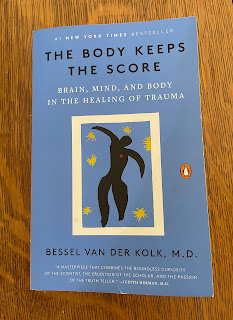
Bessel van der Kolk is one of the world’s leading experts in trauma and its treatment. In his classic book The Body Keeps the Score: Brain, Mind, and Body in the Healing of Trauma, Dr. van der Kolk describes how both sides in World War I mistreated their traumatized soldiers. Depending on the whims of individual doctors, British servicemen originally would either get a diagnosis of “shell shock,” which entitled them to treatment and a disability pension, or “neurasthenia,” which got them nothing. Then in June 1917, the British General Staff issued an order stating “In no circumstances whatever will the expression ‘shell shock’ be used verbally or recorded in any regimental or other casualty report, or any hospital or other medical document.” According to Dr. van der Kolk, “The Germans were even more punitive and treated shell shock as a character defect, which they managed with a variety of painful treatments, including electroshock.” 


During World War II, my grandfather’s generation benefited from more humane leadership and more effective psychiatric treatments. They also had the benefit of fighting and winning a “good war,” followed by the GI Bill and fifty years of peace and prosperity. Meanwhile, individuals and society mostly repressed the lingering impact of wartime trauma. 


In contrast, Vietnam was a “bad” war in every way, which likely amplified its traumatic impact on American veterans. When Dr. van der Kolk began his medical career with the Veterans Administration during the 1970s, he was struck by the fact that all his psychiatric patients were “young, recently discharged Vietnam veterans,” even though the VA hospital was filled with aging WWII vets who were all being treated for purely “medical” complaints:  “My sense was that neither the doctors nor their patients wanted to revisit the war.”


In a sign of the times, the term “Post-Traumatic Stress Disorder” was coined in 1978. The diagnosis was added to the DSM-III in 1980, with criteria that continue to reflect its status as an event-based disorder.


Dr. van der Kolk is the founder of the Trauma Research Foundation and the National Child Traumatic Stress Network. Although his work began with Vietnam veterans, he quickly recognized trauma also affects other vulnerable populations. In particular, “child abuse and neglect is the single most preventable cause of mental illness, the single most common cause of drug and alcohol abuse, and a significant contributor to leading causes of death such as diabetes, heart disease, cancer, stroke, and suicide.”

As the Department of Veteran’s Affairs recognizes, “Many traumatic events (e.g., car accidents, natural disasters, etc.) are of time-limited duration. However, in some cases people experience chronic trauma that continues or repeats for months or years at a time.” In 1988, Dr. Judith Herman proposed a new diagnosis of “complex PTSD.” In addition to the symptoms associated with classic PTSD, complex PTSD includes: 

  • Behavioral difficulties (e.g. impulsivity, aggressiveness, sexual acting out, alcohol/drug misuse and self-destructive behavior) 
  • Emotional difficulties (e.g. affect lability, rage, depression and panic) 
  • Cognitive difficulties (e.g. dissociation and pathological changes in personal identity) 
  • Interpersonal difficulties (e.g. chaotic personal relationships) 
  • Somatization (resulting in many visits to medical practitioners) 

Rather than a single traumatic event, complex PTSD is a consequence of ongoing trauma that occurs over an extended period, such as childhood abuse and neglect, domestic violence, and religious trauma. Because these types of experiences tend to involve betrayals by an individual’s most trusted authority figures, the resulting symptoms focus on impaired interpersonal relationships. Although the DSM-5 does not include diagnoses for complex PTSD or codependency, complex PTSD is already recognized by the Department of Veterans’ Affairs, the World Health Organization, and the British National Health Service.


Here is Stephanie Foo's reaction when she ended the Zoom call with her therapist and found the VA webpage after googling complex PTSD”:


It is not so much a medical document as it is a biography of my life: The difficulty regulating my emotions. The tendency to overshare and trust the wrong people. The dismal self-loathing. The trouble I have maintaining relationships. The unhealthy relationship with my abuser. The tendency to be aggressive but unable to tolerate aggression from others. It’s all true. It’s all me. The more I read, the more every aspect of my personhood is reduced to deep diagnostic flaws. I hadn’t understood how far the disease had spread. How complete its takeover of my identity was. The things I want. The things I love. The way I speak. My passions, my fears, my zits, my eating habits, the amount of whiskey I drink, the way I listen, and the things I see. Everything—everything, all of it—is infected. My trauma is literally pumping through my blood, driving every decision in my brain.


It is this totality that leaves me frantic with grief. For years I’ve labored to build myself a new life, something very different from how I was raised. But now, all of a sudden, every conflict I’ve encountered, every loss, every failure and foible in my life, can be traced back to its root: me. I am far from normal. I am the common denominator in the tragedies of my life. I am a textbook case of mental illness. Well, this explains it all, I think. Of course I’ve been having trouble concentrating on my work. Of course so many people I've loved have left. Of course I was wrong to think I could walk into fancy institutions full of well-bred, well-educated people and succeed. Because the person with C-PTSD, the person who is painted here on the internet, is broken.         


Stephanie Foo’s bleak epiphany comes near the beginning of her story, which is subtitled “A Memoir of Healing from Complex Trauma.” Eventually she recognized her disability had clouded her vision, and learned that healing is “the opposite of the ambiguous dread: fullness.


I am full of anger, pain, peace, love, of horrible shards and exquisite beauty, and the lifelong challenge will be to balance all of those things, while keeping them in the circle. Healing is never final. It is never perfection. But along with the losses are the triumphs. I accept the lifelong battle and its limitations now. Even though I must always carry the weight of grief on my back, I have become strong.


Foo’s “inner narrative” finally changed “from a hateful whip-bearing tyrant to a chill(er) surfer dude. Like love and bankruptcy, it happened slowly, then all at once.”


In many ways my journey through complex trauma and PTSD parallels Foo’s. Both of us escaped from our abusive origins by joining demanding professions – journalism and law – that turned out to be toxic. Yet we both found healing through writing, with the support of true friends and expert healthcare providers. 


Nevertheless, my experience with complex PTSD differs from Foo’s in important respects. Like so many other trauma victims, Foo’s symptoms are rooted in the pattern of abuse she suffered at the hands of her own family. I am an outlier because I was betrayed by a different kind of trusted authority figure – the Mormon priesthood leaders who told me homosexuality was a spiritual disease that could be “cured,” and who continue to deny the humanity and existence of LGBT individuals today. Fortunately, in contrast with most people who struggle with complex PTSD symptoms, I had and have the support of the best family in the world. But I also had the traumatic overlay of coming out of the closet at the height of the AIDS epidemic, when silence and rage both equaled death.


In contrast with Stephanie Foo, no one ever told me “There's no way someone could come from your background and not have complex PTSD.” Who can predict something like that? As every personal or global disaster demonstrates, individual responses to trauma will vary. What I do know is there’s no way someone could come through all this and not be a trauma survivor. If they weren’t survivors, they wouldn't have made it through – as so many of my tribe can attest. Those of us who remain.


My friend Paul’s anger at his healthcare providers probably contributed to his suicidal distress. Stephanie Foo reacted to her belatedly revealed diagnosis not only with rage, but also with resolve:


After I started realizing the magnitude of what having C-PTSD meant, I was livid at Samantha for not telling me about it sooner. This should not have been a secret, I thought. My diagnosis should have been a critical part of the conversation about my mental health this entire time.


So Foo fired her longtime therapist and began treatment with a New York psychiatrist who is one of the world’s experts in complex PTSD.


Why don’t I complain about my doctor’s original label for my disability seven years ago? Because he got it right. As I’ve reported from the beginning, after hearing about my symptoms and my background, Dr. Heuristic diagnosed me with “PTSD and serious codependency.” In addition to referring me to a therapist who specialized in treating PTSD, he also directed me to read Facing Codependency by Pia Mellody, and to attend weekly meetings sponsored by Codependents Anonymous (“CODA”). Because of my doctor’s experience with the recovery community, he recognized I would benefit from CODA’s group therapy model.


As the term is used by CODA, “codependency” refers to a pattern of deeply rooted compulsive behaviors that interfere with individuals’ ability to sustain healthy relationships, maintain functional boundaries, and express their reality appropriately. These are the same symptoms that distinguish complex PTSD from the “classic” PTSD diagnosis in the DSM. At the beginning of each CODA meeting, everyone recites the words “Many of us were raised in families where addictions existed - some of us were not.” I’m one of the “some of us.” It turns out being gay among the Mormons can be more harmful than growing up in a saloon.


Paul and Roger in Grade 4


Labels are not the patient. 


This year I’ve been reading through all of Oliver Sacks’ books. Dr. Sacks, a distinguished neurologist who died in 2015, was an extraordinary observer of the great diversity in human thinking. Most recently I finished his classic The Man Who Mistook His Wife for a Hat, a fascinating collection of case studies. In the introduction, Dr. Sacks writes that when he was a young medical student 


it was the patients I saw, their predicaments and their stories, that gripped my imagination, and these experiences imprinted themselves upon me indelibly. Lectures and textbooks, abstracted from living experience, left almost no impression. I was, however, strongly drawn to the case histories that abounded in the nineteenth-century medical literature-rich, detailed descriptions of patients with neurological or psychiatric problems. It is only by accumulating case histories of people with similar syndromes, comparing and contrasting them, that one can more fully understand the mechanisms involved and their resonances for an individual life….  With the rise of neuroscience and all its wonders, it is even more important now to preserve the personal narrative, to see every patient as a unique being with his own history and strategies for adapting and surviving. 


Since moving to Bellingham, my family has been blessed with exceptional caregivers. In particular, my physician has guided my recovery with insight and compassion. He immediately figured out my weird symptoms added up to Post-Traumatic Stress Disorder and codependency. He correctly diagnosed my tennis elbow and plantar fasciitis. He’s much nicer than Dr. House, the abrasive but insightful head of TV’s fictional “Department of Diagnostic Medicine.” He doesn’t laugh at my jokes about suing people for malpractice, but doctors never do. 


I originally gave my doctor his nickname because a “heuristic” is a simple procedure that our brains use to find quick answers to difficult questions. An expert’s various heuristics add up to an effective algorithm. Eventually I figured out my doctor’s heuristic for me. Whenever I show up with some new complaint, he will generally select from a repertoire of three standard responses:

  1. It's just another typical PTSD symptom.
  2. It’s a common side effect of my medications.
  3. It’s what happens when we get older. (He calls these “barnacles.”)

Nevertheless, Dr. Heuristic isn’t trapped by diagnostic categories. He sees each patient as an individual. He’s the opposite of the lawyers that surround me, who are blinded by confirmation bias, and so in love with the sound of their own voices that they cannot hear my scratchy lament. Because my doctor pays attention, he can help his patients find the answers they need. Rather than “Dr. Heuristic,” perhaps a better label for my insightful physician would be “Dr. Epiphany.”