Showing posts with label Jewish. Show all posts

Sunday, October 26, 2025

The Best Yale Law School Class Ever

I went to law school to escape from Utah. Killing myself was Plan A. I ended up going with Plan B instead.

I’ve endured anxiety all my life. But on two occasions I also faced suicidal depression. The first time was when I was twenty-two years old and finishing up my English degree at Brigham Young University. I’d entered college in 1981 as a Spencer W. Kimball Scholar, BYU’s most prestigious scholarship. I graduated as the university’s valedictorian. By the summer of 1986, I was worn out from years on the treadmill as the Best Little Mormon Boy in the World. So of course I committed to another crazy year in Utah. I taught freshman English at BYU; performed in multiple shows at the Hale Center Theatre; finished the coursework for a graduate degree in linguistics; and was the founding editor of Student Review, BYU’s longest-running student newspaper. At night I would run for miles, hang with queer street kids, and resist the temptation to drive off an overpass.

I also signed up for the LSAT. I scored in the 99.9th percentile. For no extra fee you could send your score to five schools. I picked Harvard, Yale, Stanford, the University of Chicago, and the University of Washington.

Midway through the year I hit rock bottom. Fortunately, I got help. I had support from friends, family, and sympathetic local Mormon church leaders. Unlike many suicidal queer youth, I found a way out of the darkness.

I needed to leave Utah so I could continue making progress on my mental health. Without suicide as an option, law school was the only escape I could think of. So I compared my acceptance letters.

The University of Washington was my safety school. I enjoyed classes in UW’s English grad program when I moved to Seattle a few years later. But I needed to see more of the world before settling down in the Pacific Northwest.

Stanford looks like a golf course, and triggered my anti-California prejudices. It’s the best law school in the West, but it was time for me to head back East.

Harvard is a great university, and Boston offers more than New Haven. But Harvard Law School was too big, with over 400 students in each entering class rather than 165 students like each of the other schools on my list.

The University of Chicago has a lot of conservative Mormon connections. I had a wonderful experience living in Chicago when I became an LGBT rights lawyer with the ACLU of Illinois several years later. Nevertheless, law school at U of C would have been a grind, and terrible for my mental health. Interesting, my financial aid package at every other school involved graduating with the same $35,000 in student loans. In contrast, the University of Chicago offered me a “merit” scholarship and a full ride. I’m glad I didn’t make a bad decision based on money.

Instead, I ended up choosing Yale Law School. I had pretty good reasons.

First, if you must go to law school, you should go to the best law school you can. Yale has been recognized as the top law school for generations. Privilege has its privileges.

Second, I needed to experience the East Coast. New Haven is a 90 minute train ride away from New York City, which gave me access to Broadway shows, gay bars, and great museums.

Third, Yale Law School doesn’t have grades. Dean Guido Calabresi gave our class a welcoming speech with the title “You’re Off the Treadmill!” The Dean told us “Our goal at Yale is to get 90% of you into the Top 10% of the class.” You can’t tell 165 overachieving nerds to turn off their competitive brains. But you can encourage them to define 165 individual paths to success.

Fourth, in preparing to leave behind the Mormons and Utah, I was looking for a new community that shared my values. Professors like Guido Calibresi inspired me to embrace the legal profession as an instrument of truth and justice. Guido offered an enchanting vision for the law school and its graduates: Excellence and Humanity. Without humanity, a highly skilled lawyer is a menace to society.

Finally, although I was clueless about lawyers and law school, I knew several earnest pre-law students at BYU. My friend Greg was a smart political science major. After touring each Top 20 law school campus, he insisted on wearing his Yale Law School sweatshirt everywhere. Greg said I’d be an idiot to go anywhere else.

Greg didn’t get into Yale. He ended up at University of Chicago instead. When we left BYU, he insisted on giving me his sweatshirt: my first Yale Law School swag.

I bought my son the same classic grey Yale Law School sweatshirt last week at our 35th year reunion.

It was only my second time returning to New Haven. Ten years ago I attended our 25th year reunion, where I heard about the prior reunions. Two stories stood out, both involving the special class-specific slots in the Alumni Weekend schedule. On Saturday evening, members of each reunion class gather for a private cocktail hour and posh dinner. The women and the East Coast men dress up. (Northwestern guys wear jeans.) The Alumni Office staff choose various local restaurants based on anticipated turnout. That year our class dinner was held in a terrible restaurant in the suburbs. My classmates still complain about being stuck on a bus to Hamden. The Class of 1990’s response? Two of our class members infiltrated the Alumni Weekend organizing committee. Last Saturday we dined at New Haven’s finest restaurant.

The Alumni Weekend schedule always includes another class-specific slot, on Saturday afternoon. Most classes meet in an Ivy League courtyard with an open bar, fancy nibbles, and cater-waiters. Some classes plan a group tour to a museum. Others gather for a commemorative photo. This year I saw many alumni on the New Haven Green, which happened to be the location of the local No Kings protest march.

The Class of 1990’s bonding time is identified in the printed schedule as “Two Minute Memoirs.” The venue is always an out-of-the-way classroom in the law school. Several of my classmates told me versions of the same story. It was their first time at Alumni Weekend. They saw the schedule and took a pass. (“Sounded like a tedious corporate ice-breaker.” “I’d never been to the Yale Center for British Art.” “I thought it would just be guys bragging about their careers.” “Who needs a roomful of lawyers?”).

Each truant class member confessed they’d made a terrible mistake and vowed never to repeat it. Hearing my classmates’ memoirs was indeed the highlight of my 25th year reunion weekend. No one wasted their two minutes on resumes. Instead, we heard deeply personal stories about excellence, humanity, and family.

Everyone who ever attends our class reunion raves about the life-altering experience of hearing these extraordinary stories. Like the time in law school when the Rolling Stones secretly played Toad’s, the small nightclub across the street from my dorm room.

This year more than sixty members of our class reunited in New Haven. Other than pathetic outliers like myself, the Class of 1990 is a privileged cohort at the peak of professional success. Yet we convened during a time of existential threat to the rule of law, even as many class members face major life transitions. Everyone talked about what really matters.

The last time I visited Yale was a few weeks before I received my PTSD diagnosis. A decade later, I told my classmates why I’d disappeared.

· The most important thing that happened to me since our last reunion was my ex disappeared and I became a full-time single dad with three teenagers and two dogs. Becoming a father twenty years ago was the best thing that ever happened to me. But becoming a single father thirteen years later gave me the experiences of a lifetime, and left me with the kind of shared memories and relationships with each child that few parents will ever know.

· The second most important thing that happened was getting the right diagnosis, which put me on the path to recovery. I live with complex PTSD symptoms every day. But I am in the best mental and physical health of my life.

· If I had been blessed with supportive co-workers at the State, I could have recovered from complex PTSD in six months. Instead it took more than six years – because my former employer and the state’s lawyers publicly accused me of faking a disability. Gaslighting abuse reinforced the traumatic impact of the Mormon’s refusal to acknowledge LGBT people exist, and triggered my second suicidal episode. Their attacks made me an unemployable pariah in the legal community where I used to be a distinguished bar leader.

· As 2025 began, I still was an unemployed disabled gay single dad, raising three teenagers and living on food stamps. Fortunately, in February I found a position with an online family law firm that has been a good fit for my legal and life experience.

I’m grateful that I can finally support my family while helping ordinary people solve their legal problems. I could also afford to get on a plane for the first time in ten years. Joining the Yale Law School Class of 1990 for our 35th year reunion was an important part of my healing. It reminded me the legal profession can demonstrate both Excellence and Humanity.

Each year the admissions office and the faculty select an extraordinary entering class. Yale Law School cohorts have become increasingly diverse. Many students come from lower socio-economic brackets, but will have their tuition and costs paid in full by generous donors. The law school leadership and the alumni community have invested immense energy and financial resources to ensure that no one misses out on the Yale Law School experience because of money. The largest donation in the history of the law school came from one of my classmates.

Three decades ago, the Class of 1990 was just as diverse as any of the law school’s carefully curated recent classes. Part of that achievement was a fluke of timing and demographics. But the diversity of our class is amplified because everyone is some kind of two-fer or triple threat. For example, it’s no surprise that I got the “Earnest-Mormon-BYU-Valedictorian” slot that’s available most years. But I also ended up contributing to Yale’s diversity as a mental illness survivor, LGBT advocate, showtune enthusiast, Trailer Park Single Dad, and Canadian.

Reconnecting with my classmates reminded me that our time together in New Haven was a transformational opportunity. I lived in the law school all three years. The first year I was a liberal Mormon, and my dormmate was a bright conservative from Texas. He grew up in the same Houston neighborhood as the Bushes, and spent a weekend in New Hampshire volunteering on George H.W. Bush’s primary campaign. The other two years I was a liberal ex-Mormon who had recently tasted coffee and alcohol for the first time. My new roommate was a J.D./English PhD candidate and Martin Luther King’s nephew. He had a vast collection of video-taped movies. There was always a crowd in our living room. Like everywhere else in the law school, the conversation never ended.

The Yale Law conversations continued beyond the walls of the law school. Many of our classmates found housing off-campus. Several groups shared houses near the beach. A posse of bros known as the “Tall Boys” hosted notorious parties – including the first time I tasted tequila, which led to the first time I threw up out of a moving car.

During his Supreme Court confirmation hearing, I kept seeing the same photo of our classmate Brett Kavanaugh that appears in the law school facebook. Brett wasn’t at the reunions. As I wrote in my essay “About My Yale Law School Classmate Brett Kavanaugh,” I realized “he may be the only member of our law school class I never met or interacted with.” Despite his prominence on the Supreme Court, in many ways Justice Kavanaugh is even more of an outlier than me as an exemplar of the Class of 1990.

My previous essay also recognized the diversity of our law school:

Despite its decidedly liberal overall bent, Yale Law School is extraordinarily diverse. (Although there may be an excessive number of Yale College graduates who linger in New Haven, including Brett Kavanaugh, Yale ’87, Law ’90). The rest of my classmates hailed from all over the country and the world, bringing their varied backgrounds and interests to the melting pot. In addition to the occasional pesky law class, you could spend your time with student legal clinics, cutting-edge academic journals, and endless philosophical arguments. My closest friends at law school included evangelical Christians, unreconstructed libertarians, prep-school Republicans, and even bros.

On paper, the diversity of Yale Law School’s carefully groomed recent classes may rival the Class of 1990. But folks who have observed the new Yale students in action say they prefer to talk to their own kind. In contrast, our class’s “endless philosophical arguments” have always been open to everyone. All weekend long at the reunion, I would sit down at a table with classmates I hadn’t seen or thought about in years. We would dive into fascinating conversations with the same old Excellence and Humanity.

At Yale Law School, the Class of 1990 learned to talk with attention and empathy to people who are different from ourselves – an essential gift that is increasingly rare.

My suicidal breakdown at BYU didn’t happen because I was beginning to figure out that I was gay. I hit rock bottom because my disability made me believe I was unworthy of anyone’s respect or love. Despite escaping to Yale Law School, I still had a long way to go.

Now that I’ve made more progress toward mental health, I realize I contributed to the disconnect with Brett Kavanaugh. I probably avoided him in law school. I know I avoided the Tall Boys. They look like the kind of bros I expect to toss me in a garbage can. During the cocktail hour before our fancy dinner, I found myself avoiding the Tall Boys once again, as well as everyone else. The acoustics in the reception room were deafening and triggered my disability. 

Fortunately, listening became easier once we sat down at the dinner tables. The four of us sitting together probably hadn’t seen each other since graduation. Hiram spent the decade since our last reunion as a college president. David, an orthodox Jew, moved his family to Israel fifteen years ago. Paulene never practiced law, instead getting a Ph.D. in Asian literature from Princeton. But she still took the bar exam to please her Chinese mother. As usual with the Class of 1990, the conversation was fascinating, witty, and kind.

When Paulene stepped away from the table, one of the Tall Boys took her chair. He thanked me for sharing my experiences as a disabled single father. During our Two Minute Memoirs that afternoon, this Tall Boy disclosed the most devastating loss in the room: the death of a child. And yet he reached down from the heights to make me feel welcome. Even in a fractured world, it is possible to sustain community by listening to other people with radical empathy.

In former dean Harold Koh’s toast to our class before our delicious dinner, he described some of my classmates’ extraordinary achievements and outsized personalities, including the Tall Boys. After forty years on the faculty, he confessed that he remembers us as his favorite class. But he’s not allowed to admit that the Class of 1990 is the Best Yale Law School Class Ever.


Thursday, February 22, 2024

Kosher Dogs


I was ten or eleven years old when I saw my first musical. It was a touring show at Vancouver’s Queen Elizabeth Theatre called Saturday’s Warrior. After the Broadway successes of Godspell and Jesus Christ Superstar, a group of musicians from Brigham Young University attempted to translate Mormon culture into musical theater. Saturday’s Warrior is about a family resisting worldly temptation and trying to get back to heaven together.


December 2023 found me back at the Queen E. This time I was onstage at the Vancouver Playhouse in front of sold-out crowds, singing carols together with a hundred of my gay brothers in Vancouver Men’s Chorus. And pretending to be Jewish.


Despite three decades in gay choruses, I’m still too much of an introvert to audition for an actual solo. But I have impeccable comic timing and a freakishly expressive face. Over the last few years I’ve confronted my anxieties by volunteering for micro-solos in VMC’s Christmas show. Each occasion involved a primarily dramatic rather than musical role. It turns out the contemporary choral repertoire includes a striking number of holiday songs where a lonely Jewish singer attempts to sing about dreidels before being shushed by Christian supremacists. Despite my Scottish / Mormon heritage, I keep getting faux typecast as the outnumbered Jewish guy.


For example, the Midwestern a capella group Straight No Chaser has created a raucous polyphonic “Christmas Can-Can.” It’s a cheery race between the chorus, a small ensemble, the orchestra, and the conductor. I signed up to be part of the small group when VMC introduced the song a few years ago. At our first rehearsal we had to assign a handful of short solo lines. “Not gonna do the kick line” went to the Asian bass. Next we needed someone to tell the audience “It’s not fair if you’re Jewish!” Without thinking, I pointed out I can easily play Jewish, and got the part. Afterwards I remembered PTSD was still a whole new adventure for me. There was a significant chance I would freeze when the time came to sing or say my four nebbishy lines. 


Fortunately, my fleeting solo came and went each night without any microphone glitches, wardrobe malfunctions, or PTSD episodes. Unfortunately, hundreds of blue-haired ladies and cute gay guys now labor/labour under the misapprehension that I’m Jewish. 


In subsequent years I’ve been assigned similar roles in other holiday songs. After one performance I got a message from a charming stranger who said the concert was “lovely” and I was “cute.” I hope his mother won’t be disappointed to find out I’m not really Jewish. 


Mark Burnham Photography 


The theme of this year’s VMC holiday show was “Cheers,” which meant lots of drinking songs. One of our recycled numbers was the “Christmas Can-Can.” I signed up to be part of the small ensemble because I’m too lazy to learn the chorus part. I was ready to let someone else take their turn being Jewish. But at the first rehearsal both the conductor and guy directing our ensemble pointed out “Roger already knows the solo.” I took the hint, and enjoyed being part of a revival. One longtime chorus member told me “It feels like Christmas when I hear you being Jewish.” 


However, current events made our repertoire fraught. The festive “Christmas Luau” was pulled after fires devastated Maui. Then war erupted between Israelis and Palestinians. Our perky “Boogie Woogie Hanukkah” number was replaced with a choral anthem in Hebrew. Nevertheless, our conductor chose to keep the “Christmas Can-Can.” He trusted the audience, and had faith in my experience and timing.


Each of my beleaguered Jewish lines gets smiles and laughs if it lands just right. Normally a missed landing wouldn’t be a big deal – there are a lot of other things happening on stage, and twenty other songs in the concert. But with the Holy Land in turmoil, I was terrified I would create an offensive distraction.


Although it stressed me out every night, I safely landed each comic Jewish line. And then I enjoyed the rest of the show.


Mark Burnham Photography

Rehearsals have started for VMC’s next show, which has the theme “Icons.” Our concerts are in June, so we’re still learning new music. In the meantime we’ve been asked to sing three songs at a fundraising gig next month. Two of the songs were part of our set at the Canadian LGBT choral festival in Halifax last May. I was pleased to discover I still have both songs memorized, including a surprising percentage of the choreography to “Don’t Rock the Boat.” 


The third number is an Irish drinking song from our concert in December. Unfortunately, when the conductor waved his baton I suddenly realized I don’t know “Nil Sen La.” 


One of my favorite psychology experiments tested the intelligence of farmers before and after harvest. The researchers found what they called a “scarcity mindset.” Before the harvest, while the farmers were still worrying their crop might fail, they tested an average of thirteen IQ points lower than their intelligence after a successful harvest. Chronic stress “makes you distracted, defensive, less rational, and effectively dumber.”


I have a lifetime of experience as a performer and public speaker. I can handle ordinary stage fright. At our June concert a couple of years ago, I kept my poise while introducing the song “Chosen Family” with a tear-jerking speech about being both a PFLAG son and father. But as a PTSD survivor I’ve learned to recognize the impact of extraordinary triggers and stressors. During our recent concerts, I thought I was phoning in “Nil Sen La” because it’s too high and I was saving my voice. In reality, I was so stressed about the four tiny solo lines coming up right afterwards that I couldn’t remember a word in Gaelic, or even the words “Dum Dee Dum.” Now I’m frantically memorizing “Nil Sen La” in preparation for our gig next month.


Bear and I walk for miles every day along the waterfront. My dog has both an uncanny direction sense and a perfect memory for establishments that offer treats. As I observed in “Fairhaven,” our local gay bar Rumors has the biggest treats, but the kitchen door at Chrysalis Inn has the best:  huge chunks of roast chicken breast diverted from the bourgeoisie’s Caesar salads. Bear will also drag us back to any place that has served him lamb or duck, long after the café itself has been boarded up.


When the Chrysalis Inn is out of chicken they usually substitute cheese. Which is fine – Bear loves dairy. The other day they had alderwood-smoked bacon instead, which looked delicious to me. But Bear is meh about bacon and pork.


I’m not Jewish. But Bear might be.


Tuesday, March 8, 2022

The Best Things That Ever Happened To Me

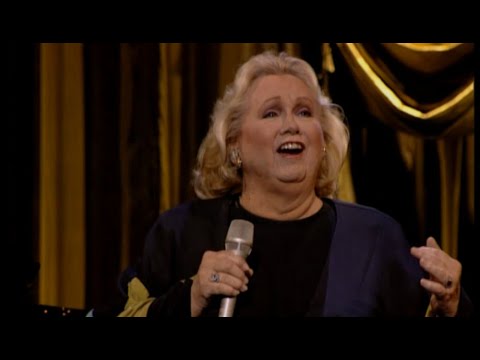
Barbara Cook singing "Anyone Can Whistle" on YouTube

Every musical theatre nerd mourns the loss of Stephen Sondheim, our adoptive artistic father, who died in November 2021 at age 91. I heard the incomparable composer speak a few years ago when I was still a lawyer in Seattle. Frank Rich interviewed Sondheim on the stage at Benaroya Hall in an event presented by Seattle Arts & Lectures. 


The year my mother turned sixty, I bought us tickets to see Barbara Cook perform at Benaroya. She was touring with a concert consisting of music by Sondheim, plus a few other showtunes he told Barbara he “wished he had written.” For her encore, Barbara sang an unadorned arrangement of “Anyone Can Whistle,” accompanied at the piano by her longtime musical director Wally Harper.


Anyone who gets to share Barbara Cook singing “Mostly Sondheim” with his mother is a pretty lucky fella.


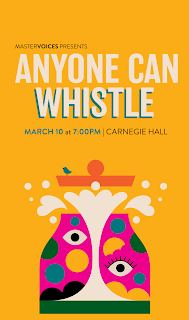
This week’s “Must See” list in New York magazine highlights Thursday’s extraordinary musical event:


In a big Carnegie Hall celebration, MasterVoices honors one of Stephen Sondheim’s earlier, odder cult favorites, a 1964 satire written with Arthur Laurents about fake miracles, asylum patients who take over a town, and a corrupt (or playful?) solution for public health. Revivals of Whistle don’t come along often, but concert productions have kept its weird flame flickering. Vanessa Williams plays Cora, the crooked mayor. 


A young Angela Lansbury was destined for musical theatre immortality after originating the role of the mayoress, even though the original production closed after just nine performances. I’ve never seen Anyone Can Whistle. No one has. But in addition to tackling mental illness, the show introduced Sondheim standards like “There Won’t Be Trumpets,” “I’ve Got You to Lean On,” and “Everybody Says Don’t.”


Obviously I know the original cast album by heart, as well as the recording of the famous AIDS benefit at Carnegie Hall in 1995. Madeleine Kahn played the mayor, Angela Lansbury narrated, and Scott Bakula was mysterious stranger J. Bowden Hapgood. Bernadette Peters played Nurse Fay, who sings the title song.


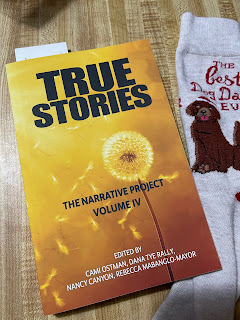
Read “For Good,” my story about the dogs, 

in the recently published anthology True Stories Vol. IV


I’m almost to the end of my first book manuscript, entitled Anyone Can Whistle: A Memoir of Religion, Showtunes, and Mental Illness. I’ll finish writing the memoir as soon as I finish living through this part of my story – hopefully later this year.


A couple of years ago, I went through The Narrative Project’s flagship “Finish Your Book!” writing program. Under Cami Ostman’s expert guidance, I found a writer’s community where I learned to write through and about trauma. The nine-month program offered the perfect opportunity to practice my craft with the support and encouragement of other writers – even as I endured gaslighting lawyers and stonewalling bureaucrats, and single parented three teenagers through a pandemic.


I thought I would finish writing my memoir during the formal The Narrative Project program. Instead, I made immeasurable progress toward mental health and happiness. Meanwhile, after over half a million words of public blog essays and an even greater volume of legal filings and private journaling, Anyone Can Whistle needed to find its own voice and structure as a book. And to lose weight.


So I ruthlessly edited out all the tedious lawyer stuff, exiling it to a future sequel. The title will be Too Many Lawyers, an homage to my favourite mystery novelist Rex Stout, who published “Too Many Witnesses,” “Too Many Cooks,” “Too Many Clients,” and “Too Many Women.” Everything Is Connected became the working title for my research and writing about neuroscience and psychology. It would be my dissertation, if they awarded graduate degrees for reading a lot of interesting books while recovering your mental health. 


As I sit at my desk each morning, I ask myself whether today’s best story will be about a Father, a Writer, or a Lawyer. Readers vote overwhelmingly for “Father.” So as soon as I’m done with my tedious lawsuits and can finish telling my gay Mormon PTSD story in Anyone Can Whistle, I’ll focus on writing about Gay Sitcom Dad.


As I wrote in “Buster,” last month I was one of the writers reading from our recent work at the launch of a new anthology. My contribution to True Stories, “For Good,” comes from the chapter of my memoir where I explain that I’m not really a dog person.


Bear and Buster are purebred Aussiedoodles – one of the most popular of the trendy class of “doodles.” My ex and his husband were friends with a local breeder. I never wanted a dog myself – to the contrary, I was comfortable in my role as the dogs’ fabulous gay uncle. Besides, if I’d chosen a dog, I would have picked what in my day we called a “mutt.”


When my ex and his husband divorced a couple of years later and I ended up with three kids and two dogs fulltime, Bear turned out to be the comfort animal I never knew I needed. Although many of the dogs Bear and I encounter on our walks look like mutts, their owners always refer to them as “rescue dogs.” I feel like a “rescue human.” A rescued human.


Each of the chapter titles in my memoir is the name of a showtune, such as “If You Were Gay,” “Turn It Off,” and “I’d Rather be Sailing.” The title for my dog chapter is from Wicked. I’ve seen Wicked three times: (1) the original production on Broadway with Kristin Chenoweth and Idina Menzel; (2) with my mother for her 70th birthday at a lavish benefit for marriage equality at the Paramount Theater in Seattle; and (3) at the Queen Elizabeth Theatre in Vancouver with my daughter Eleanor for her ninth birthday. It’s hard to pick a favourite performance.


“For Good” comes near the end of Wicked. Elphaba and Glinda sing “I don’t know if I’ve been changed for better, but because I knew you, I have been changed for good.”


Stephen Sondheim won his Pulitzer Prize for Sunday in the Park with George, which is a musical about Children and Art. In addition to his artistic genius, Sondheim was a born teacher who often said his greatest regret was never having children. 


I came to fatherhood unexpectedly and late in life. The President of the Mormon Church when I was born was David O. McKay. President McKay’s famous motto was “No amount of success can compensate for failure in the home.” Growing up as a closeted gay Mormon during that era, I was taught that fatherhood was essential to human happiness – yet impossible for me. 


It Gets Better. I was forty-one years old when I watched my daughter Eleanor being born. We adopted Rosalind three and a half years later, and Oliver the following year. Having children transformed my life.


Every science fiction fan knows there are fixed points that connect the multiverse. The most important moment on my own timeline occurred in Spring 2011, when we salvaged Oliver’s adoption. Since 2011, I have made numerous mistakes I would reverse if I could. I have been beset by plagues I would have avoided with the benefit of Doctor Who’s or the Flash’s time traveling abilities. I would love a do-over of the last few years. 


I also made a lot of mistakes before 2011. I suffered trauma that still haunts me. But I would not change a single moment that led me to my daughter, child, and son.


The first Sondheim show I saw on Broadway was Into the Woods with Bernadette Peters. I also saw his next two Broadway openings, Assassins with Neil Patrick Harris and Passion with Donna Murphy. Sondheim and others describe Passion as his most personal work, because he wrote it after falling in love for the first time in his life.


If I had a favourite song it would be “If Love Were All,” from a forgotten 1928 musical by Noel Coward. Bitter Sweet is about an English maiden who must choose between her stuffy nobleman fiancé and her dashing Austrian music tutor. (Spoiler alert: she runs off with the musician.) The song is actually sung by the musician’s plucky ex-girlfriend – sorta like Eponine pining after Marius in Les Miserables. 


In her classic cabaret album It’s Better with a Band, Barbara Cook sings a lovely version of “If Love Were All.” But the definitive performance is from Judy Garland’s legendary Carnegie Hall concert on April 23, 1963. You can listen to Judy for yourself on YouTube.


If wealth were all, I would be a failure.


If professional success were all, I would be bitter.


If art were all, I would be grateful for my own talent to amuse, and the mental health to finally use it.


If social justice were all, I would be proud of what I’ve accomplished so far.


If romantic love were all, I would be as lonely as Judy Garland sounds on her Carnegie Hall concert album.


But if love is all, then I consider myself to be the luckiest man on the face of this earth.


The chapter of my memoir where I write about gay choruses in general and Vancouver Men’s Chorus in particular is called “The Best Thing that Ever Happened to Me.” Windy City Gay Chorus, Seattle Men’s Chorus, and Vancouver Men’s Chorus represent my tribe at its best. 


“The Best Thing that Ever Happened to Me” is the title of a song from Sondheim’s final Broadway musical. Road Show tells the story of colourful brothers Addison Mizner and Wilson Mizner from the Klondike gold rush through the Florida real estate scams of the 1920s. Addison Mizner and Stephen Sondheim both were gay. Sondheim came from a generation that survived homophobic psychoanalysis, yet continued to take comfort from the closet for decades. The composer worked on this particular show for years as it evolved from Gold! to Wise Guys to Bounce before finally opening as Road Show in 2008. “The Best Thing that Ever Happened to Me” started out being sung by Wilson Mizner and his wife Nellie in Bounce, but ended up as a comic love duet in Road Show between Addison Mizner and his lover Hollis Bessemer. 


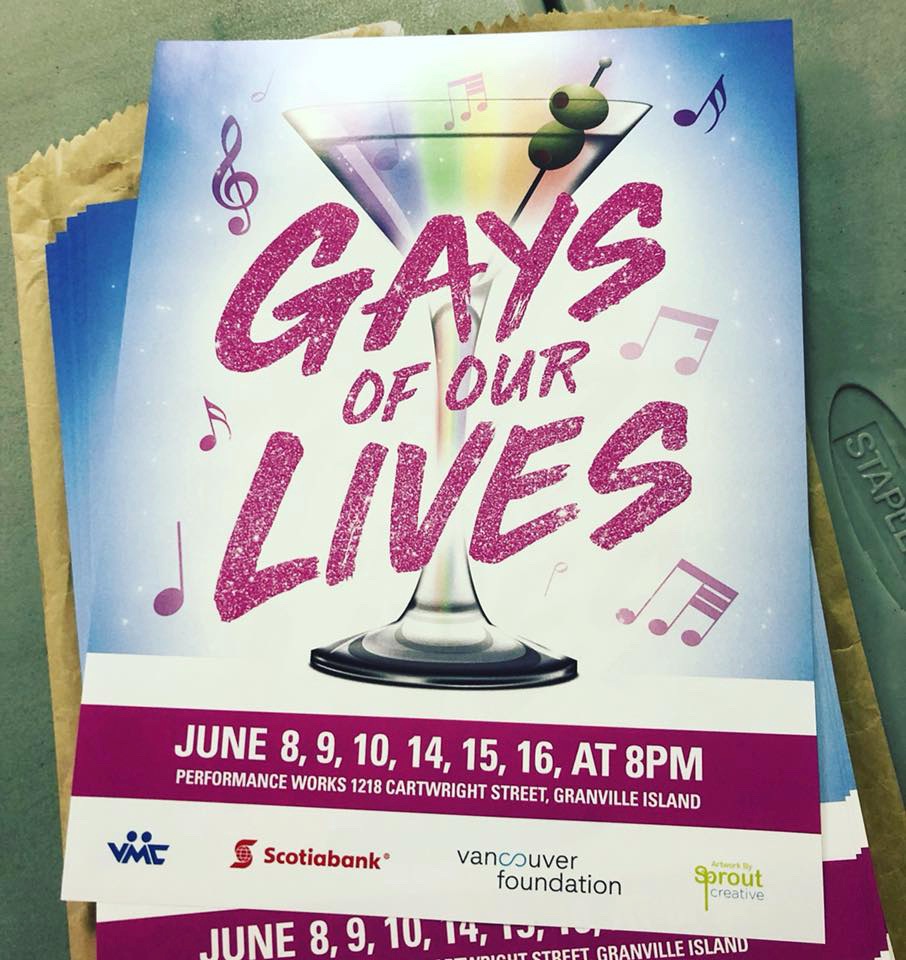
After the Omicron covid variant temporarily shut down choirs once again, Vancouver Men’s Chorus gathered online for Zoom rehearsals and weekly fellowship. In January we watched the video of our 2018 concert “Gays of Our Lives,” which showcased songs from our communal history of activism and anger, pride marches and prejudice, loss and love. Sondheim was represented by “The Best Thing that Ever Happened to Me.”


You can find a recording of the song on YouTube by the actors who played Addison and Hollis in Road Show on Broadway. But my favourite version of “The Best Thing that Ever Happened to Me” will always be the duet between tenor David Browning and baritone Alex Burns, backed up by the rest of Vancouver Men’s Chorus.


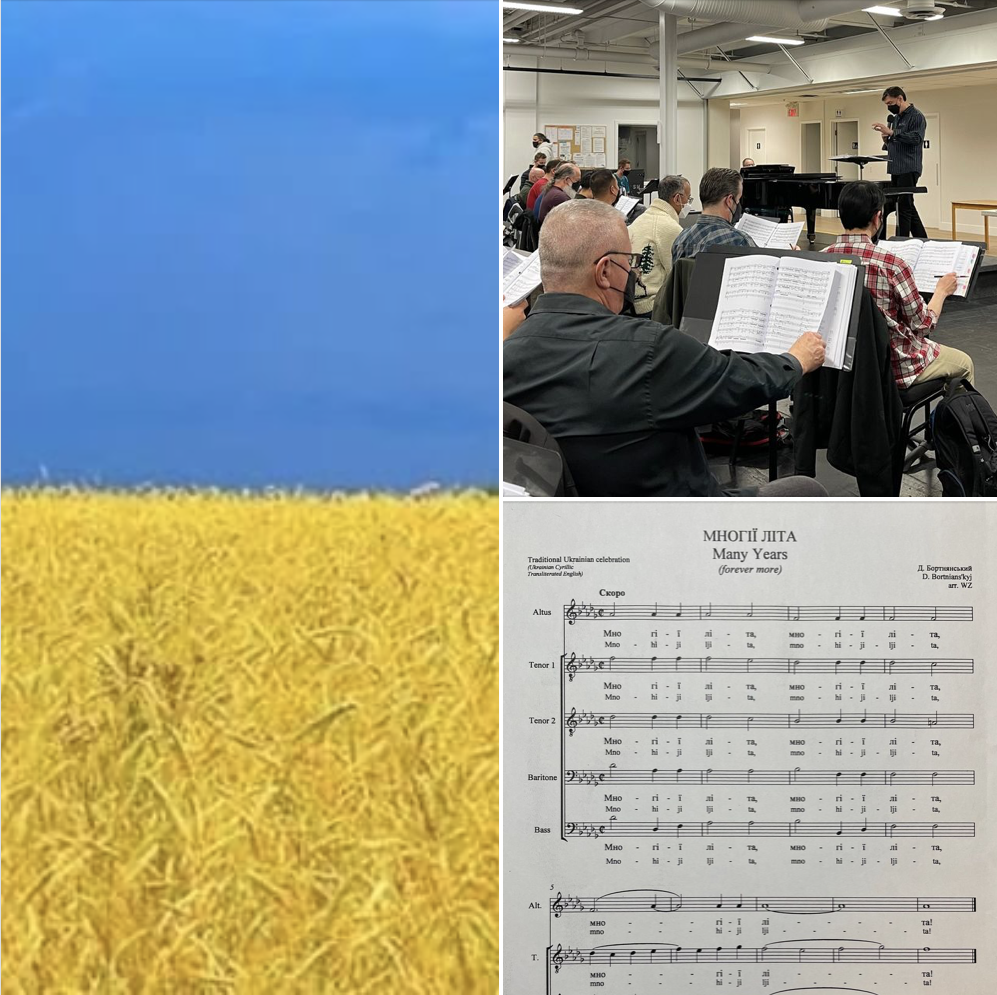
I spent last Wednesday evening with my two favourite Ukrainian-Canadians: my sister-in-law Kyla Moojalwsky Leishman and VMC founder/conductor Willi Zwozdesky. 


I saw Kyla while visiting my brother Doug on the spine floor at Vancouver General Hospital. Then I went to VMC rehearsal, where Willi conducted the entire chorus together in one room and off Zoom for the first time in two years.


Willi grew up singing Ukrainian folk songs among immigrants on the Prairies before founding Canada’s first LGBT choir in 1981. At rehearsal on Wednesday, Willi handed out the sheet music for “Mnohiji Ljita,” which means “Many Years” in Ukrainian. It’s the celebration song Ukrainians sing at birthdays. Willi picked “Mnohiji Ljita” because we only had to learn two words repeated over and over. You sing the song twice at normal speed, then a third time very slowly and dramatically.


Like every other Ukrainian folk song, “Mnohiji Ljita” usually sounds either like Rachmaninov’s Vespers sung by the Yale Slavic Chorus as a soundtrack to the classic Soviet-era silent movie Battleship Potemkin, or like a vodka-infused group of soldiers linking arms in a Kyiv pub. Sung in four-part harmony by 100 voices from a chorus that survived one plague as a band of brothers only to be silenced temporarily by a new pandemic, “Mnohiji Ljita” sounds like Hope.


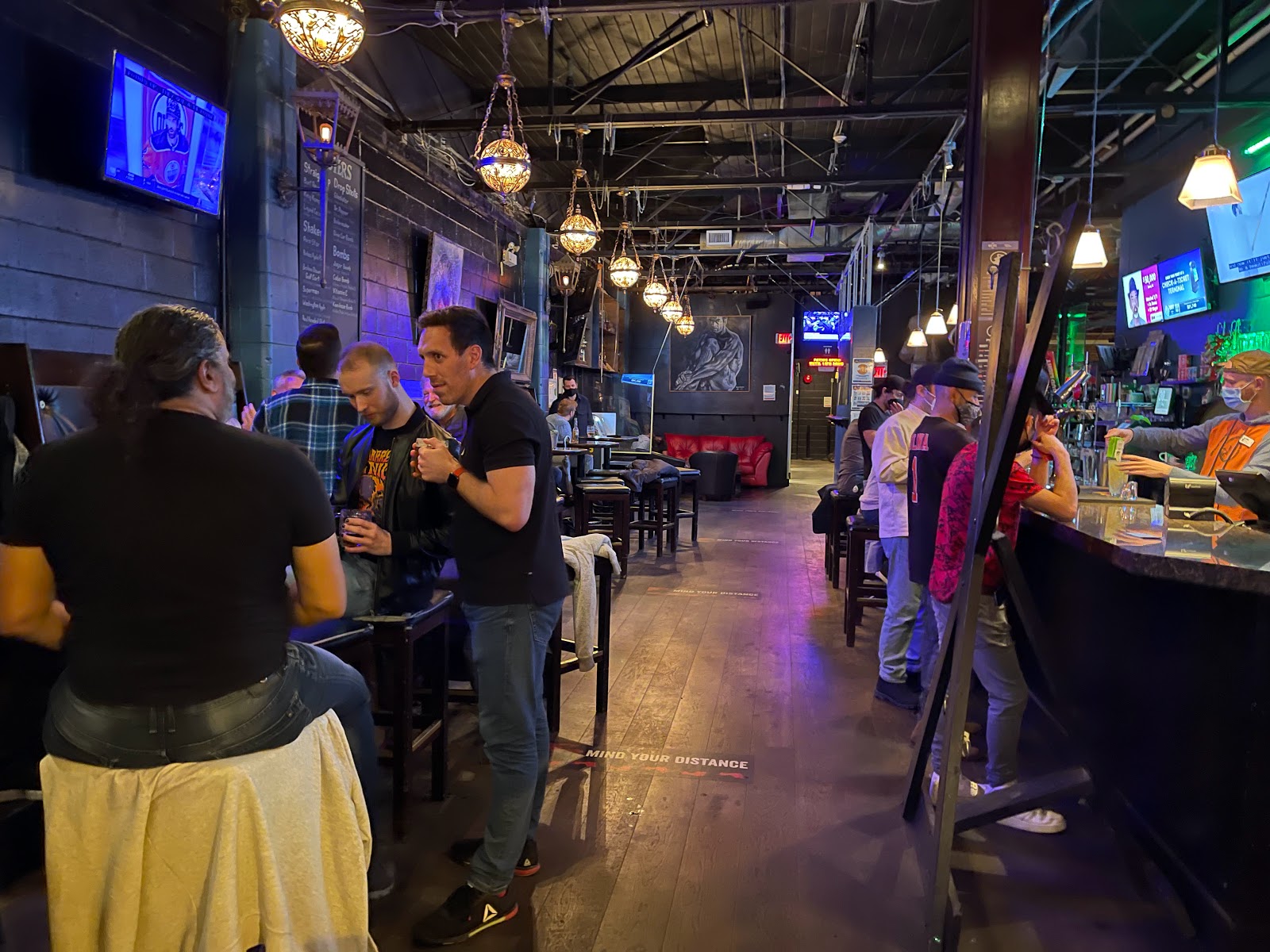
In addition to our first real VMC rehearsal in two years, the recent liberalization of BC’s covid restrictions also meant that after rehearsal a group of us were able to gather for drinks at our longstanding watering hole PumpJack. (Sadly, showtune singalong night remains homeless and on indefinite hiatus.)


While at PumpJack I chatted with Xavi, a fellow Second Tenor who also happens to be a regular reader of my blog. When I asked him which kinds of anecdotes he prefers, Xavi voted for Gay Sitcom Dad. So over a couple of ginger-infused cidres I regaled him with unprintable stories from my less than fabulous life. Before heading for the border, I thanked Xavi and told him I couldn’t remember the last time I had the opportunity to talk to someone who wasn’t named “Leishman” or “Bear.” (Xavi realizes Bear is the name of my dog, not my porn fantasy.)


At rehearsal last week we got copies of the new songs for our June concert that VMC’s stable of arrangers completed during the pandemic. “Chosen Family” is by Rina Sawayama, a Japanese woman who lives in Britain. (Here’s a YouTube link to her singing it as a duet with Elton John.) The lyrics include “We don’t need to be related to relate, we don’t need to share genes or a surname – you are my chosen family.” The best things that ever happened to me are my biological, adoptive, and chosen families. 


Tuesday, May 5, 2020

A New Brain


My daughter Eleanor is my most reliable theatre date, at least since Fred died and Dr. Ken moved to California. Occasionally I invite one of my other children to attend with me instead, but it’s hard to find a play that will capture their screen-addled attention.

Last summer I took Rosalind to Vancouver for an evening of Bard on the Beach. The performance was a charmingly updated version of the timeless comedy As You Like It, with a 1960s setting and the characters all singing Beatles songs. The heroine at the center of As You Like It remains one of the Bard’s greatest creations. According to Harold Bloom, if she “cannot please us, then no one in Shakespeare or elsewhere in literature ever will.”

Nevertheless, Rosalind found the play disturbing. The heroine’s name is Rosalind, and my daughter isn’t used to hearing her name repeated out loud that often. Unless she’s in trouble.

I understand where Rosalind is coming from. Because my ex Jason was born the first year of his name’s decades-long reign at the top of the baby name charts, he went through his school years surrounded by guys with same name. To compensate, we gave each of our children names that were uncommon, classic, but not weird. My own name comes from a similar chapter of the Baby Name book. Like Rosalind, Eleanor, and Oliver, I seldom overhear my name referring to someone else.

Except when I’m introduced to rabid showtune fans. They invariably mimic the recording on the guys’ answering machine in Rent:  “RoGER, this is your moTHER.”


I’ve always relied on lists to manage my confusing thoughts, regardless of whether they involve shopping, legal arguments, or cute guys. 

For example, at the piano bar singalong night in Vancouver each Wednesday, I usually spend the evening noodling over three separate mental lists. The first list involves the evening’s songs. The two piano players, Kerry and Sean, always call for requests. I never comply. Instead, I maintain a secret list of the top three songs I’d like to hear that night. They average getting it right a couple of times a month.

The process of listening to the evening’s songs generates my second list:  which performance of that same song from my four decades of theatre-going would someone else be most impressed by? For example, Sean envies me for seeing the original production of Rent in 1997, but that’s because he thinks one of the actors is hot. 

One night I happened to be sitting next to Kerry’s mum. She swooned over “Losing My Mind.” I told her for my own mother’s 60th birthday I took her to see Barbara Cook in concert. Later I challenged Kerry to top my demonstration of filial piety.

The third mental list rotates each week, although eventually it degenerates from something like “Who would I like to come up and talk to me?” to “Who’s hot?”


With the bars closed, Showtunes Night has moved online. Each Wednesday Kerry and Sean take turns playing from their home pianos, with the regular crowd observing and chatting on Facebook Live.

A couple of weeks ago, Kerry saw one of my chat comments, and invited me to request a song. Here’s my response:

Roger Leishman: Same rule as at PumpJack. You're supposed to read my mind and guess my request.
Roger Leishman: However, my daughter says she can get credit in her Zoom high school drama class if you play something from Wicked, Waitress, or Hairspray.
Roger Leishman: Or Mama Mia.
Roger Leishman: I told her she could have the rest of my drink if you guessed my request instead.


I’ve been going to piano bar singalong after Vancouver Men’s Chorus rehearsal almost every Wednesday for several years. Personally, the most devastating consequence of the coronavirus pandemic has been the closure of the Canadian border.

The last time I enjoyed my fix in person, I closed the bar. (Hush, that only happens half the time.) After 1 am, the regulars are mostly vodka-infused rockers. Usually they prefer Sean’s renditions of AM radio classics from the 80s. 

However, Kerry and I are more the showtune type. In his last set, Kerry observed “This is one of Roger’s favourite songs. And in the show the song comes from, it’s sung by a character named Roger.”


William Finn is my favourite off-Broadway composer. Last weekend I spent my birthday blissfully listening to a playlist of Finn’s songs as I walked, wrote, and parented.  

I realized I’d only seen a couple of Finn’s shows in person. I saw the original Broadway production of The 25th Annual Putnam County Spelling Bee in 2004. And years ago I saw a production of Falsettos, which combines Finn’s first three autobiographical plays into a single madcap story about a gay man organizing his son’s Bar Mitzvah with his ex-wife, his former therapist/ex-wife’s new husband, his HIV-positive on-and-off boyfriend, and the lesbians next door. 

I love the original 1990 cast album from Falsettoland. But I also recommend the film of the 2016 Falsettos revival, which featured the original Elder Price, Andrew Rannells, along with Christian Borle and Stephanie J. Block. Eleanor would recognize Borle as the gay composer in the TV show Smash; I saw him on Broadway as a dissolute Tony-winning William Shakespeare in Something Rotten.

As I sat at the computer listening to my playlist of William Finn songs last week, my non-showtune daughter dreamily wandered through the kitchen. Rosalind paused, then said “Papa, why do I suddenly want to watch Into the Woods?”


The “Roger song” Kerry played during my last Showtunes Night in Canada was “I’d Rather Be Sailing,” from the 1998 musical Finn wrote with James Lapine, A New Brain. The show is loosely based on Finn’s own experience at age forty when he was rushed to the hospital for emergency brain surgery, almost died, and slowly recovered.

The character who is a surrogate for Finn in A New Brain, “Gordon Schwinn,” is a frustrated writer. Gordon composes songs for children’s television host “Mr. Bungee,” but he’s blocked in his efforts to finish both Mr. Bungee’s frog songs and his own creative works. Gordon’s long-suffering boyfriend Roger is the one who loves sailing. 


Last week while surfing Apple Music I realized New York’s Encores! staged concert series produced a revival of A New Brain in 2015. The cast album features Jonathan Groff as Gordon, as well as Ana Gasteyer as his mother and Christian Borle as Mr. Bungee. Unlike the abbreviated original album I already knew by heart, this marvelous new recording contains the full show, including new and extended songs. 

In A New Brain, the experience of going through profound mental failure helps Gordon both to work through his creative block and to revive his relationships with Roger and others in his life. He changes his mindset.

Before his brain surgery, Gordon tries to finish “The Spring Song” and “The Yes Song” for Mr. Bungee. In the familiar original cast album, they’re mostly sung by Mr. Bungee. In the new Encores! recording, Gordon sings both songs first. They’re lovely and affirming – when Jonathan Groff sings them in earnest, not when Christian Borle or Chip Zien sings the same song as a hammy Mr. Bungee. Each of these encouraging songs eventually resonates with the musical’s happy ending, including Gordon’s reprise of “I’d Rather Be Sailing.”

My epiphany from listening to the expanded score of A New Born (other than the fact that Jonathan Groff is much more appealing than Malcolm Gets): even before he got his new brain, Gordon was on the right track. 


More Showtune Night Stories:


"Missing Marie's Crisis" (5/6/17)

"Get Out and Stay Out" (10/18/17)

"Six Degrees of Kristin Chenoweth" (10/31/18)

"Comfort Animals" (4/24/19)

"I am Third" (5/29/19)

"Spongeworthy" (6/13/19)

"Maybe I Love Showtunes Too Much"  (9/17/19)

"Artificial Emotional Intelligence" (2/25/20)

"Do Gay Androids Dream of Electric Brunch?" (2/26/20)