Showing posts with label Justice. Show all posts

Sunday, October 26, 2025

The Best Yale Law School Class Ever

I went to law school to escape from Utah. Killing myself was Plan A. I ended up going with Plan B instead.

I’ve endured anxiety all my life. But on two occasions I also faced suicidal depression. The first time was when I was twenty-two years old and finishing up my English degree at Brigham Young University. I’d entered college in 1981 as a Spencer W. Kimball Scholar, BYU’s most prestigious scholarship. I graduated as the university’s valedictorian. By the summer of 1986, I was worn out from years on the treadmill as the Best Little Mormon Boy in the World. So of course I committed to another crazy year in Utah. I taught freshman English at BYU; performed in multiple shows at the Hale Center Theatre; finished the coursework for a graduate degree in linguistics; and was the founding editor of Student Review, BYU’s longest-running student newspaper. At night I would run for miles, hang with queer street kids, and resist the temptation to drive off an overpass.

I also signed up for the LSAT. I scored in the 99.9th percentile. For no extra fee you could send your score to five schools. I picked Harvard, Yale, Stanford, the University of Chicago, and the University of Washington.

Midway through the year I hit rock bottom. Fortunately, I got help. I had support from friends, family, and sympathetic local Mormon church leaders. Unlike many suicidal queer youth, I found a way out of the darkness.

I needed to leave Utah so I could continue making progress on my mental health. Without suicide as an option, law school was the only escape I could think of. So I compared my acceptance letters.

The University of Washington was my safety school. I enjoyed classes in UW’s English grad program when I moved to Seattle a few years later. But I needed to see more of the world before settling down in the Pacific Northwest.

Stanford looks like a golf course, and triggered my anti-California prejudices. It’s the best law school in the West, but it was time for me to head back East.

Harvard is a great university, and Boston offers more than New Haven. But Harvard Law School was too big, with over 400 students in each entering class rather than 165 students like each of the other schools on my list.

The University of Chicago has a lot of conservative Mormon connections. I had a wonderful experience living in Chicago when I became an LGBT rights lawyer with the ACLU of Illinois several years later. Nevertheless, law school at U of C would have been a grind, and terrible for my mental health. Interesting, my financial aid package at every other school involved graduating with the same $35,000 in student loans. In contrast, the University of Chicago offered me a “merit” scholarship and a full ride. I’m glad I didn’t make a bad decision based on money.

Instead, I ended up choosing Yale Law School. I had pretty good reasons.

First, if you must go to law school, you should go to the best law school you can. Yale has been recognized as the top law school for generations. Privilege has its privileges.

Second, I needed to experience the East Coast. New Haven is a 90 minute train ride away from New York City, which gave me access to Broadway shows, gay bars, and great museums.

Third, Yale Law School doesn’t have grades. Dean Guido Calabresi gave our class a welcoming speech with the title “You’re Off the Treadmill!” The Dean told us “Our goal at Yale is to get 90% of you into the Top 10% of the class.” You can’t tell 165 overachieving nerds to turn off their competitive brains. But you can encourage them to define 165 individual paths to success.

Fourth, in preparing to leave behind the Mormons and Utah, I was looking for a new community that shared my values. Professors like Guido Calibresi inspired me to embrace the legal profession as an instrument of truth and justice. Guido offered an enchanting vision for the law school and its graduates: Excellence and Humanity. Without humanity, a highly skilled lawyer is a menace to society.

Finally, although I was clueless about lawyers and law school, I knew several earnest pre-law students at BYU. My friend Greg was a smart political science major. After touring each Top 20 law school campus, he insisted on wearing his Yale Law School sweatshirt everywhere. Greg said I’d be an idiot to go anywhere else.

Greg didn’t get into Yale. He ended up at University of Chicago instead. When we left BYU, he insisted on giving me his sweatshirt: my first Yale Law School swag.

I bought my son the same classic grey Yale Law School sweatshirt last week at our 35th year reunion.

It was only my second time returning to New Haven. Ten years ago I attended our 25th year reunion, where I heard about the prior reunions. Two stories stood out, both involving the special class-specific slots in the Alumni Weekend schedule. On Saturday evening, members of each reunion class gather for a private cocktail hour and posh dinner. The women and the East Coast men dress up. (Northwestern guys wear jeans.) The Alumni Office staff choose various local restaurants based on anticipated turnout. That year our class dinner was held in a terrible restaurant in the suburbs. My classmates still complain about being stuck on a bus to Hamden. The Class of 1990’s response? Two of our class members infiltrated the Alumni Weekend organizing committee. Last Saturday we dined at New Haven’s finest restaurant.

The Alumni Weekend schedule always includes another class-specific slot, on Saturday afternoon. Most classes meet in an Ivy League courtyard with an open bar, fancy nibbles, and cater-waiters. Some classes plan a group tour to a museum. Others gather for a commemorative photo. This year I saw many alumni on the New Haven Green, which happened to be the location of the local No Kings protest march.

The Class of 1990’s bonding time is identified in the printed schedule as “Two Minute Memoirs.” The venue is always an out-of-the-way classroom in the law school. Several of my classmates told me versions of the same story. It was their first time at Alumni Weekend. They saw the schedule and took a pass. (“Sounded like a tedious corporate ice-breaker.” “I’d never been to the Yale Center for British Art.” “I thought it would just be guys bragging about their careers.” “Who needs a roomful of lawyers?”).

Each truant class member confessed they’d made a terrible mistake and vowed never to repeat it. Hearing my classmates’ memoirs was indeed the highlight of my 25th year reunion weekend. No one wasted their two minutes on resumes. Instead, we heard deeply personal stories about excellence, humanity, and family.

Everyone who ever attends our class reunion raves about the life-altering experience of hearing these extraordinary stories. Like the time in law school when the Rolling Stones secretly played Toad’s, the small nightclub across the street from my dorm room.

This year more than sixty members of our class reunited in New Haven. Other than pathetic outliers like myself, the Class of 1990 is a privileged cohort at the peak of professional success. Yet we convened during a time of existential threat to the rule of law, even as many class members face major life transitions. Everyone talked about what really matters.

The last time I visited Yale was a few weeks before I received my PTSD diagnosis. A decade later, I told my classmates why I’d disappeared.

· The most important thing that happened to me since our last reunion was my ex disappeared and I became a full-time single dad with three teenagers and two dogs. Becoming a father twenty years ago was the best thing that ever happened to me. But becoming a single father thirteen years later gave me the experiences of a lifetime, and left me with the kind of shared memories and relationships with each child that few parents will ever know.

· The second most important thing that happened was getting the right diagnosis, which put me on the path to recovery. I live with complex PTSD symptoms every day. But I am in the best mental and physical health of my life.

· If I had been blessed with supportive co-workers at the State, I could have recovered from complex PTSD in six months. Instead it took more than six years – because my former employer and the state’s lawyers publicly accused me of faking a disability. Gaslighting abuse reinforced the traumatic impact of the Mormon’s refusal to acknowledge LGBT people exist, and triggered my second suicidal episode. Their attacks made me an unemployable pariah in the legal community where I used to be a distinguished bar leader.

· As 2025 began, I still was an unemployed disabled gay single dad, raising three teenagers and living on food stamps. Fortunately, in February I found a position with an online family law firm that has been a good fit for my legal and life experience.

I’m grateful that I can finally support my family while helping ordinary people solve their legal problems. I could also afford to get on a plane for the first time in ten years. Joining the Yale Law School Class of 1990 for our 35th year reunion was an important part of my healing. It reminded me the legal profession can demonstrate both Excellence and Humanity.

Each year the admissions office and the faculty select an extraordinary entering class. Yale Law School cohorts have become increasingly diverse. Many students come from lower socio-economic brackets, but will have their tuition and costs paid in full by generous donors. The law school leadership and the alumni community have invested immense energy and financial resources to ensure that no one misses out on the Yale Law School experience because of money. The largest donation in the history of the law school came from one of my classmates.

Three decades ago, the Class of 1990 was just as diverse as any of the law school’s carefully curated recent classes. Part of that achievement was a fluke of timing and demographics. But the diversity of our class is amplified because everyone is some kind of two-fer or triple threat. For example, it’s no surprise that I got the “Earnest-Mormon-BYU-Valedictorian” slot that’s available most years. But I also ended up contributing to Yale’s diversity as a mental illness survivor, LGBT advocate, showtune enthusiast, Trailer Park Single Dad, and Canadian.

Reconnecting with my classmates reminded me that our time together in New Haven was a transformational opportunity. I lived in the law school all three years. The first year I was a liberal Mormon, and my dormmate was a bright conservative from Texas. He grew up in the same Houston neighborhood as the Bushes, and spent a weekend in New Hampshire volunteering on George H.W. Bush’s primary campaign. The other two years I was a liberal ex-Mormon who had recently tasted coffee and alcohol for the first time. My new roommate was a J.D./English PhD candidate and Martin Luther King’s nephew. He had a vast collection of video-taped movies. There was always a crowd in our living room. Like everywhere else in the law school, the conversation never ended.

The Yale Law conversations continued beyond the walls of the law school. Many of our classmates found housing off-campus. Several groups shared houses near the beach. A posse of bros known as the “Tall Boys” hosted notorious parties – including the first time I tasted tequila, which led to the first time I threw up out of a moving car.

During his Supreme Court confirmation hearing, I kept seeing the same photo of our classmate Brett Kavanaugh that appears in the law school facebook. Brett wasn’t at the reunions. As I wrote in my essay “About My Yale Law School Classmate Brett Kavanaugh,” I realized “he may be the only member of our law school class I never met or interacted with.” Despite his prominence on the Supreme Court, in many ways Justice Kavanaugh is even more of an outlier than me as an exemplar of the Class of 1990.

My previous essay also recognized the diversity of our law school:

Despite its decidedly liberal overall bent, Yale Law School is extraordinarily diverse. (Although there may be an excessive number of Yale College graduates who linger in New Haven, including Brett Kavanaugh, Yale ’87, Law ’90). The rest of my classmates hailed from all over the country and the world, bringing their varied backgrounds and interests to the melting pot. In addition to the occasional pesky law class, you could spend your time with student legal clinics, cutting-edge academic journals, and endless philosophical arguments. My closest friends at law school included evangelical Christians, unreconstructed libertarians, prep-school Republicans, and even bros.

On paper, the diversity of Yale Law School’s carefully groomed recent classes may rival the Class of 1990. But folks who have observed the new Yale students in action say they prefer to talk to their own kind. In contrast, our class’s “endless philosophical arguments” have always been open to everyone. All weekend long at the reunion, I would sit down at a table with classmates I hadn’t seen or thought about in years. We would dive into fascinating conversations with the same old Excellence and Humanity.

At Yale Law School, the Class of 1990 learned to talk with attention and empathy to people who are different from ourselves – an essential gift that is increasingly rare.

My suicidal breakdown at BYU didn’t happen because I was beginning to figure out that I was gay. I hit rock bottom because my disability made me believe I was unworthy of anyone’s respect or love. Despite escaping to Yale Law School, I still had a long way to go.

Now that I’ve made more progress toward mental health, I realize I contributed to the disconnect with Brett Kavanaugh. I probably avoided him in law school. I know I avoided the Tall Boys. They look like the kind of bros I expect to toss me in a garbage can. During the cocktail hour before our fancy dinner, I found myself avoiding the Tall Boys once again, as well as everyone else. The acoustics in the reception room were deafening and triggered my disability. 

Fortunately, listening became easier once we sat down at the dinner tables. The four of us sitting together probably hadn’t seen each other since graduation. Hiram spent the decade since our last reunion as a college president. David, an orthodox Jew, moved his family to Israel fifteen years ago. Paulene never practiced law, instead getting a Ph.D. in Asian literature from Princeton. But she still took the bar exam to please her Chinese mother. As usual with the Class of 1990, the conversation was fascinating, witty, and kind.

When Paulene stepped away from the table, one of the Tall Boys took her chair. He thanked me for sharing my experiences as a disabled single father. During our Two Minute Memoirs that afternoon, this Tall Boy disclosed the most devastating loss in the room: the death of a child. And yet he reached down from the heights to make me feel welcome. Even in a fractured world, it is possible to sustain community by listening to other people with radical empathy.

In former dean Harold Koh’s toast to our class before our delicious dinner, he described some of my classmates’ extraordinary achievements and outsized personalities, including the Tall Boys. After forty years on the faculty, he confessed that he remembers us as his favorite class. But he’s not allowed to admit that the Class of 1990 is the Best Yale Law School Class Ever.


Friday, October 17, 2025

Rip Van Winkle, Esq.


The coat of arms of Yale Law School. In heraldryspeak: “Per pale Or and Sable, in dexter a greyhound gorged of a collar Gules, in sinister seven staples Or 3,2, on a chief Vert a crocodile Argent."

Ten years ago I flew back east for my Yale Law School 25th year reunion. I got a cheap red-eye flight to Newark, saw some Broadway shows, closed the sing-along piano bar at Marie’s Crisis in Greenwich Village, stayed in an expensive closet in Manhattan for a couple of nights, then took a train to New Haven.

One of the highlights of my law school reunion was when our class gathered in a classroom to share “two minute memoirs.” Jeb Boasberg, one several federal judges in the class of 1990, was timekeeper. (Supreme Court Justice Brett Kavanaugh skipped our reunion.)

I was one of the last members of our class to have kids. I shared my experience adopting three kids in my forties, then breaking up with my gay partner. I told my classmates the dirty little secret of divorce: alternating weeks is just about the perfect amount of time parenting. I could give the kids my full attention, then spend the next week recovering, working, running errands, and trying to be slightly fabulous.

I described my varied legal career in Seattle, plus five years in Chicago as a LGBT rights lawyer with the ACLU. I shared that I’d recently moved to the college town on the Canadian border where my parents have lived since 1981. My ex and his new husband had also moved to Bellingham, so we were all living nearby. As I told my Yale Law classmates, I’d found my dream job with the State as general counsel to Washington’s third largest university.

My “dream job” turned out to be a nightmare.

This week I flew back east for my Yale Law School 35th year reunion. Once again I got a cheap red-eye flight to Newark, bought tickets to Broadway shows, closed the sing-along piano bar at Marie’s Crisis in Greenwich Village, and stayed in an expensive Manhattan closet for a couple of nights. I took the train to New Haven on Friday morning.

On Saturday the Class of 1990 will be gathering to share “two minute memoirs.” Jeb Boasberg, now the Chief Judge of the D.C. District Court, will be keeping time once again. Here’s the story I’ll share with my classmates:

Stephanie Foo is a successful public radio producer who grew up in an abusive home. In her memoir What My Bones Know, Foo describes debilitating anxiety symptoms and relationship dysfunctions that sidelined her career. Eventually Foo’s therapist gave her the diagnosis that let her begin the process of healing: “complex PTSD.”

Soon after I started my job with the State, I began exhibiting strange physical and mental symptoms that eerily paralleled Stephanie Foo’s experience. A few weeks after my law school reunion, I met with my new Bellingham physician, who gave me the same diagnosis as Foo.

As the Department of Veteran’s Affairs recognizes, “Many traumatic events (e.g., car accidents, natural disasters, etc.) are of time-limited duration. However, in some cases people experience chronic trauma that continues or repeats for months or years at a time.” In 1988, Dr. Judith Herman proposed a new diagnosis of “complex PTSD.” Rather than a single traumatic event, complex PTSD is a consequence of ongoing trauma that occurs over an extended period, such as childhood abuse and neglect, domestic violence, and religious trauma. Because these types of experiences tend to involve betrayals by an individual’s most trusted authority figures, the resulting symptoms focus on impaired interpersonal relationships, as well as anxiety symptoms that are similar to ordinary PTSD.

In my case, a toxic workplace triggered debilitating symptoms. But my underlying traumas involved growing up in a Mormon culture that denied the existence of LGBT people.

I have no memories of the last show I saw on Broadway. This week I was back at the St. James Theatre to see Kristin Chenoweth in Queen of Versailles.

Something happened to me since my last law school reunion that was more even more important than my disability diagnosis.

Every gay man needs a hot cop story. Mine starts when my kids took a roadtrip vacation with my ex and his husband during the summer of 2019. My older kids were about to start high school, and my son was starting middle school. We had been amicably co-parenting and alternating kid weeks for several years. But when they got home from their California road trip, my ex and his husband grimly announced they were getting divorced.

I was already busy coping with my disability and career frustration. My ex didn’t have a clear plan for the future. A few days later we were at the house having a painful discussion about what would happen next. We went out to the backyard to get away from the kids.

We were interrupted at a particularly heated moment when the doorbell rang. On the porch were two hot Bellingham cops. My nine-year-old son stood behind them on the front lawn. Apparently his bedroom window was open, and he’d overheard our argument. My son had never heard me raise my voice before. So he called 911, like they taught him to do at school.

My ex and I sheepishly explained the situation to the police officers. The parental conversation resumed more quietly. A few days later my ex moved across the country to start a new life. The kids occasionally visit him. Both my ex’s ex-husband and my parents still live in town, and they provide an essential safety net. But I’ve learned to parent alone.

For the last seven years, my life has centered on being a full-time single father. I’ve been lucky enough to raise a wonderful daughter, son, and child. One of each.

Complex PTSD symptoms occur when a victim endures betrayal by a trusted institution. I was betrayed by beloved Mormon leaders who refused to acknowledge that gay people exist, even as I shared my queer generation’s collective trauma from coming out of the closet at the height of the AIDS epidemic.

Fortunately, I’ve made huge progress managing my disability. I’ve even made my peace with the Mormons. A couple of years ago I drove my daughter to college in Arizona and visited Utah for the first time since 2006. I had a wonderful time showing my kids where I’d lived and gone to school, without experiencing nausea or chest pains like the last few visits. My mental desert has finally blossomed like a rose.

Unfortunately, other aspects of my disability have only gotten worse, particularly some of the physical side effects. After my healthcare providers figured out what was causing my debilitating symptoms, I promptly disclosed my PTSD diagnosis to my employers. When I sought a reasonable accommodation, they rejected my request. Instead, the State used my complaint about workplace homophobia as pretext for firing me. Even today, former Attorney General (now Governor) Bob Ferguson and his lieutenants publicly insist that I am faking a disability. As a result, I was effectively blackballed from the Washington legal community – another betrayal that triggered ongoing complex PTSD symptoms.

After my ex moved across the country, I focused on raising three teenagers as a single parent, finished my original legal battle with the State, and worked on my recovery from complex PTSD. A couple of years ago my kids said they were ready for me to find a job. So did my banker. Unsure whether I was fit to practice law again, I started volunteering a couple of times a month at our local low-income legal clinic. Helping ordinary people solve their real life problems restored my faith in the law.

Because I’ve enjoyed a remarkably diverse career, I’m the only volunteer lawyer who’s willing to meet with clients from any of our clinics, regardless of whether the cases involve Employment, Landlord/Tenant, Homeless Youth, Family, Indian law, Guardianship, or General Law matters. Working through clients’ family law problems has been particularly rewarding, and led me to new opportunity.

I’d applied for a lot of different kinds of positions over the last few years. The job search has been tough, particularly because I wanted a role that would let me stay close to my family in Bellingham and my friends in Vancouver. At the beginning of the year I applied for family law positions for the first time. I quickly was invited to interviews, then offered a job with a primarily online firm that covers the entire state of Washington.

Three times during the search process, people told me something like “We never get resumes like yours!” This is true in at least two ways:

First, most people with Yale Law degrees do not spend the decade of their fifties as disabled unemployed gay single fathers – living in poverty, relying on food stamps, and learning to navigate the mental health and legal systems. Today most of my disability symptoms are manageable, and I consider myself healed. But my strange mix of life experiences makes me a sympathetic and effective counselor for family law clients. I know what it feels like to be overwhelmed by life and trapped in system that is beyond anyone’s control.

Second, I used to be a snob. Family is a low-status, low-pay corner of the legal profession. One of my small group classmates at Yale, the late Cheryl McCall, went on to be a prominent family law lawyer in Nevada. But I don’t know of anyone else who ended up in our low-class pink-collar ghetto. Somehow family law firms never get resumes from other members of the Yale Law School class of 1990.

Over the years I told a lot of other people besides my Yale Law classmates that the “dirty little secret of divorce” was how alternating weeks felt like just about the perfect amount of parenting time. It turns out I was wrong.

Becoming a father twenty years ago was the best thing that ever happened to me. But becoming a single father thirteen years later gave me the experiences of a lifetime, and left me with the kind of shared memories and relationships with each child that few parents will ever know.

Although many of our symptoms overlap, my complex PTSD differs from Stephanie Foo’s in one very important respect. Like many trauma victims, Foo’s symptoms were rooted in the pattern of abuse she suffered at the hands of her own family. I am a mental illness outlier because I was betrayed by two different kinds of trusted authority figures: first the Mormon priesthood leaders who told me homosexuality was a spiritual disease that could be “cured,” and then by the lawyers and judges who erased my disability and drove me out of the legal profession.

Families are forever. Fortunately, unlike most people who struggle with complex PTSD, I had then and have now the support of the best family in the world. I come from good people. And they taught me to be a great father.


Friday, February 7, 2025

Enabling Bullies


During his first two weeks back in office, Donald Trump and his collaborators identified their top priority targets:  trans individuals, immigrants, programs supporting diversity, and foreign aid. 

My brother Warren spent his career at the United States Agency for International Development. Warren and his wife Nadine raised their children overseas. Their plan was to return to the United States this summer after their youngest son graduated from the International High School in Frankfurt. Here is what Warren posted to Facebook this week:

Over 22 years ago I joined the General Counsel's Office at USAID - US Agency for International Development. After eight wonderful years litigating contract claims and protests, I had the opportunity of a lifetime to join the Foreign Service as a Regional Legal Officer. With my family gamely in tow we've had adventures serving our country in Ethiopia, Jordan, Ghana, and now Germany. I've worked with amazing people truly dedicated to helping make the world a better place for everyone. And those efforts have demonstrably made the United States stronger, more secure, and more prosperous.  

USAID has ceased to exist. Not after Congressional debate or due to studies and evidence showing it didn't work and offering a better alternative but because of the whims of the unelected billionaire who is running our country now. The immediate harm is to people in severe poverty across the world. Short term damage is to uprooted families like mine. Long term America will be a weaker, more isolated, less respected, and spiritually poorer nation as a result.


My nephew Fynn came out as trans while Warren’s family was living in Ghana. To facilitate his transition, Fynn moved to Bellingham to live with my parents while finishing high school. Now he lives with my kids and me. Warren and Nadine have been incredibly supportive of their trans child.

Our family checks all of Donald Trump and Elon Musk’s black boxes:   USAID. Trans identity. As a lawyer I’ve advocated for members of marginalized communities, and for years I chaired the state’s nonprofit Initiative for Diversity in the legal profession. My brothers and I grew up as immigrants in Vancouver, although most of us immigrated back to the States. For now.


Several friends recently posted Pastor Martin Niemöller’s poem to Facebook: 

First they came for the Communists
And I did not speak out
Because I was not a Communist

Then they came for the Socialists
And I did not speak out
Because I was not a Socialist

Then they came for the trade unionists
And I did not speak out
Because I was not a trade unionist

Then they came for the Jews
And I did not speak out
Because I was not a Jew

Then they came for me
And there was no one left
To speak out for me


Pastor Niemöller uses the word “they” to refer to the German people, not to Adolf Hitler. The Führer corrupted his compatriots with propaganda that stoked their fear and hatred of the Other. School yard bullies never pick the popular kids as their initial victims. Instead, they target the kids who don’t fit in, because bullies know how to work a crowd.


When I became an LGBT rights lawyer three decades ago, the Republican Party was using anti-gay initiatives and “Defense of Marriage” acts to rile up their base and win close elections. Nowadays, open homophobia is no longer welcome in polite society. But the nation’s new leaders can count on visceral bathroom panic over trans folk, and prejudice based on the fiction of dirty Mexican rapist immigrants. Between 2021 and 2023, the percentage of Americans who believe transgender athletes should only be able to play on teams that match their birth gender rose from 62% to a whopping 69%. Foreign aid, immigrants, and diversity efforts are similarly unpopular and misunderstood punching bags. 


The Trump/Musk team’s priorities during their twisted honeymoon should come as no surprise. Sadly, their enthusiastic support from MAGA-world is no surprise either.


Stand up to bullies.


Tuesday, June 27, 2023

Hopefully


Last year my one of my children told me they identified as nonbinary. I’m that kind of a father.


They also said “Rosalind” felt like “too girly” a name. So at school this year they went by the nickname “Lynn.” In the meantime, because they still haven’t picked a new permanent name, I have a free pass using “Rosalind” at home. (They said old people can only handle so much change.)


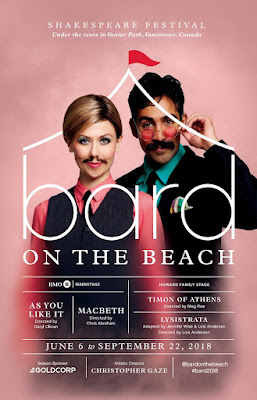
When I was looking at baby names long ago, “Rosalind” seemed like a name that said “strong woman” – with shout outs to Shakespeare and Auntie Mame. But I remember how uncomfortable my child felt sitting in the audience at As You Like It five years ago when everyone kept referring to the main character with their name. Of course, Rosalind cross dresses for most of the play....


I have seen anti-trans headlines many times before. 


As Co-Chair of the Federation of statewide LGBT advocacy organizations during the 1990s, I was among the voices loudly insisting on full inclusion for trans voices and trans issues in our advocacy. There will aways be whispered (and often shouted) temptations to leave some folks behind. Instead, I’m proud to have been part of welcoming communities and organizations for the last thirty years. 


Trans journalist Evan Urquhart recently published a chilling essay in Slate under the headline “Many Queers Can’t Bring Themselves to Face the Emotion They’re Really Feeling Right Now. We Must.” According to Urquhart, “the word for what we’re feeling right now is ‘despair’: 


I first had the idea to write a piece about despair more than a year ago. Let me leave you with the knowledge that none of this was unexpected. For many in the queer community, we’ve moved well past the point of fearing something might happen, and on to figuring out how we’re going live through this. Our despair is grounded in grim acceptance and practicality. We are learning that life goes on after you accept the fact that no help is coming, and you’ve been left alone to defy or defend or escape, or just bear witness.


It is 2023, and I weep to see children used as punching bags by evil politicians and the Republican Party. But I refuse to despair.


Tuesday, February 8, 2022

SLOW DOWN!!!


I’m frugal with my exclamation marks. Nevertheless, before approaching the lectern to present argument before any court over the last thirty years, I’ve always written “SLOW DOWN!!!” at the top of my notes. Nowadays it’s tattooed on the inside of my eyelids.


As I recently wrote in “Snap,” this fall I had a series of epiphanies about my relationship with “Executive Function.” According to Harvard’s Center on the Developing Child, “Executive function and self-regulation skills are the mental processes that enable us to plan, focus attention, remember instructions, and juggle multiple tasks successfully. Just as an air traffic control system at a busy airport safely manages the arrivals and departures of many aircraft on multiple runways, the brain needs this skill set to filter distractions, prioritize tasks, set and achieve goals, and control impulses.”


The presenter at a recent legal education webinar explained that many new attorneys struggle “with some type of executive function challenge: focusing, staying on task, organizing, managing time effectively, starting and finishing tasks, keeping a schedule, communicating with others, and more.” The recently evolved neural networks in our prefrontal cortex are particularly vulnerable to physical and psychological assaults. As I listened to the presentation, I realized how easily both ordinary stressors and specific PTSD triggers impair my own Executive Functioning.


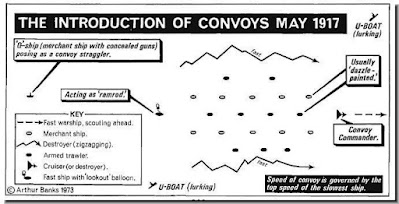
During World War I and World War II, the Royal Navy had a slogan:  “A convoy travels at the speed of its slowest ship.”


Last August I obtained major victories in two longstanding legal cases. I thought that meant we would soon begin exciting new phases in the litigation. Instead, none of our reboots occurred until January 2022. While the other side’s lawyers stonewalled, I spent a frustrating fall trying in vain to speed things up. 


Looking back, I’m grateful for the breathing space provided by our glacial litigation pace during autumn’s blessed post-vaccination window. The kids went back to school, where they wore masks and thrived while doing normal-ish things like choir and theatre. The Canadian border finally opened after eighteen bleak months. Because of room capacity limitations, Vancouver Men’s Chorus divided itself in half for rehearsals before joyously reuniting in December for a successful and revitalizing concert run.


Then anti-vaxers gave us the Omicron surge. Real life slowed down again. Nevertheless, hope has returned with the new year. Tomorrow I’m crossing the border to see my brother and to attend VMC’s first in-person rehearsal of the year.


Meanwhile, I finally accepted that the pace of litigation pace will always be set by the courts’ judicious and deliberate speed, not the parties and lawyers. More importantly, I realized I need to slow myself way down to compensate for all the stress placed on my Executive Function. I’ve learned to work on one task at a time, avoid toxic encounters, and regularly take healthy breaks with my children or walking the dogs. It turns out the courts’ speed works for me, too.

Like every good Canadian gay boy, all I really need to know I learned from Anne of Green Gables.


Lucy Maud Montgomery’s novel, published in 1908, is the national epic of Prince Edward Island. It tells the story of spunky 11-year old orphan Anne Shirley, who is mistakenly sent to live with Matthew and Marilla Cuthbert, a bachelor farmer and his spinster sister. The Cuthberts asked the Victorian social workers to send a boy to help work the farm. Instead, Anne’s enchanting chatter and vivid imagination quickly brighten the lives of everyone around her. 


A few years later in the story, when Anne was the same age my daughters are now, Marilla was startled to see Anne had grown taller than her. Marilla noticed “there were other changes in Anne no less real than the physical change”: 

For one thing, she became much quieter. Perhaps she thought all the more and dreamed as much as ever, but she certainly talked less. Marilla noticed and commented on this also.

“You don’t chatter half as much as you used to, Anne, nor use half as many big words. What has come over you?”

Anne colored and laughed a little, as she dropped her book and looked dreamily out of the window, where big fat red buds were bursting out on the creeper in response to the lure of the spring sunshine.

“I don’t know—I don’t want to talk as much,” she said, denting her chin thoughtfully with her forefinger. “It’s nicer to think dear, pretty thoughts and keep them in one’s heart, like treasures. I don’t like to have them laughed at or wondered over. And somehow I don’t want to use big words any more. It’s almost a pity, isn’t it, now that I’m really growing big enough to say them if I did want to. It’s fun to be almost grown up in some ways, but it’s not the kind of fun I expected, Marilla. There’s so much to learn and do and think that there isn’t time for big words. Besides, Miss Stacy says the short ones are much stronger and better. She makes us write all our essays as simply as possible. It was hard at first. I was so used to crowding in all the fine big words I could think of—and I thought of any number of them. But I’ve got used to it now and I see it’s so much better.”


Alice Flaherty is a neurologist and a professor at Harvard Medical School. Two difficult pregnancies left her with post-partum manic-depression so severe she eventually admitted herself into a mental hospital. In her memoir The Midnight Disease: The Drive to Write, Writer’s Block, and the Creative Brain, Flaherty wrote about her struggle with excruciating writer’s block, followed by intense hypergraphia (the overwhelming compulsion to write).


My own youthful traumas caused three decades of increasing writer’s block. It took a PTSD diagnosis before the fog began to lift. Writing these blog essays, as well as working on my book manuscripts and even countless legal briefs, became both a creative joy and effective Cognitive-Behavioral Therapy. Like Anne Shirley and Alice Flaherty, my manic early writing was overwhelmingly prolific. The output slowed down as I gained the skills and courage to confront increasingly challenging topics:  exile from my Canadian home, my repressed Mormon youth, finding my gay tribe at the height of the AIDS epidemic, and my recent betrayals by an unjust legal profession. 


In 2020, I had the privilege of participating in an extraordinary cohort of writers and coaches working together as part of The Narrative Project. Last weekend I was one of the writers reading from our recent work at the launch of True Stories, a new anthology. The writers in our small group – Jennifer, Kimberly, Patty, and I – would exchange new work and support each other. The larger cohort would gather for sessions about the craft and business of writing, and the elements of a writer’s life. Cami Ostman, founder of The Narrative Project, is an experienced writer, editor, educator, and therapist. In addition to growing through the collaborative writing process, I learned how to write through trauma. 


Nowadays I recognize the warning signs of Executive Function overload – including when my work requires me to produce legal writing about triggering issues. Looking back at my court filings over the last five years, I wish I had figured out how to slow down a long time ago. I owe an apology to a few judges for some longwinded briefs, particularly those slightly ranting conclusions. Fortunately, my new slower gear and improved self-editing skills arrived just in time for new briefing before the Washington Supreme Court. 


Our group’s coach from The Narrative Project, Rebecca Mabanglo-Mayor, is currently working on a science fiction novel. We bonded over The Mandalorian. And over the fundamental patterns and rhythms of the writing process. As Rebecca would say, This is the Way.


Tuesday, January 4, 2022

Another Do-Over Year

2022  많이 받으세요
“2022nyun bok manhi padeseyo”

The literal translation of the Korean equivalent to “Happy New Year” is “May you receive many blessings in 2022.”


Hopefully a few new blessings.


2021 turned out to be another year spent indoors waiting for viruses, lawyers, and judges to finish their work. I didn’t see enough movies to generate a list of favorite films. The only play I saw indoors was a high school production of Macbeth (Eleanor was one of the witches). My only other non-Zoom experience was seeing David Sedaris at the Mount Baker Theatre in September.


Fortunately, one of the benefits of emerging from the fog of mental illness is that I’m reading again. In addition to magazines and other online reading, last year I finished sixty books. Here are my favourites: 


Roger's Favourite Books of 2021


1.     Barbara Blatchley, What are the Chances? Why We Believe in Luck


2.     Vladimir Nabokov, Speak, Memory


3.     Lauren Hough, Leaving Isn’t the Hardest Thing


4.     Lacy Crawford, Notes on a Silencing


5.     Temple Grandin, Animals Make Us Human


6.     Sarah Schulman, Let the Record Show:  A Political History of ACT UP New York 1987-93


7.     Stephen King, On Writing


8.     Oliver Sacks, On the Move


9.     Douwe Draaisma, Why Life Speeds Up As You Get Older: How Memory Shapes Our Past


10.  B.J. Fogg, Tiny Habits


11.  Daniel J. Levitin, This is Your Brain on Music


12.  Leslie Jamison, The Empathy Exams


13.  Maria Konnikova, The Biggest Bluff: How I Learned to Pay Attention, Master Myself, and Win


14.  Brian Greene, Until the End of Time


15.  Michael Shermer, The Believing Brain


16.  Leonard Mlodinow, The Drunkard’s Walk:  How Randomness Rules our Lives


17.  Eric Garcia, We’re Not Broken:  Changing the Autism Conversation


18.  Sam Quinones, The Least of Us: True Tales of America and Hope in the Time of Fentanyl and Meth


19.  David Sedaris, A Carnival of Snackery: Diaries (2003-2020)


20.  Simon Garfield, Dog’s Best Friend


21.  Anne Lamott, Bird By Bird


22.  Michael J. Fox, No Time Like the Future


23.  Julia Glass, A House Among the Trees


24.  Kevin Kwan, Crazy Rich Asians


25.  Oliver Sacks, Hallucinations


26.  Daniel Kahneman, Olivier Sibony, & Cass Sunstein, Noise: A Flaw in Human Judgment


27.  Alan Cumming, Baggage


28.  Ethan Kross, Chatter: The Voice in Our Head, Why it Matters, and How to Harness It 


29.  Daniel J. Levitin, The Organized Mind: Thinking Straight in the Age of Information Overload


30.  Stephen Hawking & Leonard Mlodinow, The Grand Design


I’m fascinated by memoirs, both as a reader and a writer. My 2021 reading list included memoirs by writers, mathematicians, neurologists, addicts, and actors, as well as dispatches from across the Autism Spectrum. Plus Vladimir Nabokov. Many English Majors identify Speak, Memory as the best-written memoir ever. It’s true – the rest of us should probably just give up writing. But we can’t help ourselves.


Upcoming blog essays respond to the two memoirs that spoke most directly to me in 2021. Lacy Crawford is a journalist. In Notes on a Silencing, Crawford describes her trauma as a sexual assault victim at a prestigious boarding school, and her triggers and re-traumas three decades later as she observed how the legal system worked to protect her abusers and their enablers.


Lauren Hough is a middle-aged lesbian writer/cable installer whose parents raised her in a weird sex cult named “The Children of God.” Leaving Isn’t the Hardest Thing tells how Hough escaped her religious roots by finding a new community in the military – only to find herself betrayed by authoritarian abusers in the era of “Don’t Ask, Don’t Tell.” It turns out Pharisees and lawyers are everywhere.


As usual, many of the other books on my 2021 reading list are about how thinking does and doesn't work.


Other than our extraordinary brains, humans are unremarkable as a species. Many animals are faster and stronger, with superior powers of vision and hearing, or superpowers like flight and invisibility. Instead, after our primate ancestors diverged from their chimpanzee cousins, evolution spent the next sixteen million years focused on building bigger and fancier human brains. This turned out to be a great longterm investment – eventually. 


In the meantime, we spent most of the Pliocene and Pleistocene eons as feeble hairless bipeds cowering in trees and caves. Even after the arrival of modern Homo sapiens half a million years ago, we lived for hundreds of thousands of years scattered in small bands of hunter-gatherers, well down the food chain from more impressive predators. Even within genus Homo, H. sapiens isn't very special. To the contrary, just 100,000 years ago we were one of at least six extant human species. Even after we tamed fire and invented a few stone tools, the investment in big brains was hardly paying dividends. As Yuval Noah Harari points out


We assume that a large brain, the use of tools, superior learning abilities and complex social structures are huge advantages. But humans enjoyed all of these advantages for a full two million years during which they remained weak and marginal creatures.


Then, just a few thousand years ago, something clicked in the human brain. Suddenly we experienced an accelerating series of revolutions:  agriculture, writing, civilization, empires, industry, automobiles, and iPhones. In a cosmic blink of the eye, humans achieved supremacy over every other species on the planet. 


Since this Cognitive Revolution, there hasn’t been enough time for natural selection to accomplish further genetic evolution. Instead, our enhanced human brains are responsible for the havoc wrought by the immense cultural evolution that continues at an ever-accelerating pace. At our current rate of “progress,” well only need a few centuries or even mere decades before we join Tyrannosaurus Rex and the dodo in extinction, no doubt dragging the rest of the biosphere with us. Unless we finally learn how to think clearly.


For decades, evolutionary biologists and child psychologists have been trying to figure out when the human mind originated. Both point to the same breakthrough in the development of the human species and in the development of each human individual child:  “Theory of Mind.” 


The phrase “Theory of Mind” comes from an influential 1978 paper by David Premack and Guy Woodruff, “Does the chimpanzee have a theory of mind?” Only modern Homo sapiens has demonstrated the capacity to understand our experience and to act based on the proposition that other individuals possess a mental state that may differ from our own. When humans finally evolved enough to feel empathy, our brains grow three sizes. Not just our hearts.


Some neuroscientists and philosophers focus on another important aspect of Theory of Mind:  because each individual’s mental state is independent of the real world, humans can feel, believe, and foresee things that are not true and may never be. According to Harari, “large numbers of strangers can cooperate successfully by believing in common myths.”


One of the few TV shows I binge-watched in 2021 was The Wheel of Time, a sorta-feminist variation on Game of Thrones set in a fantasy world that resets itself every few thousand years. Human experience In the real world is profoundly cyclical, whether you focus on days, months, seasons, years, or the school calendar. 


Last year I read several excellent books about how our brains process probabilities, choices, disappointment, and uncertainty. My upcoming blog essay “How Lucky Can You Get?” dives into these topics, including some of the insights from my favourite book of the year, What are the Chances? Why We Believe in Luck, by neuroscientist Barbara Blatchley.


Blatchley identifies our reliance on “counterfactuals” as another important aspect of Theory of Mind:  


Counterfactuals are alternatives to reality that we generate, particularly after negative events. An upward counterfactual is an imagined alternative to reality that is better than what actually happened. A downward counterfactual is an alternative that is worse than reality. Researchers have found that upward counterfactuals might help us prepare to encounter this negative situation again in the future and perhaps to do better the next time.


What are the Chances? resonated with the best book I read in 2019, Carol Dweck’s Mindset. Dweck is the psychologist who coined the terms “fixed” and “growth” mindsets:

 
In a fixed mindset students believe their basic abilities, their intelligence, their talents, are just fixed traits. They have a certain amount and that’s that, and then their goal becomes to look smart all the time and never look dumb. In a growth mindset students understand that their talents and abilities can be developed through effort, good teaching and persistence. They don’t necessarily think everyone’s the same or anyone can be Einstein, but they believe everyone can get smarter if they work at it. 


Similarly, Blatchley observes “When lucky people are unlucky – when something unwanted or awful happens – they learn from their mistakes, incorporating that experience into their expectations about the future. They are able to use their transformed expectations to change their bad luck into good for the next time.” Life becomes an upward spiral.


Somehow we all made it through 2020 and 2021, endured Donald Trump and Zoom school, and survived forest fires and floods. Now it’s another new year. The holiday snow is melting and the days already feel longer. As we slouch toward Groundhog’s Day, remember the lesson of the classic 80s movie:  Bill Murray learned how to learn from experience.


According to Barbara Blatchley in What are the Chances?


Luck is the way you face the randomness in the world. If we are open to it, accepting, not anxious or afraid, willing to learn from mistakes and to change a losing game, we can benefit from randomness. We can gain a modicum of control over this aspect of life, even if we can't control the universe on a large scale. Randomness will happen no matter what we do—chaos theory rules in our universe. Knowing how to roll with the punches; now that's lucky.


May we all plant plenty of flowers and find many blessings in 2022.