Showing posts with label BYU. Show all posts

Sunday, October 26, 2025

The Best Yale Law School Class Ever

I went to law school to escape from Utah. Killing myself was Plan A. I ended up going with Plan B instead.

I’ve endured anxiety all my life. But on two occasions I also faced suicidal depression. The first time was when I was twenty-two years old and finishing up my English degree at Brigham Young University. I’d entered college in 1981 as a Spencer W. Kimball Scholar, BYU’s most prestigious scholarship. I graduated as the university’s valedictorian. By the summer of 1986, I was worn out from years on the treadmill as the Best Little Mormon Boy in the World. So of course I committed to another crazy year in Utah. I taught freshman English at BYU; performed in multiple shows at the Hale Center Theatre; finished the coursework for a graduate degree in linguistics; and was the founding editor of Student Review, BYU’s longest-running student newspaper. At night I would run for miles, hang with queer street kids, and resist the temptation to drive off an overpass.

I also signed up for the LSAT. I scored in the 99.9th percentile. For no extra fee you could send your score to five schools. I picked Harvard, Yale, Stanford, the University of Chicago, and the University of Washington.

Midway through the year I hit rock bottom. Fortunately, I got help. I had support from friends, family, and sympathetic local Mormon church leaders. Unlike many suicidal queer youth, I found a way out of the darkness.

I needed to leave Utah so I could continue making progress on my mental health. Without suicide as an option, law school was the only escape I could think of. So I compared my acceptance letters.

The University of Washington was my safety school. I enjoyed classes in UW’s English grad program when I moved to Seattle a few years later. But I needed to see more of the world before settling down in the Pacific Northwest.

Stanford looks like a golf course, and triggered my anti-California prejudices. It’s the best law school in the West, but it was time for me to head back East.

Harvard is a great university, and Boston offers more than New Haven. But Harvard Law School was too big, with over 400 students in each entering class rather than 165 students like each of the other schools on my list.

The University of Chicago has a lot of conservative Mormon connections. I had a wonderful experience living in Chicago when I became an LGBT rights lawyer with the ACLU of Illinois several years later. Nevertheless, law school at U of C would have been a grind, and terrible for my mental health. Interesting, my financial aid package at every other school involved graduating with the same $35,000 in student loans. In contrast, the University of Chicago offered me a “merit” scholarship and a full ride. I’m glad I didn’t make a bad decision based on money.

Instead, I ended up choosing Yale Law School. I had pretty good reasons.

First, if you must go to law school, you should go to the best law school you can. Yale has been recognized as the top law school for generations. Privilege has its privileges.

Second, I needed to experience the East Coast. New Haven is a 90 minute train ride away from New York City, which gave me access to Broadway shows, gay bars, and great museums.

Third, Yale Law School doesn’t have grades. Dean Guido Calabresi gave our class a welcoming speech with the title “You’re Off the Treadmill!” The Dean told us “Our goal at Yale is to get 90% of you into the Top 10% of the class.” You can’t tell 165 overachieving nerds to turn off their competitive brains. But you can encourage them to define 165 individual paths to success.

Fourth, in preparing to leave behind the Mormons and Utah, I was looking for a new community that shared my values. Professors like Guido Calibresi inspired me to embrace the legal profession as an instrument of truth and justice. Guido offered an enchanting vision for the law school and its graduates: Excellence and Humanity. Without humanity, a highly skilled lawyer is a menace to society.

Finally, although I was clueless about lawyers and law school, I knew several earnest pre-law students at BYU. My friend Greg was a smart political science major. After touring each Top 20 law school campus, he insisted on wearing his Yale Law School sweatshirt everywhere. Greg said I’d be an idiot to go anywhere else.

Greg didn’t get into Yale. He ended up at University of Chicago instead. When we left BYU, he insisted on giving me his sweatshirt: my first Yale Law School swag.

I bought my son the same classic grey Yale Law School sweatshirt last week at our 35th year reunion.

It was only my second time returning to New Haven. Ten years ago I attended our 25th year reunion, where I heard about the prior reunions. Two stories stood out, both involving the special class-specific slots in the Alumni Weekend schedule. On Saturday evening, members of each reunion class gather for a private cocktail hour and posh dinner. The women and the East Coast men dress up. (Northwestern guys wear jeans.) The Alumni Office staff choose various local restaurants based on anticipated turnout. That year our class dinner was held in a terrible restaurant in the suburbs. My classmates still complain about being stuck on a bus to Hamden. The Class of 1990’s response? Two of our class members infiltrated the Alumni Weekend organizing committee. Last Saturday we dined at New Haven’s finest restaurant.

The Alumni Weekend schedule always includes another class-specific slot, on Saturday afternoon. Most classes meet in an Ivy League courtyard with an open bar, fancy nibbles, and cater-waiters. Some classes plan a group tour to a museum. Others gather for a commemorative photo. This year I saw many alumni on the New Haven Green, which happened to be the location of the local No Kings protest march.

The Class of 1990’s bonding time is identified in the printed schedule as “Two Minute Memoirs.” The venue is always an out-of-the-way classroom in the law school. Several of my classmates told me versions of the same story. It was their first time at Alumni Weekend. They saw the schedule and took a pass. (“Sounded like a tedious corporate ice-breaker.” “I’d never been to the Yale Center for British Art.” “I thought it would just be guys bragging about their careers.” “Who needs a roomful of lawyers?”).

Each truant class member confessed they’d made a terrible mistake and vowed never to repeat it. Hearing my classmates’ memoirs was indeed the highlight of my 25th year reunion weekend. No one wasted their two minutes on resumes. Instead, we heard deeply personal stories about excellence, humanity, and family.

Everyone who ever attends our class reunion raves about the life-altering experience of hearing these extraordinary stories. Like the time in law school when the Rolling Stones secretly played Toad’s, the small nightclub across the street from my dorm room.

This year more than sixty members of our class reunited in New Haven. Other than pathetic outliers like myself, the Class of 1990 is a privileged cohort at the peak of professional success. Yet we convened during a time of existential threat to the rule of law, even as many class members face major life transitions. Everyone talked about what really matters.

The last time I visited Yale was a few weeks before I received my PTSD diagnosis. A decade later, I told my classmates why I’d disappeared.

· The most important thing that happened to me since our last reunion was my ex disappeared and I became a full-time single dad with three teenagers and two dogs. Becoming a father twenty years ago was the best thing that ever happened to me. But becoming a single father thirteen years later gave me the experiences of a lifetime, and left me with the kind of shared memories and relationships with each child that few parents will ever know.

· The second most important thing that happened was getting the right diagnosis, which put me on the path to recovery. I live with complex PTSD symptoms every day. But I am in the best mental and physical health of my life.

· If I had been blessed with supportive co-workers at the State, I could have recovered from complex PTSD in six months. Instead it took more than six years – because my former employer and the state’s lawyers publicly accused me of faking a disability. Gaslighting abuse reinforced the traumatic impact of the Mormon’s refusal to acknowledge LGBT people exist, and triggered my second suicidal episode. Their attacks made me an unemployable pariah in the legal community where I used to be a distinguished bar leader.

· As 2025 began, I still was an unemployed disabled gay single dad, raising three teenagers and living on food stamps. Fortunately, in February I found a position with an online family law firm that has been a good fit for my legal and life experience.

I’m grateful that I can finally support my family while helping ordinary people solve their legal problems. I could also afford to get on a plane for the first time in ten years. Joining the Yale Law School Class of 1990 for our 35th year reunion was an important part of my healing. It reminded me the legal profession can demonstrate both Excellence and Humanity.

Each year the admissions office and the faculty select an extraordinary entering class. Yale Law School cohorts have become increasingly diverse. Many students come from lower socio-economic brackets, but will have their tuition and costs paid in full by generous donors. The law school leadership and the alumni community have invested immense energy and financial resources to ensure that no one misses out on the Yale Law School experience because of money. The largest donation in the history of the law school came from one of my classmates.

Three decades ago, the Class of 1990 was just as diverse as any of the law school’s carefully curated recent classes. Part of that achievement was a fluke of timing and demographics. But the diversity of our class is amplified because everyone is some kind of two-fer or triple threat. For example, it’s no surprise that I got the “Earnest-Mormon-BYU-Valedictorian” slot that’s available most years. But I also ended up contributing to Yale’s diversity as a mental illness survivor, LGBT advocate, showtune enthusiast, Trailer Park Single Dad, and Canadian.

Reconnecting with my classmates reminded me that our time together in New Haven was a transformational opportunity. I lived in the law school all three years. The first year I was a liberal Mormon, and my dormmate was a bright conservative from Texas. He grew up in the same Houston neighborhood as the Bushes, and spent a weekend in New Hampshire volunteering on George H.W. Bush’s primary campaign. The other two years I was a liberal ex-Mormon who had recently tasted coffee and alcohol for the first time. My new roommate was a J.D./English PhD candidate and Martin Luther King’s nephew. He had a vast collection of video-taped movies. There was always a crowd in our living room. Like everywhere else in the law school, the conversation never ended.

The Yale Law conversations continued beyond the walls of the law school. Many of our classmates found housing off-campus. Several groups shared houses near the beach. A posse of bros known as the “Tall Boys” hosted notorious parties – including the first time I tasted tequila, which led to the first time I threw up out of a moving car.

During his Supreme Court confirmation hearing, I kept seeing the same photo of our classmate Brett Kavanaugh that appears in the law school facebook. Brett wasn’t at the reunions. As I wrote in my essay “About My Yale Law School Classmate Brett Kavanaugh,” I realized “he may be the only member of our law school class I never met or interacted with.” Despite his prominence on the Supreme Court, in many ways Justice Kavanaugh is even more of an outlier than me as an exemplar of the Class of 1990.

My previous essay also recognized the diversity of our law school:

Despite its decidedly liberal overall bent, Yale Law School is extraordinarily diverse. (Although there may be an excessive number of Yale College graduates who linger in New Haven, including Brett Kavanaugh, Yale ’87, Law ’90). The rest of my classmates hailed from all over the country and the world, bringing their varied backgrounds and interests to the melting pot. In addition to the occasional pesky law class, you could spend your time with student legal clinics, cutting-edge academic journals, and endless philosophical arguments. My closest friends at law school included evangelical Christians, unreconstructed libertarians, prep-school Republicans, and even bros.

On paper, the diversity of Yale Law School’s carefully groomed recent classes may rival the Class of 1990. But folks who have observed the new Yale students in action say they prefer to talk to their own kind. In contrast, our class’s “endless philosophical arguments” have always been open to everyone. All weekend long at the reunion, I would sit down at a table with classmates I hadn’t seen or thought about in years. We would dive into fascinating conversations with the same old Excellence and Humanity.

At Yale Law School, the Class of 1990 learned to talk with attention and empathy to people who are different from ourselves – an essential gift that is increasingly rare.

My suicidal breakdown at BYU didn’t happen because I was beginning to figure out that I was gay. I hit rock bottom because my disability made me believe I was unworthy of anyone’s respect or love. Despite escaping to Yale Law School, I still had a long way to go.

Now that I’ve made more progress toward mental health, I realize I contributed to the disconnect with Brett Kavanaugh. I probably avoided him in law school. I know I avoided the Tall Boys. They look like the kind of bros I expect to toss me in a garbage can. During the cocktail hour before our fancy dinner, I found myself avoiding the Tall Boys once again, as well as everyone else. The acoustics in the reception room were deafening and triggered my disability. 

Fortunately, listening became easier once we sat down at the dinner tables. The four of us sitting together probably hadn’t seen each other since graduation. Hiram spent the decade since our last reunion as a college president. David, an orthodox Jew, moved his family to Israel fifteen years ago. Paulene never practiced law, instead getting a Ph.D. in Asian literature from Princeton. But she still took the bar exam to please her Chinese mother. As usual with the Class of 1990, the conversation was fascinating, witty, and kind.

When Paulene stepped away from the table, one of the Tall Boys took her chair. He thanked me for sharing my experiences as a disabled single father. During our Two Minute Memoirs that afternoon, this Tall Boy disclosed the most devastating loss in the room: the death of a child. And yet he reached down from the heights to make me feel welcome. Even in a fractured world, it is possible to sustain community by listening to other people with radical empathy.

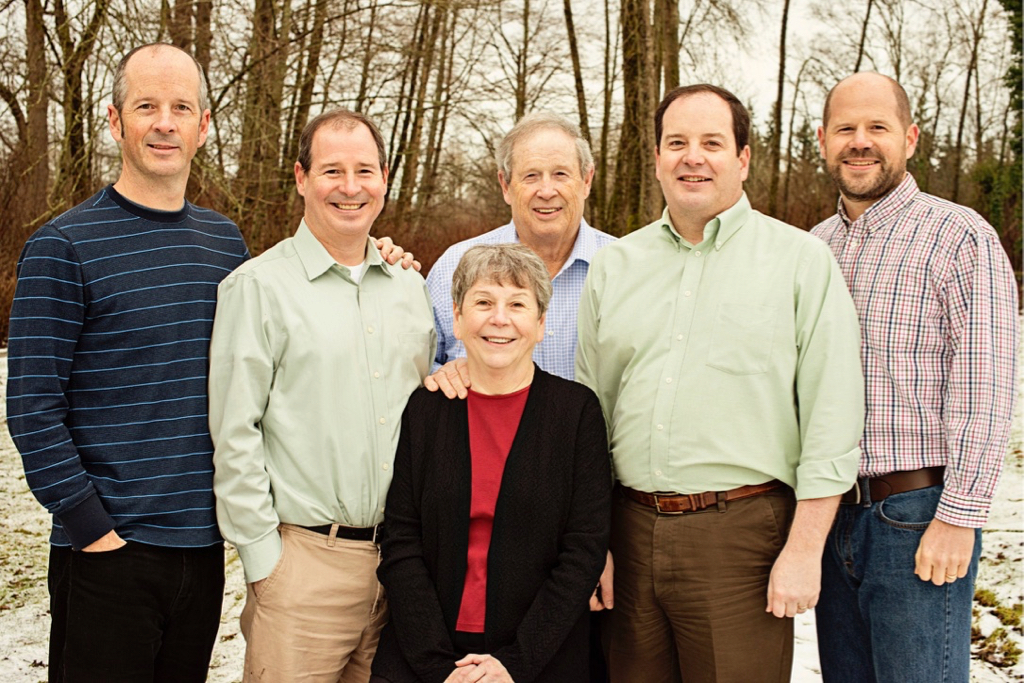
In former dean Harold Koh’s toast to our class before our delicious dinner, he described some of my classmates’ extraordinary achievements and outsized personalities, including the Tall Boys. After forty years on the faculty, he confessed that he remembers us as his favorite class. But he’s not allowed to admit that the Class of 1990 is the Best Yale Law School Class Ever.


Sunday, May 11, 2025

The Whiffenpoofs of 2025


As I waited for my mother in the lobby of the Bellingham High School auditorium last fall, Facebook reminded me we’ve been going to musical performances together for a long time. Mom and I started by seeing shows like Saturday’s Warrior and Anne of Green Gables at the Queen Elizabeth Theatre in 1970s Vancouver.

According to Facebook, my mother and I saw the Broadway musical Wicked on tour in Seattle exactly twelve years earlier. To celebrate her 70th birthday, I’d bought tickets to a special performance benefiting the marriage equality campaign. When Mom turned 80, we saw Kristin Chenoweth at the Mount Baker Theater. For her 60th birthday, I got tickets to see the incomparable Barbara Cook sing Sondheim at Benaroya Hall.

At Bellingham High, I was waiting to share another unique musical event with my mother: the opening concert of the Whiffenpoofs of 2025’s World Tour.

The Whiffenpoofs are North America’s oldest collegiate a capella singing group. Fourteen tenors, baritones, and basses are tapped from each Yale graduating class. They sing a repertoire of elegantly arranged standards along with contemporary songs, all in tight harmonies. In addition to their concert tour, each year’s crop of Whiffenpoofs makes an album showcasing their talents. Together with my ancient vinyl and CDs, iTunes can fill an entire weekend with a guilty pleasure playlist. It’s my favourite kind of music. 

The reason the Whiffenpoofs of 2025 started their World Tour at Bellingham High School is Logan Foy. He’s the student chosen as this year’s music director (called the “pitchpipe”). Logan graduated from BHS, where he was the star of its music and theatre programs. He was also a proudly out member of the high school’s Gender/Sexuality Alliance. Each Whiffenpoof got a solo during the concert. Logan assigned himself the group’s classic arrangement of “Midnight Train to Georgia,” with he/him pronouns.

The Whiffenpoofs sounded great, and Logan basked in the hometown crowd’s love. As my mother and I walked out of the auditorium, I overheard a middle-aged man tell someone that Logan began studying with an opera coach while he was still in elementary school. It was Logan’s beaming father. I usually don’t talk to strangers. But I went over to Mr. Foy and introduced myself as a gay PFLAG dad. I said I’ve been going to Whiffenpoof concerts for 37 years, and told him he should be proud to hear and see what his son has accomplished.

The Whiffenpoofs of 2018 - L.W.W.B.

The last time I saw the Whiffenpoofs perform live was in 2018, when their tour included a stop in Seattle.

In 1975, President Ford signed legislation opening the service academies to women. Four years later, the Air Force Academy Class of 1979 adopted the motto “Loyalty, Courage, Wisdom, Bravery.” However, the Commandant cancelled their order for class rings engraved with the initials “L.C.W.B.” when he discovered the letters actually stood for “Last Class With Balls.” (At best – according to a Congressional report cataloging misconduct at the academy, the Class of 1979’s real motto was either “Last Class Without Bitches” or “Last Class Without Broads.”)

Yale College was founded in 1701, but women weren’t admitted until 1968. Similarly, after a 110-year wait, the gentlemen I saw perform in Seattle selected the group’s first female singer as a member of the Whiffenpoofs of 2019.

This year’s tenor section includes four women. It was my first time attending a co-ed Whiffenpoof concert. As someone who generally prefers his harmonies in the bass clef, I expected to be a curmudgeon. But the inclusion of a few women was not enough to tip the overall balance, and did not spoil the familiar arrangements. Instead, their voices added to the power, range, and variety of the performances.

Still, the concert sounded different. Our brains process male and female voices differently. Hearing a woman’s voice “triggers the auditory section of an audience’s brain,” which is “the area that’s used to analyze.” Because female voices are “more easily decoded,” they seem “clearer than their male counterparts.” Sure enough, this was my first time at a Whiffenpoof concert where I felt like Cole Porter’s lyrics were being beamed directly into my head.

“Singing Can Be a Drag” is Vancouver Men’s Chorus’s biggest annual fundraiser. Talented and extroverted members of the chorus don spectacular drag outfits and sing show-stopping numbers. No lip synching allowed.

I’m not the kind of guy who sings solos or wears drag. Instead, every year I volunteer at the event as an usher. This year a woman came up to me as I guided patrons to their seats. She said “You've shaved your beard since the holiday concert, but I recognized you. I wanted to let you know you have the best smile in the chorus. Whenever I watch you sing, the word I think of is ‘joyous.’”

In the classic fairy tale “The Ugly Duckling,” the hero of the story is the supportive duck mother – not the awkward swan who was lucky to find himself in the most affirming of nests. No parent expects a Whiffenpoof. But I will be eternally grateful for a PFLAG mom who raised me with the joy of music.


Happy Mother's Day


Sunday, May 4, 2025

The Boys Who Lived

Vancouver Men’s Chorus is busy rehearsing for our June concerts. (Tickets are on sale at the chorus website.) This year’s theme is Totally Awesome ’80s. We will be singing songs by Cyndy Lauper, George Michael, Eurythmics, Madonna, Tina Turner, Erasure, Pet Shop Boys, Whitney Houston, and more. There will be synthesizers, dancing boys, and big hair. 

I spent the 1980s as a clueless high school student in small town Utah; as an earnest Mormon missionary in Korea; as an overachieving student at Brigham Young University; and as a liberated law student at Yale. I’m like an episode of Stranger Things – 80s music is the soundtrack of my youth. 

More than music and mullets, my relationship with the 80s is defined by one essential fact: I came out of the closet in the middle of the AIDS epidemic. 

I recently read a collection of essays with the title Between Certain Death and a Possible Future:  Queer Writing on Growing Up with the AIDS Crisis. These writers speak for my generation:

Every queer person lives with the trauma of AIDS, and this plays out intergenerationally. Usually we hear about two generations - the first, coming of age in the era of gay liberation, and then watching entire circles of friends die of a mysterious illness as the government did nothing to intervene. And now we hear about younger people growing up with effective treatment and prevention available, unable to comprehend the magnitude of the loss. But there is another generation between these two, one that came of age in the midst of the epidemic with the belief that desire intrinsically led to death, and internalized this trauma as part of becoming queer.

I arrived too late for the fun. Instead, I threw myself into activism. I joined the ACLU of Illinois as Director of the LGBT Rights/AIDS Project at the height of the AIDS epidemic. The Project’s founder, John Hammell, had recently died. Many other pioneering Baby Boomer gay activists were dead, dying, and/or burnt out. Stalwart lesbians and unprepared young gay men filled their empty shoes. 

Some people see personality types through the prism of birth order. As the first of four brothers, I exhibit many “eldest child” behaviors. But when it comes to my gay tribe, I’m part of very specific cohort:  the traumatized gay boys of Generation X, stumbling through life as perpetual younger brothers to the men of the Stonewall Generation. 

This photo of San Francisco Gay Men’s Chorus was taken in 1993, twelve years into the AIDS epidemic. The seven men in white are the original members of the chorus. The 115 men in black represent those who had already died. 

Trauma warps memory. As I learn to live with complex PTSD, I’ve discovered a handful of revealin gaps and glitches in my recollection of past events.   

For example, the quietest moment in our 80s concert occurs during “Eulogy.” Seattle Men’s Chorus commissioned this song in 1985. I have sung and heard “Eulogy” countless times since I joined my first gay chorus three decades ago, including at various memorial services. I’ve repeatedly listened to SMC perform “Eulogy” on their classic Pink Album. 

Nevertheless, I have no memory of the song. All I can tell you is that it repeates the word “Onward.” Every time VMC rehearses “Eulogy,” I feel like I’m sight-reading a shocking new testament of grief. By the end of the song I’m silently weeping.


Many of the boys died.

The theme of VMC’s June 2018 concert was Gays of Our Lives. As we read through “I Shall Miss Loving You” at our first rehearsal, I realized the last time I’d sung the song was eighteen years before, at my friend Jim Palmer’s memorial. We sang together in Windy City Gay Chorus during the 90s. The miraculous new HIV/AIDS medications came along too late to stop the disease’s progress through Jim’s body. Still, he wanted to see the new millennium. He barely made it. 

I was thirty-five years old. Jim was thirty. I weep every time I try to sing these words:

I shall miss loving you.
I shall miss the comfort of your embrace….

I shall miss the joy of your comings,
And pain of your goings, and, 
After a time,
I shall miss loving you.

Boys like Jim died from AIDS, suicide, drugs, and other causes. Somehow, some of us survived to tell the stories. 

In September 1914, soon after Britain suffered the first casualties of the Great War, Lawrence Binyon published “For the Fallen.” The poem’s fourth stanza has become known as the “Ode to Remembrance”:

They shall grow not old, as we that are left grow old: 
Age shall not weary them, nor the years condemn.
At the going down of the sun and in the morning
We will remember them.

Some of the men lived.

In 1981, a pioneering national tour by San Francisco Gay Men’s Chorus inspired gay choruses to form in cities including Chicago, New York, Seattle, and Vancouver. Forty-four years later, our founder Willi Zwozdesky still conducts Vancouver Men’s Chorus. Willi is the senior conductor in the LGBT choral movement.

VMC has never sounded better. We continue to attract talented new singers. At our recent rustic retreat, Millennials and Gen Y gay boys joined in the skits, rehearsals, and comradery. We listened to our elders around the campfire, and serenaded our conductor with his favourite song.  Along with Willi, a handful of other survivors have held the chorus and the community together through five extraordinary decades.

I am growing old. But the men of the Stonewall generation will always be older than me.


Saturday, July 6, 2024

My First

The very first concert I ever attended was at the Marriott Center in Provo, Utah, in September 1981. I saw Barry Manilow.

I’d arrived as a clueless freshman at Brigham Young University three weeks before. During my time at BYU, I was confused about my own sexual orientation. I was also oblivious to the fact that most of my college friends were gay, too. And the fact that Barry Manilow is gay.

Years later, a friend who had been part of BYU’s secret gay underground told me a story about the Barry Manilow concert. Apparently afterwards an unmarked car full of BYU security officers followed Manilow and his posse forty-five mile north to the Sun Tavern, Salt Lake City’s gay bar.


Last week I drove with my daughter Eleanor for seven hours so we could see singer-songwriter Noah Kahan at The Gorge Amphitheater. I waited for five hours in the desert, mostly in arbitrary lines fueling monopolistic profit. It was too hot, too muggy, and then too cold. We got home at 3:30 am the next morning. It was amazing.

I’ve been to other classic outdoor concert venues, like Red Rocks and Ravinia. I saw Sting play Park City, with Stewart Copeland sitting in on drums. Seattle used to host concerts on a waterfront pier where I saw artists like Indigo Girls and Lyle Lovett sing as sailboats passed by.  

I’d heard of the Gorge, of course, and its reputation as a concert venue. I’d had opportunities to attend shows before. My inevitable response: “All that driving just to sit in the desert?”

I’ve always been more into theater than music performances anyway, except for eras when I’ve gone to concerts with the handful of partners whose musical taste I absorbed. With my mother I’ve seen Great American Songbook masters like Barbara Cook and Kristin Chenoweth. My boyfriend in Chicago was a lesbian, at least musically, so he dragged me to Ani DiFranco, Tori Amos, Alanis Morrisette, and Natalie Merchant. My ex in Seattle was more twee – we saw Belle & Sebastian twice. 

Now Eleanor is my go-to concert date. Our first show after covid was Harry Styles at the Tacoma Dome.

Eleanor went to her first concert with a friend. It was also Eleanor’s first outdoor concert, at the Muckleshoot Tribe’s Wind River Amphitheater near Seattle. She saw the Jonas Brothers. As we drove to the Gorge, I asked Eleanor which Jonas brother is “the cute one.” She picked Joe. (Wrong – the correct answer is Nick.) 

According to Eleanor, the highlight of the Jonas Brothers concert was their opening act, a rising country star named Kelsea Ballerini. On the same day we went to the Gorge, Noah Kahan released a new duet with Kelsea:  “Cowboys Cry Too.”

Noah Kahan’s concert at the Gorge sold out long ago. Thirty thousand people stood on the darkening hillside for his entire two hour set. We watched a talented and suddenly successful young musician connect with the crowd for a one-night-only performance on the day his breakthrough single “Stick Season” hit a billion Spotify streams.

Kahan writes openly about living with anxiety and depression. His charity benefits mental illness programs. As an extra encore at the Gorge, Kahan performed “Young Blood.” He introduced it as the first song he ever wrote. Looking out at the vast crowd, he told us “I remember feeling really lost. I wrote this song so that when I got older and if I had a music career, I could remember where I came from and what it was like to feel alone.”


It Gets Better and Better. If I were a little smarter, I would have recognized fatherhood was my destiny a little sooner. But then I wouldn’t be going to amazing concerts with Eleanor.

Tuesday, September 14, 2021

Blink


Before I acquired so many children and dogs, I used to collect antique maps and prints. Above the stereo cabinet in our living room is a poster with the slogan “Strengthen Liberty.” It commemorates my time in Chicago as a gay rights lawyer with the American Civil Liberties Union. 


The poster was actually printed for the Boy Scouts of America’s fortieth anniversary in 1950, the year that also marked the ACLU’s thirtieth anniversary. BSA and the ACLU share a comically similar taste in patriotic graphic design.


I keep this picture of the Statue of Liberty, an American flag, a Boy Scout, a Cub Scout, and an Explorer to remind me that some things change, and some things don’t. Because some people won’t change.


John Hammell and Keith Richardson in Windy City Times

When I arrived in Chicago in 1995, I inherited an appeal defending the ACLU’s victory in an employment discrimination case against the local Boy Scout council. John Hammell, the founder of the ACLU of Illinois LGBT Right Project, had filed suit on behalf of Keith Richardson under the City of Chicago’s antidiscrimination ordinance. John and Keith were both Eagle Scouts. (I think I made it to Second Class Scout.) After the Chicago Area Council rejected Keith’s employment application because he was an “avowed homosexual,” the Chicago Human Rights Commission determined the Boy Scouts violated Chicago’s ordinance prohibiting employment discrimination based on sexual orientation.


Sexual orientation has nothing to do with Scouting. Nevertheless, decades ago the Boy Scouts adopted an internal anti-gay policy excluding LGBT youth and adult leaders. BSA acted at the behest of some of its major organizational partners, including the Mormon church. For many decades, the Mormons sponsored more Boy Scout troops, Cub packs, and Explorer posts than any other organization. Scouting was the church’s official youth program for boys when I was growing up.


The First Amendment guarantees the right of “expressive association,” which means a private organization like the Boy Scouts can exclude members whose statements or presence would prevent the organization communicating its chosen message. Until advocates like the ACLU and Lambda Legal came along, most people didn’t know about BSA’s exclusionary policy. After critics began speaking out and LGBT rights lawyers began challenging the Boy Scouts’ anti-gay policy, BSA started identifying homophobia as one of its core values – preaching that it’s impossible for a gay individual to live up to the Scout Oath’s promise to be “morally straight.” In June 2000, the United States Supreme Court ruled by a 5-4 vote in Dale v. Boy Scouts of America that the First Amendment protected BSA’s exclusionary policy from the application of local anti-discrimination laws. 


In hindsight, the Boy Scouts of America won the battle but lost the war. A year after the Dale decision, Lambda Legal’s Executive Director Kevin Cathcart said “I’m disappointed that we lost the court ruling, but never have we lost so successfully. It must be driving the Boy Scouts crazy - to keep thinking this is going to die down, and yet it doesn’t stop.” Gregg Shields, the Boy Scouts’ longtime spokesman, told another reporter that despite winning in the Supreme Court, it felt like BSA lost.


The Advocate (March 17, 1998)


When I was working on the Richardson v. Chicago Area Council appeal, I could see the writing on the wall. The Boy Scouts were absolutely committed to their anti-gay policy. Eventually the mounting evidence of BSA’s homophobic statements and conduct would demonstrate to any court that the phrase “morally straight” should be taken literally as one of the organization’s core expressive values. At some point the excruciatingly principled folks at the ACLU would have to start defending BSA, just like we would with the First Amendment rights of Ku Klux Klan marchers or Nazis parading through Skokie.


It was time to redirect pressure toward the partners and sponsors of Scouting whose own values embraced LGBT inclusion. Because the Richardson case had generated a full trial record, I inherited a mountain of documents showing how Scouting works. The Girl Scouts are like Starbucks – GSA owns and operates each individual Girl Scout troop. In contrast, the Boys Scouts are organized like McDonald’s – BSA and its regional councils franchise or “charter” local organizations to operate each youth group in accordance with BSA’s policies. The charter approach greatly expands BSA’s reach.


The Richardson case file included a printout identifying the organization holding the charter for each of the 400+ Boy Scout troops, Cub Scout packs, and Explorer posts chartered by the Chicago Area Council. Many of the chartered organizations were schools and other governmental entities, as well as various private groups and churches. For example, a substantial share of Explorer posts in Chicago and nationwide were operated by government agencies.


So I filed a lawsuit against the Chicago School District, instead of against the Boy Scouts. I argued that the government cannot exclude youth or adults from taxpayer-funded programs just because someone signed a homophobic charter agreement with a discriminatory private organization. Our plaintiffs were a Methodist minister and Kevin Poloncarz, a gay law student. After a few months of litigation, the school district agreed to voluntarily end its sponsorship of the Boy Scouts’ discriminatory programs. 


The next week BSA announced it was opening its Explorer posts nationwide to every youth, regardless of sexual orientation or religious belief. That earnest teenaged Explorer saluting in my vintage poster?  As of 1998, it was ok for him to be gay.


Every religion has its little quirks. Transubstantiation. Lutheran hotdish. Yarmulkes. Usually these peculiar beliefs do not interfere with adherents’ ability to participate in ordinary society. Since the LDS Church’s founding in 1830, Mormon doctrine has dramatically diverged from the American mainstream only three times. 

In the nineteenth century the divisive issue was polygamy. Joseph Smith, who claimed to see God and later produced the Book of Mormon, was the first Mormon Prophet. Brother Joseph was a charismatic, visionary, strange man. Before an Illinois mob shot and killed him, Joseph told his closest confidants God had revealed that the highest degree of heaven required a man to marry multiple wives. (It’s not clear whether Joseph ever told his wife Emma this, even after Joseph secretly married the nanny and several other attractive young women.) 

Joseph Smith led the church for its action-packed first fourteen years. His death in 1844 amid continuing attacks by their neighbors left the Mormons in disarray. Characteristically ambiguous, Joseph sent mixed messages about who would succeed him, and the saints split into various factions. The largest group followed Brigham Young, the senior member of the Quorum of the Twelve Apostles. 


Brother Brigham was God’s dude on Earth for the next thirty-three years. He was a very different kind of leader compared to Joseph Smith, yet exactly the shepherd his demoralized flock needed. Young took Joseph Smith’s wild visions and translated them for a practical world. He held his grieving people together, then led them across the prairies and mountains all the way out of the country. After the United States stole Utah and the rest of the West from Mexico three years later, Brother Brigham pragmatically became territorial governor. History recognizes Brigham Young as an American Moses. 

As with many other aspects of Joseph Smith’s creative theology, Brother Brigham organized and systemized polygamy. Brigham himself married fifty-five wives. Despite my Mormon pioneer heritage, I only have one polygamous ancestor. Leishmans are bad at multi-tasking, and as marginal family farmers they couldn’t meet the strict financial requirements for polygamy anyway. 

By the time Brigham Young died in 1877, the United States was targeting polygamy for extermination. Within a few years Church leaders were in hiding or in prison. The federal government seized the Salt Lake Temple and other church property. Families like the Romneys crossed the border to found Mormon colonies in Mexico and Canada.  

In 1890, Brigham’s successor Wilford Woodruff announced “The Lord showed me by vision and revelation exactly what would take place if we did not stop this practice.” He issued a Manifesto that abandoned and denounced the previously eternal principle of plural marriage. Nowadays you’ll only see polygamists on HBO in Big Love, or in Northern Arizona compounds where folks in quaint outfits still believe everything Joseph Smith and Brigham Young said.   

Seventy-five years after the Utah branch of Mormons abandoned polygamy, the church found itself in conflict with evolving American values regarding race.

During the nineteenth century, the Mormons picked up a lot of racist myths and folk theology. As a result, no one with a “drop” of African blood could be ordained to the priesthood, or participate in the Church’s most sacred rites. Like so many other Americans since 1619, one generation of Mormon leaders after another were flawed human beings who embraced and perpetuated structural racism. 


The church’s anti-Black doctrine became increasingly untenable in the 1960s and 70s. Missionaries found it heartbreaking to turn away enthusiastic converts in multiracial nations like Brazil. College athletes refused to play against teams from BYU. Ordinary Mormons found the dissonance between their Christian values and the Brethren’s out-of-touch dogma unbearable.


One of the advantages of a rigidly hierarchical organizational structure is that a single person has the power to end centuries of evil. In 1978, when I was a Boy Scout, the Mormon Prophet was Spencer W. Kimball. After “spending many hours in the Upper Room of the Temple supplicating the Lord for divine guidance,” President Kimball “received a revelation extending priesthood and temple blessings to all worthy male members of the Church.”

Like his predecessor President Woodruff, Spencer W. Kimball chose people over dogma. Because of his humility and vision, Mormons and their church finally began the long process of emerging from a century and a half of entrenched systemic racism.

Other supposed Christians were even slower than the Mormons on race. Conservative evangelical Bob Jones founded his eponymous university in 1927. His grandson Bob Jones III was president of the university in 1971 when it admitted its first Black students. Nevertheless, the Joneses and the university were convinced God had forbidden miscegenation, and therefore retained their rules against interracial dating and marriage.

In 1976, the Internal Revenue Service revoked Bob Jones University’s tax-exempt status on the grounds that it practiced racial discrimination. In 1983, the Supreme Court ruled against the university in an 8-1 decision. (Justice Rehnquist dissented. Typical.)

Last week in “Move On,” I wrote about the work of REAP – the Religious Exemption Accountability Project – which was founded last year by my former law firm colleague Paul Southwick. REAP seeks to apply the logic of IRS v. Bob Jones University to private colleges that accept government funding, yet insist on discriminating against LGBT students. Religious organizations should be free to practice their discriminatory beliefs – but not if they want to accept the benefits of being part of a civilized community.  

Bob Jones III abandoned the university’s interracial dating ban in 2000, after a campus visit by presidential candidate George W. Bush provoked intense media scrutiny. In 2008, Bob Jones University finally apologized for having allowed “institutional policies to remain in place that were racially hurtful.”

With the Mormon church, the good news is that interracial couples have been permitted to marry in the temple since 1978. The bad news is that the church still hasn’t apologized for its racist past – just like the Brethren have yet to offer a word of apology for their decades of abusively homophobic words and deeds. 

Rachel Maddow on the Bob Jones University apology

In the decades after the Supreme Court’s ruling in Dale, the Boy Scouts faced increased internal and external opposition to its anti-gay policy. Membership and donations plummeted. As CBS News reported, 

In 2013, after heated internal debate, the BSA decided to allow openly gay youth as scouts, but not gay adults as leaders. Several denominations that collectively sponsor close to half of all Scout units – including the Roman Catholic church, the Mormon church and the Southern Baptist Convention – have been apprehensive about ending the ban on gay adults.

Just two years later, the Boy Scouts of America announced a compromise that “ended its blanket ban on gay adult leaders, while allowing church-sponsored Scout units to maintain the exclusion for religious reasons.”

But the Mormons were already on their way out the door.


In 1913, the Mormon church became the Boy Scouts’ very first sponsor in the United States. For the next century every Mormon congregation chartered at least one Boy Scout troop, and every Mormon boy was automatically enrolled in Scouting. Even me. The immediate past president of the church, Thomas S. Monson, was a member of BSA’s National Executive Board, and a recipient of the Silver Buffalo Award, BSA’s highest honor.

President Monson died on January 2, 2018. His successor, Russell M. Nelson, is a 97-year old former heart surgeon. President Nelson has focused his tenure on getting everyone to stop using the word “Mormon.“ (The formal name of the church is “The Church of Jesus Christ of Latter-day Saints.”) Even the Mormon Tabernacle Choir has been rebranded.

One of the most interesting items I found in the Richardson v. Chicago Area Council files twenty-five years ago was a transcript from the deposition of Jack H. Gosalind, then the Mormon church’s Young Men’s President. Elder Gosalind testified that the church’s two top ecclesiastical bodies – the First Presidency and the Quorum of the Twelve Apostles – had each adopted written policies stating that if BSA ever backed away from its anti-gay policy, the church would end its relationship with Scouting. 

Four months after President Monson’s death, the Mormon church announced that it was following through with the Brethren’s threat, and terminated its 105-year relationship with the Boy Scouts.


Last week in “Move On” I responded to a recent speech by Mormon apostle Jeffrey Holland, who used to be the president of Brigham Young University and my English professor. Afterwards several friends asked me how long I thought it would take before the church backed away from its anti-gay message and dogma. 

My prediction:  decades. In the meantime, thousands of LGBT Mormons and their families will continue to suffer, and a generation of would-be saints will drift away from the Brethren’s perplexing and unchristian fundamentalism.

The panel that made me weep the first time I saw the AIDS Memorial Quilt 

Here are three reasons for my pessimism. 

First, as Maya Angelou said, “When someone shows you who they are, believe them the first time.” The Brethren have history of taking their marbles home to Salt Lake to sulk. At the conclusion of his recent anti-gay speech to BYU’s assembled faculty and staff, Elder Holland issued a threat that echoed Elder Gosalind’s deposition testimony in the Boy Scout case:

We could mimic every other university in the world until we got a bloody nose in the effort and the world would still say, “BYU who?” No, we must have the will to stand alone, if necessary, being a university second to none in its role primarily as an undergraduate teaching institution that is unequivocally true to the gospel of the Lord Jesus Christ in the process. If at a future time that mission means forgoing some professional affiliations and certifications, then so be it. There may come a day when the price we are asked to pay for such association is simply too high, too inconsistent with who we are. No one wants it to come to that, but, if it does, we will pursue our own destiny….

I pity BYU students and graduates as they try to explain why they went to an unaccredited Bible school. Fortunately, like Elder Holland I have a degree from Yale to compensate for my B.A. from Bob Jones University of the West.

Second, the Mormon church is a rigid gerontocracy. Ever since Brigham Young seized the martyred Joseph Smith’s mantle, the church presidency has automatically gone to the senior member of the Quorum of the Twelve Apostles. The current church president fills each apostolic vacancy with a thoroughly vetted disciple. Nowadays no one with the prophetic spark that inspired Joseph Smith, Brigham Young, and Spencer W. Kimball can sneak into the Quorum.

President Nelson just turned 97. His presumed successor, legalistic bigot Dallin Oaks, is 88. Next in line is Russell Ballard, age 92, followed by Jeffrey Holland. Although Elder Holland is a relative youth at age 80, his recent speech at BYU demonstrated his homophobic bona fides. As with the Trump-skewed Supreme Court, religious political extremists will retain control over Mormon doctrine for the foreseeable future.


Third, Mormon hostility to LGBT dignity and equality is inescapably tied to the church’s doctrine about gender roles, including their extraordinary and inspiring belief that we have both a Father and a Mother in Heaven.

The First Presidency and the Quorum of the Twelve Apostles issued a “Proclamation on the Family” in 1995, at the height of hysteria over the mere possibility of marriage equality. Many states rushed to pass “Defense of Marriage Acts.” You will not be surprised to learn Utah’s mostly Mormon legislators won the race to pass the first DOMA in the country.


The Proclamation insists on a very narrow vision of what a family looks like:


Children are entitled to birth within the bonds of matrimony, and to be reared by a father and a mother who honor marital vows with complete fidelity.… By divine design, fathers are to preside over their families in love and righteousness and are responsible to provide the necessities of life and protection for their families. Mothers are primarily responsible for the nurture of their children…. God has commanded that the sacred powers of procreation are to be employed only between man and woman, lawfully wedded as husband and wife.


Apparently our Mother in Heaven is the kind of wife who sits in silence while staring up adoringly at her husband. Like the church’s all-male gerontocracy itself, the language of the Proclamation on the Family comes directly from the era of Ozzie and Harriet. Nevertheless, I barely notice the Proclamation’s pervasive sexism. Instead, I’m inevitably drawn to these words:


“Gender is an essential characteristic of individual premortal, mortal, and eternal identity and purpose.”


As I wrote in “Our Family,” the Mormon authors and readers of the “Proclamation on the Family” didn't realize “gender” is not the same thing as “sex.” These are not Women’s Studies majors. Instead, they probably thought “gender” is just a euphemism for “sex” that doesn’t sound so, well, sexy.

In the New Testament, Jesus says “in the resurrection they neither marry, nor are given in marriage.” Matt. 22:30. Where other Christians have stuck with this bright-line rule for 2000 years, I’ve always appreciated the Mormons’ openness to creative theology. Nevertheless, as applied to the reality of LGBT experience, Mormon doctrine is on a collision course with itself.

I’m a humble English Major, not a theologian. I’m not here to fine-tune Mormon eschatology, just to point out the lessons of history. The current Mormon doctrine privileging eternal male-female couples only goes back as far as President Woodruff’s 1890 Manifesto. Before that, Mormons believed God only loved polygamists. Before that, Mormons who wanted to get into Heaven were “sealed” in the temple to a righteous man. Surely God can also find room at the heavenly family reunion for His and Her lesbian, gay, bisexual, and transgender children.


For many of us, the most offensive and abusive aspect of the Mormons’ anti-gay campaign has been their insistence that LGBT people do not even exist – we’re just weak sinners who struggle to overcome what both Mormons and their allies in the discredited field of “reparative therapy” insist on calling “same-sex attraction.” For example, this quote comes from an influential 1996 sermon by Dallin Oaks, currently President of the Quorum of the Twelve and heir to the Prophet’s mantle: 


We should note that the words homosexual, lesbian, and gay are adjectives to describe particular thoughts, feelings, or behaviors. We should refrain from using these words as nouns to identify particular conditions or specific persons. Our religious doctrine dictates this usage. 


A quarter century later, perhaps the most disappointing aspect of Elder Holland’s recent anti-gay speech to the BYU faculty is his inability to say words like “gay,” “lesbian,” and “transgender.” Instead, he referred to “those who live with this same-sex challenge.” Elder Holland’s homophobic dog-whistle is painfully familiar to survivors of the Mormons’ traumatizing “pray-the-gay-away” preaching. 


Galileo before the Inquisition

One tragic irony of the Mormon’s multi-decade campaign against LGBT dignity and equality:  the Brethren were halfway to the truth all along. Here’s the next sentence from Dallin Oak’s 1996 sermon:

It is wrong to use these words to denote a condition, because this implies that a person is consigned by birth to a circumstance in which he or she has no choice. 

You can find similar statements from Spencer W. Kimball, Boyd K. Packer, and every other Mormon priesthood leader who has offered his non-expert opinion about the scientific basis of sexual orientation and gender identity. In 2021, the rest of us recognize these traits are essential and immutable aspects of individual identity.

As Galileo pointed out four centuries ago, sometimes the way to see the truth is to stop thinking you’re the center of the universe. It took 359 years before the Vatican hierarchy finally admitted Galileo was right and they were wrong. Hopefully it won’t take that long for someone in Salt Lake to embrace God’s love and recognize the truth about gay, lesbian, bisexual, and transgender people. 

On the left: Copernicus and Galileo's heliocentric model of the solar system
On the right: what it takes to live a lie