Showing posts with label Mindfulness. Show all posts

Thursday, September 8, 2022

I'd Rather Be Sailing

S/V Stella Maris, Deception Pass - 2000


The last time I was at showtunes night in Canada, here’s how our piano player Kerry O’Donovan introduced the song “I’d Rather Be Sailing”:


“This is one of Roger’s favourite songs. And in the show the song comes from, it’s sung by a character named Roger.”


S/V Reachfar, Elliott Bay - 2007

My recent blog essay “Roger, Roger” described two of the three characters from Broadway musicals who are named “Roger”:  (1) Roger Davis, the rocker bro half of Rent’s straight tragic couple; and (2) Roger DeBris, the fabulous gay auteur who directs and stars in the terrible musical at the center of Mel Brooks’ The Producers, “Springtime for Hitler.” 


The third Broadway “Roger” is another gay supporting character. Roger Delli-Bovi is the romantic partner of the protagonist in A New Brain, the 1998 musical William Finn wrote with James Lapine. The show is loosely based on Finn’s own experience at age forty when he was rushed to the hospital for emergency brain surgery, almost died, and slowly recovered.


William Finn’s surrogate in A New Brain, Gordon Schwinn, is a frustrated songwriter. Gordon composes songs for children’s television host “Mr. Bungee,” but he’s blocked in his efforts to finish both Mr. Bungee’s frog songs and his own creative projects. Gordon’s long-suffering boyfriend Roger is the one who loves sailing more than anything else in the world. Roger arrives late to the hospital because he had to wait for wind on Long Island Sound.


Gordon hates sailing. Roger still loves Gordon.


In the most recent revival of A New Brain, Jonathan Groff played Gordon, not Roger. But here is a link to Groff singing “I’d Rather Be Sailing” on YouTube. 


S/V Reachfar, Admiralty Inlet - 2005

Once upon a time I had a sailboat, a convertible, and a beach house. Seventeen years later, I’m an unemployed disabled gay single dad with three teenagers, two dogs, and an ancient minivan.


As Bear and I walk along the Boardwalk, we admire the boats out on Bellingham Bay. I miss my sailboat. It was a beautiful thirty-seven-foot Jeanneau, which I named “Reachfar.” What gets lost in the telling is that I actually bought my boat while we were pregnant with Eleanor.


S/V Stella Maris, Sidney Spit BC - 1995

During the 1990s, one of my gay lawyer friends lived on his sailboat at Shilshole Marina in Seattle. Many of my happiest memories involved the times I spent with friends on S/V Stella Maris. We explored Manzanilla Bay, Lake Union, and the Hiram Chittenden locks. We introduced my roommate Geoff to his husband Mike at a party on Jim’s boat. Even after I moved to Chicago to be a gay rights lawyer with the ACLU, I would regularly return to Seattle and the water, like a homesick salmon.


For several years I joined Jim on his annual spring sailing trip from Seattle north to the San Juan and Gulf Islands. We would arrive in Victoria’s Inner Harbour in time to watch our more intense sailor buddies compete in the annual Swiftsure Yacht Race. After a fun weekend in Victoria fraternizing with friendly Canadians, our group would sail off to explore otherwise inaccessible gems like Sidney Spit and Wallace, Prevost, Sucia, and Patos Islands, before returning home to the drudgery of legal practice.
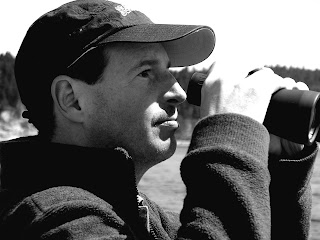

S/V Reachfar - Puget Sound, 2007


Sailing is naturally mellowing.  

For decades, I found every aspect of being a lawyer crushingly stressful, even before I was diagnosed with complex PTSD and codependency. Nevertheless, I could always escape my miserable life by surrounding myself with waves and forests. Sailing offered instant relief. Although I found a similar Zen on chartered sailboats in Belize, California, and Tahiti, I always felt particularly at home on the waters of the Pacific Northwest. 


Eventually I became convinced I needed a boat of my own to sustain the magic. So in 2005, I bought a used sailboat. In a rare twist, the economics of boat ownership made sense for me. When I moved back from Chicago, I’d chosen to buy a weekend cabin on Whidbey Island rather than an overpriced condo in the city. Mooring a sailboat at Elliott Bay Marina as a crashpad turned out to be cheaper than renting an apartment in Seattle.


As the cliché goes, the two happiest days of a boat owner’s life are the day they buy the boat, and the day they sell it. By 2008, I recognized sailing was not going to be my priority for the foreseeable future. I was happy to find a willing buyer for S/V Reachfar, for two reasons. First, I discovered being in charge of my own boat diminished sailing’s relaxing effects. Being the captain was a buzz kill. Second, I needed a place in the city that would fit my growing family, rather than a lonely pied-à-mer.


One of the poetic epitaphs in Spoon River Anthology by Edgar Lee Masters (1915)

We started the laborious adoption process in Fall 2004 by signing up with an agency and taking thirty hours of parenting classes. A few weeks later, I got a telephone call out of the blue and learned the cousin of a friend of a friend was pregnant. They were looking for a gay couple to adopt the baby, and chose us. 


I bought my sailboat at the beginning of May 2005. All those years of sailing, research, and trips to the Boat Show intersected with the miraculous surprise of parenthood. In hindsight, I think I grasped at the familiar comfort of sailing rather than face the terror of desiring something completely beyond my control. After the ultrasound, I realized our birthmother was just as terrified about us walking away from the adoption as I was worried about her changing her mind. Fortunately, my partner and her boyfriend were able to calm both of us down.  


At home on Whidbey Island late one night in June, I got the call saying our birth mother had gone into labor. We caught the last ferry to the mainland and raced to the hospital in Puyallup. Everyone spent the night watching movies in the lovely birthing suite. Shortly before 9 am, the doctor and the baby arrived. 


I watched Eleanor being born. Then we walked out of the room with our daughter, and the world has never been the same.


Bear, Buster, and Schooner Zodiac


“I’d Rather Be Sailing” is the simplest of songs. Gordon’s lover Roger celebrates the joy of sun, wind, and waves. Then he lists some of the things that aren’t as good as sailing, like food, sex, and other people. However, as Roger sings to Gordon, what he loves best about going out sailing is afterwards he can “come home to you.” 


Near the end of A New Brain, Gordon and Roger reprise “I’d Rather Be Sailing” as a duet. Gordon will never be a sailor. Instead, he sings “I feel like I’m sailing – holding on for life.” With the right craft and crew, sailing offers the exhilaration of the second-greatest roller coaster in the world. 


Sailing [Vancouver, chorus, writing, Bear, whatever] could be the one thing in the world I love almost as much as my children. But the point is I love my children even more. That’s the kind of Roger I am.

S/V Reachfar, Port Townsend - 2006


Tuesday, January 4, 2022

Another Do-Over Year

2022년 복 많이 받으세요
“2022nyun bok manhi padeseyo”

The literal translation of the Korean equivalent to “Happy New Year” is “May you receive many blessings in 2022.”


Hopefully a few new blessings.


2021 turned out to be another year spent indoors waiting for viruses, lawyers, and judges to finish their work. I didn’t see enough movies to generate a list of favorite films. The only play I saw indoors was a high school production of Macbeth (Eleanor was one of the witches). My only other non-Zoom experience was seeing David Sedaris at the Mount Baker Theatre in September.


Fortunately, one of the benefits of emerging from the fog of mental illness is that I’m reading again. In addition to magazines and other online reading, last year I finished sixty books. Here are my favourites: 


Roger's Favourite Books of 2021


1.     Barbara Blatchley, What are the Chances? Why We Believe in Luck


2.     Vladimir Nabokov, Speak, Memory


3.     Lauren Hough, Leaving Isn’t the Hardest Thing


4.     Lacy Crawford, Notes on a Silencing


5.     Temple Grandin, Animals Make Us Human


6.     Sarah Schulman, Let the Record Show:  A Political History of ACT UP New York 1987-93


7.     Stephen King, On Writing


8.     Oliver Sacks, On the Move


9.     Douwe Draaisma, Why Life Speeds Up As You Get Older: How Memory Shapes Our Past


10.  B.J. Fogg, Tiny Habits


11.  Daniel J. Levitin, This is Your Brain on Music


12.  Leslie Jamison, The Empathy Exams


13.  Maria Konnikova, The Biggest Bluff: How I Learned to Pay Attention, Master Myself, and Win


14.  Brian Greene, Until the End of Time


15.  Michael Shermer, The Believing Brain


16.  Leonard Mlodinow, The Drunkard’s Walk:  How Randomness Rules our Lives


17.  Eric Garcia, We’re Not Broken:  Changing the Autism Conversation


18.  Sam Quinones, The Least of Us: True Tales of America and Hope in the Time of Fentanyl and Meth


19.  David Sedaris, A Carnival of Snackery: Diaries (2003-2020)


20.  Simon Garfield, Dog’s Best Friend


21.  Anne Lamott, Bird By Bird


22.  Michael J. Fox, No Time Like the Future


23.  Julia Glass, A House Among the Trees


24.  Kevin Kwan, Crazy Rich Asians


25.  Oliver Sacks, Hallucinations


26.  Daniel Kahneman, Olivier Sibony, & Cass Sunstein, Noise: A Flaw in Human Judgment


27.  Alan Cumming, Baggage


28.  Ethan Kross, Chatter: The Voice in Our Head, Why it Matters, and How to Harness It 


29.  Daniel J. Levitin, The Organized Mind: Thinking Straight in the Age of Information Overload


30.  Stephen Hawking & Leonard Mlodinow, The Grand Design


I’m fascinated by memoirs, both as a reader and a writer. My 2021 reading list included memoirs by writers, mathematicians, neurologists, addicts, and actors, as well as dispatches from across the Autism Spectrum. Plus Vladimir Nabokov. Many English Majors identify Speak, Memory as the best-written memoir ever. It’s true – the rest of us should probably just give up writing. But we can’t help ourselves.


Upcoming blog essays respond to the two memoirs that spoke most directly to me in 2021. Lacy Crawford is a journalist. In Notes on a Silencing, Crawford describes her trauma as a sexual assault victim at a prestigious boarding school, and her triggers and re-traumas three decades later as she observed how the legal system worked to protect her abusers and their enablers.


Lauren Hough is a middle-aged lesbian writer/cable installer whose parents raised her in a weird sex cult named “The Children of God.” Leaving Isn’t the Hardest Thing tells how Hough escaped her religious roots by finding a new community in the military – only to find herself betrayed by authoritarian abusers in the era of “Don’t Ask, Don’t Tell.” It turns out Pharisees and lawyers are everywhere.


As usual, many of the other books on my 2021 reading list are about how thinking does and doesn't work.


Other than our extraordinary brains, humans are unremarkable as a species. Many animals are faster and stronger, with superior powers of vision and hearing, or superpowers like flight and invisibility. Instead, after our primate ancestors diverged from their chimpanzee cousins, evolution spent the next sixteen million years focused on building bigger and fancier human brains. This turned out to be a great longterm investment – eventually. 


In the meantime, we spent most of the Pliocene and Pleistocene eons as feeble hairless bipeds cowering in trees and caves. Even after the arrival of modern Homo sapiens half a million years ago, we lived for hundreds of thousands of years scattered in small bands of hunter-gatherers, well down the food chain from more impressive predators. Even within genus Homo, H. sapiens isn't very special. To the contrary, just 100,000 years ago we were one of at least six extant human species. Even after we tamed fire and invented a few stone tools, the investment in big brains was hardly paying dividends. As Yuval Noah Harari points out, 


We assume that a large brain, the use of tools, superior learning abilities and complex social structures are huge advantages. But humans enjoyed all of these advantages for a full two million years during which they remained weak and marginal creatures.


Then, just a few thousand years ago, something clicked in the human brain. Suddenly we experienced an accelerating series of revolutions:  agriculture, writing, civilization, empires, industry, automobiles, and iPhones. In a cosmic blink of the eye, humans achieved supremacy over every other species on the planet. 


Since this Cognitive Revolution, there hasn’t been enough time for natural selection to accomplish further genetic evolution. Instead, our enhanced human brains are responsible for the havoc wrought by the immense cultural evolution that continues at an ever-accelerating pace. At our current rate of “progress,” we’ll only need a few centuries or even mere decades before we join Tyrannosaurus Rex and the dodo in extinction, no doubt dragging the rest of the biosphere with us. Unless we finally learn how to think clearly.


For decades, evolutionary biologists and child psychologists have been trying to figure out when the human mind originated. Both point to the same breakthrough in the development of the human species and in the development of each human individual child:  “Theory of Mind.” 


The phrase “Theory of Mind” comes from an influential 1978 paper by David Premack and Guy Woodruff, “Does the chimpanzee have a theory of mind?” Only modern Homo sapiens has demonstrated the capacity to understand our experience and to act based on the proposition that other individuals possess a mental state that may differ from our own. When humans finally evolved enough to feel empathy, our brains grow three sizes. Not just our hearts.


Some neuroscientists and philosophers focus on another important aspect of Theory of Mind:  because each individual’s mental state is independent of the real world, humans can feel, believe, and foresee things that are not true and may never be. According to Harari, “large numbers of strangers can cooperate successfully by believing in common myths.”


One of the few TV shows I binge-watched in 2021 was The Wheel of Time, a sorta-feminist variation on Game of Thrones set in a fantasy world that resets itself every few thousand years. Human experience In the real world is profoundly cyclical, whether you focus on days, months, seasons, years, or the school calendar. 


Last year I read several excellent books about how our brains process probabilities, choices, disappointment, and uncertainty. My upcoming blog essay “How Lucky Can You Get?” dives into these topics, including some of the insights from my favourite book of the year, What are the Chances? Why We Believe in Luck, by neuroscientist Barbara Blatchley.


Blatchley identifies our reliance on “counterfactuals” as another important aspect of Theory of Mind:  


Counterfactuals are alternatives to reality that we generate, particularly after negative events. An upward counterfactual is an imagined alternative to reality that is better than what actually happened. A downward counterfactual is an alternative that is worse than reality. Researchers have found that upward counterfactuals might help us prepare to encounter this negative situation again in the future and perhaps to do better the next time.


What are the Chances? resonated with the best book I read in 2019, Carol Dweck’s Mindset. Dweck is the psychologist who coined the terms “fixed” and “growth” mindsets:

 
In a fixed mindset students believe their basic abilities, their intelligence, their talents, are just fixed traits. They have a certain amount and that’s that, and then their goal becomes to look smart all the time and never look dumb. In a growth mindset students understand that their talents and abilities can be developed through effort, good teaching and persistence. They don’t necessarily think everyone’s the same or anyone can be Einstein, but they believe everyone can get smarter if they work at it. 


Similarly, Blatchley observes “When lucky people are unlucky – when something unwanted or awful happens – they learn from their mistakes, incorporating that experience into their expectations about the future. They are able to use their transformed expectations to change their bad luck into good for the next time.” Life becomes an upward spiral.


Somehow we all made it through 2020 and 2021, endured Donald Trump and Zoom school, and survived forest fires and floods. Now it’s another new year. The holiday snow is melting and the days already feel longer. As we slouch toward Groundhog’s Day, remember the lesson of the classic 80s movie:  Bill Murray learned how to learn from experience.


According to Barbara Blatchley in What are the Chances?, 


Luck is the way you face the randomness in the world. If we are open to it, accepting, not anxious or afraid, willing to learn from mistakes and to change a losing game, we can benefit from randomness. We can gain a modicum of control over this aspect of life, even if we can't control the universe on a large scale. Randomness will happen no matter what we do—chaos theory rules in our universe. Knowing how to roll with the punches; now that's lucky.


May we all plant plenty of flowers and find many blessings in 2022.


Tuesday, November 2, 2021

Stereotypos


According to the Roman poet Juvenal, a good life begins with Orandum est ut sit mens sana in corpore sano:  “Pray for a healthy mind in a healthy body.” Philosophers and scientists have been arguing for millennia about the relative significance of mind and body .


So where does your brain fit into a mind/body dichotomy? 


The Human Brain / Ice Cream Scoop Analogy


The evolutionary history of your brain can be compared to piling scoops of ice cream on a cone. At the bottom is the reptilian vanilla scoop of our brain stem. Even the simplest animal has a similar need for these neurons dedicated to basic life support and motor functions. Natural selection subsequently piled on extra scoops to handle our more sophisticated motor needs as mammals. 


Meanwhile, evolution added scoops of the fruity flavors that create, regulate, and respond to emotions. Perched precariously on top, at least for humans, is a final delicious scoop containing such revolutionary flavors as the prefrontal cortex, Executive Function, and Theory of Mind. But the ice cream scoops all tend to blend together.


Your brain is the greediest organ in your body – comprising only 2 percent of your mass, while consuming 20 percent of your fuel. The brain’s energy-sucking chemical and electrical processes generate what you experience as your mind. Both mind and body are all about connections:  100 billion neurons linked to each other and to the rest of your body in innumerable combinations and recombinations. Your brain is both hardware and software.


Unsurprisingly, our wires can get crossed. Sometimes in very similar ways.


When my physician diagnosed me with Post-Traumatic Stress Disorder almost six years ago, the most obvious indicator among my strange new symptoms was virulent trichotillomania, i.e. compulsive hair-pulling, that primarily targeted my forehead. I’ve made significant progress toward managing the impact of trauma and triggers on my thinking, but my trichotillomania, stammer, humming, and other body tics have only gotten worse. 


In my search for answers, I’ve learned how much mental health involves contested labels. For example, in 1973 the American Psychiatric Association removed homosexuality from its Diagnostic & Statistical Manual’s catalogue of mental illnesses after a contentious campaign. 


A particular symptom may be listed among the criteria defining multiple disorders, may be identified as its own syndrome, or may be normalized as an example of neurodiversity and healthy variation. We find ourselves using multiple labels to describe basically the same behavioral consequence of crossed neural wiring – including terms like trichotillomania, tics, echolalia, coprolalia, stimming, and stereotypies.


The first time I read the word “stereotypy” I thought it was a typo. 


Apparently so did the copy editor at the New York Times. In “The Case Against Zoos,” a guest essay by Emma Marris, the word appears spelled both correctly and incorrectly in the same paragraph:


In many modern zoos, animals are well cared for, healthy and probably, for many species, content. Zookeepers are not mustache-twirling villains. They are kind people, bonded to their charges and immersed in the culture of the zoo, in which they are the good guys.


But many animals clearly show us that they do not enjoy captivity. When confined they rock, pull their hair and engage in other tics. Captive tigers pace back and forth, and in a 2014 study, researchers found that “the time devoted to pacing by a species in captivity is best predicted by the daily distances traveled in nature by the wild specimens.” It is almost as if they feel driven to patrol their territory, to hunt, to move, to walk a certain number of steps, as if they have a Fitbit in their brains.


The researchers divided the odd behaviors of captive animals into two categories: “impulsive/compulsive behaviors,” including coprophagy (eating feces), regurgitation, self-biting and mutilation, exaggerated aggressiveness and infanticide, and “stereotypies,” which are endlessly repeated movements. Elephants bob their heads over and over. Chimps pull out their own hair. Giraffes endlessly flick their tongues. Bears and cats pace. Some studies have shown that as many as 80 percent of zoo carnivores, 64 percent of zoo chimps and 85 percent of zoo elephants have displayed compulsive behaviors or stereotypes.


“Stereotypies: Bad Habits or Vices?”

I encountered the term “stereotypy” last year in Temple Grandin’s book Animals Make Us Human. As a leading expert on animal behavior, Grandin helps pet owners and farmers understand how each species’ brains work, and how humans can create a healthy environment for each type of animal. 


Grandin describes animal species responding to frustration and captivity with similar patterns of abnormal repetitive behaviors. For example, gerbils in the wild dig for shelter; caged gerbils dig compulsively, with no productive purpose. As Grandin observes, both humans and animals resort to “normal stereotypies” in “high-tension moments.” A life of near-constant stress can result in a life of near-constant stereotypy.


Years ago, a physician friend came back from a global health conference and told me Bill Gates definitely is on the autism spectrum. “Did you examine him? Did he come out from the podium?” I asked.


She said no – she just observed Bill as he rocked back and forth during the speeches.


In addition to her experience with animal husbandry, Temple Grandin also is a leading expert on living with Autism Spectrum Disorder. Grandin sees a parallel between animal stereotypies and similar repetitive behaviors in humans who have been diagnosed with various mental disorders, including autism and what used to be called “Asperger’s Syndrome.” (DSM-5 now puts the formerly separate diagnoses of autism and Asperger’s on the same A.S.D. spectrum.) 


I never noticed the word “stimming” before this year, but apparently it’s been in use for a couple of decades, particularly within the autism community. Stimming refers to "self-stimulating behaviors, usually involving repetitive movements or sounds."


This year I’ve been reading my way through all of Oliver Sacks’ books. Dr. Sacks, a gay Jewish British immigrant who died in 2015 at age 82, was a distinguished neurologist and a best-selling author who wrote with elegance and humanity. Dr. Sacks always maintained a busy clinical practice. The real-life neurological case studies he explored in his various books provide another illuminating perspective on how the neural networks connecting our brains to our bodies’ motor functions can get their wires crossed.


Many of Dr. Sacks’ patients suffered from Parkinsonism and related disorders where the mind loses control over the body, including dyskinesia and Tourette’s Syndrome. Doctors treat these diseases with the same types of anti-psychotic medications as they prescribe for serious mental illnesses like schizophrenia. On a cellular level, thinking and acting are a matter of chemistry. 


According to the Oxford Dictionary, “coprolalia” is “the involuntary and repetitive use of obscene language, as a symptom of mental illness or organic brain disease.” (I’m not a lexicographer, but should we really think of “mental illness” as some kind of inorganic brain disease? Mind/body dualism fails us once again.) Coprolalia is seen in some people with Tourette’s Syndrome – but also in nursing home residents whose stroke damage or dementia lesions have targeted particular brain regions, resulting in little old ladies who swear like sailors.


Oliver Sacks offers the hope of integration. In Musicophilia: Tales of Music and the Brain, he writes about professional musicians with Tourette's Syndrome who are able to harness the energy fueling their tics and direct it toward their creativity:


Tourette’s brings out in stark form questions of will and determination: who orders what, who pushes whom around. To what extent are people with Tourette’s controlled by a sovereign “I,” a complex, self-aware, intentional self, or by impulses and feelings at lower levels in the brain-mind? Similar questions are brought up by musical hallucinations, and brainworms, and varied forms of quasi-automatic echoing and imitation. Normally we are not aware of what goes on in our brains, of the innumerable agencies and forces inside us that lie outside or below the level of conscious experience—and perhaps this is just as well. Life becomes more complicated, sometimes unbearably so, for people with eruptic tics or obsessions or hallucinations, forced into daily, incessant contact with rebellious and autonomous mechanisms in their own brains. They face a special challenge, but they may also, if the tics or hallucinations are not too overwhelming, achieve a sort of self-knowledge or reconciliation that may significantly enrich them, in their strange fight, the double lives they lead.


Our dog Buster is a bundle of tics. Most recently, Buster gave himself an unsightly bald patch. It’s on his butt, instead of on his forehead like my own trichotillomania handiwork.


Whenever Buster’s fur reaches a certain length it becomes hopelessly matted. “Mats” form when dog fur becomes tangled and wraps around itself, forming tight clumps of dead and live fur. “Doodle coats are a blend of a curly coat and a double-coat, making them the perfect storm for matting.” Eventually there’s nothing the groomer can do besides give them a buzzcut.


Aussiedoodles are supposed to be “non-shedding.” It’s true to a point. This year when Buster’s fur reached critical mass he started scratching uncontrollably as he tried to pull out all the mats. The floors became covered with black clumps that looked like furry cockroaches.


It takes six weeks to get a dog groomer appointment. Buster couldn’t wait. Fortunately, we found a friend with canine clippers who volunteered to relieve Buster’s distress. Unfortunately, some of the mats were too close to his skin. An unrecognizable Buster came home shorn and with a few razor nicks – which he couldn’t resist scratching.


We had to get the Cone of Shame out of the garage. Buster is spending a few days relying on this plastic restraint to moderate his compulsive scratching – just like Papa fiddles with unfuzzy things to keep his hands away from his scalp. In the last few years I’ve learned a lot about impairments to both human and canine mental health. I’ve started to remove the cause. But not the symptoms.


Thursday, May 27, 2021

Black Labs Matter


At a recent family dinner, my son announced “I identify as a woman.” As both the only straight white man in the household and the victim of two bossy older sisters, Oliver often feels oppressed. 


Predictably, at the same meal the children all voted for “Oliver” as “Papa's Favorite.” The dogs and I all voted for “Bear.” 


Spring means we’re going on longer and longer walks, even Buster. Improved weather also picked up the pace at the nearby construction sites where Western Washington University is adding a new interdisciplinary science building and more dorms. One of the campus parking lots is temporarily assigned to construction workers  – a cohort of drivers that typically differs from college students and professors. 


Recently I noticed a pickup truck labeled “I identify as a Prius.” Another car had a sticker proclaiming “Black Labs Matter.” Bear asked why I don’t have a bumper sticker celebrating Aussiedoodles.


The next time we walked through the parking lot neither car was there. But I felt a ping – seeking for something, realizing it was missing, then remembering the “Black Labs Matter” car seemed weird. 


In any humor or hashtag situation, “Black Labs Matters” is a potentially provocative flag. A high degree of difficulty maneuver. An opportunity to exhibit grace and empathy. 


Bear and I took these photos the next time we encountered the Black Labs sticker. Up close you can see why my brain was getting a weird vibe from Mr. Black Labs Matter. There’s a mixed message in the preamble “Coexist” – a lofty goal, but usually not spelled out with armaments arranged as letters of the alphabet. 


If my subconscious still had a question about the message intended by the slogan “Black Labs Matter,” it was answered by the sticker underneath:  “I LUBRICATE MY AR-15 WITH LIBERAL TEARS.” In black G.I. Font. With a picture of a red assault rifle. 


The stickers on the other side of the car probably won’t change your unconscious’s opinion about the car owner:


All of us who are accustomed to speaking from a place of privilege must learn to talk about less privileged folks in a way that contributes to civil dialogue. 


It’s not enough to stop stigmatizing, baiting, or “owning” the unprivileged Other. It’s also about monitoring access to The Room Where It Happens. We must look around the room, then ask who is present and who is absent. And why. 


Unfortunately, it’s been months since I found myself looking around a real life room containing anyone who wasn’t named Leishman, Bear, or Buster. 


Nevertheless, we can always question the patterns we observe around us in our culture and institutions. A few weeks ago in “Deadlines,” I wrote about how during the 1800s, the word “deadline” originally applied to “a line drawn within or around a prison that a prisoner passes at the risk of being shot.” By the end of the century, the word’s usage had expanded to include any line drawn to exclude a group. 


Each day the dogs and I pass this ten-year-old historic marker on our walk along the waterfront: 


CHINESE DEADLINE

NO CHINESE ALLOWED BEYOND THIS POINT

1898-1903


Followed by:


MAYOR APOLOGIZES TO

CHINESE COMMUNITY

2011


It Gets Better. Eventually.


Most of the photos in “Deadlines” show a different kind of historic marker. Lighter in tone. Collectively they represent a time capsule from the 1980s that preserves a time capsule from the 1890s:


Fairhaven Village is Bellingham’s quaint Olde Tyme neighborhood. The dogs enjoy walking to the waterfront through Fairhaven. Along the way we encounter historic markers that reveal tidbits from the community’s frontier past. According to Atlas Obscura, a local historian obtained community grants to fund the project four decades ago. 


Some of these markers reflect Fairhaven’s Wild West beginnings:  “Location of Town Pillory.” “Spanish Chalice dated 1640 found here.” “Counterfeiters’ Hide Out, 1905 - $5 and $10 pieces passed in saloons on weekends.” “Office of F.A. Higg, Alaskan Photographer, 1890.” “Huge freight wagon disappeared beneath quicksand, 1889.” “Benton’s Bath Parlor & Tonsorial Palace, 1903.” And my favorite: “Here is where Mathew was cut in two by a streetcar, 1891.”


After leaving downtown Fairhaven, tourists finally see a few Asian-themed markers:  “Site of Chinese Bunkhouse, 1900 – Chinatown population 600.” “Site of Japanese Bunkhouse No. 5, circa 1903.” Meanwhile, comic cultural artifacts line Harris Street all the way to the train station. Historic markers commemorate the unfortunate Mathew, quicksand victims, and President McKinley driving by in a buggy. Pluse “Chinese foreman traded daughter for a boy, 1908.”


A community’s story is incomplete if its account of any marginalized group is limited to statistics and stereotypes. Four decades ago, whoever chose Fairhaven’s marker topics wasn’t paying close attention to the overall message sent by a few dozen historic vignettes.  


Convinced I’m seeing things? That I’m a hypersensitive snowflake? A few weeks later, Bear and I finally found another Asian-themed marker on Harris Street:  “Site of Sam Low’s Opium Den, 1904.”


The ACLU often uses the 19th century slogan “Eternal vigilance is the price of liberty.” “Vigilance” means paying attention. Mindfulness. As individuals and as a society, we must eternally strive to see each other and ourselves more clearly.